
I have spent quite a bit of time reading old letters and family stories over the years, and every once in a while, something catches my attention that probably wouldn’t have seemed particularly remarkable to the person writing it.
In this case, it was a saucer.
A broken saucer, to be precise.
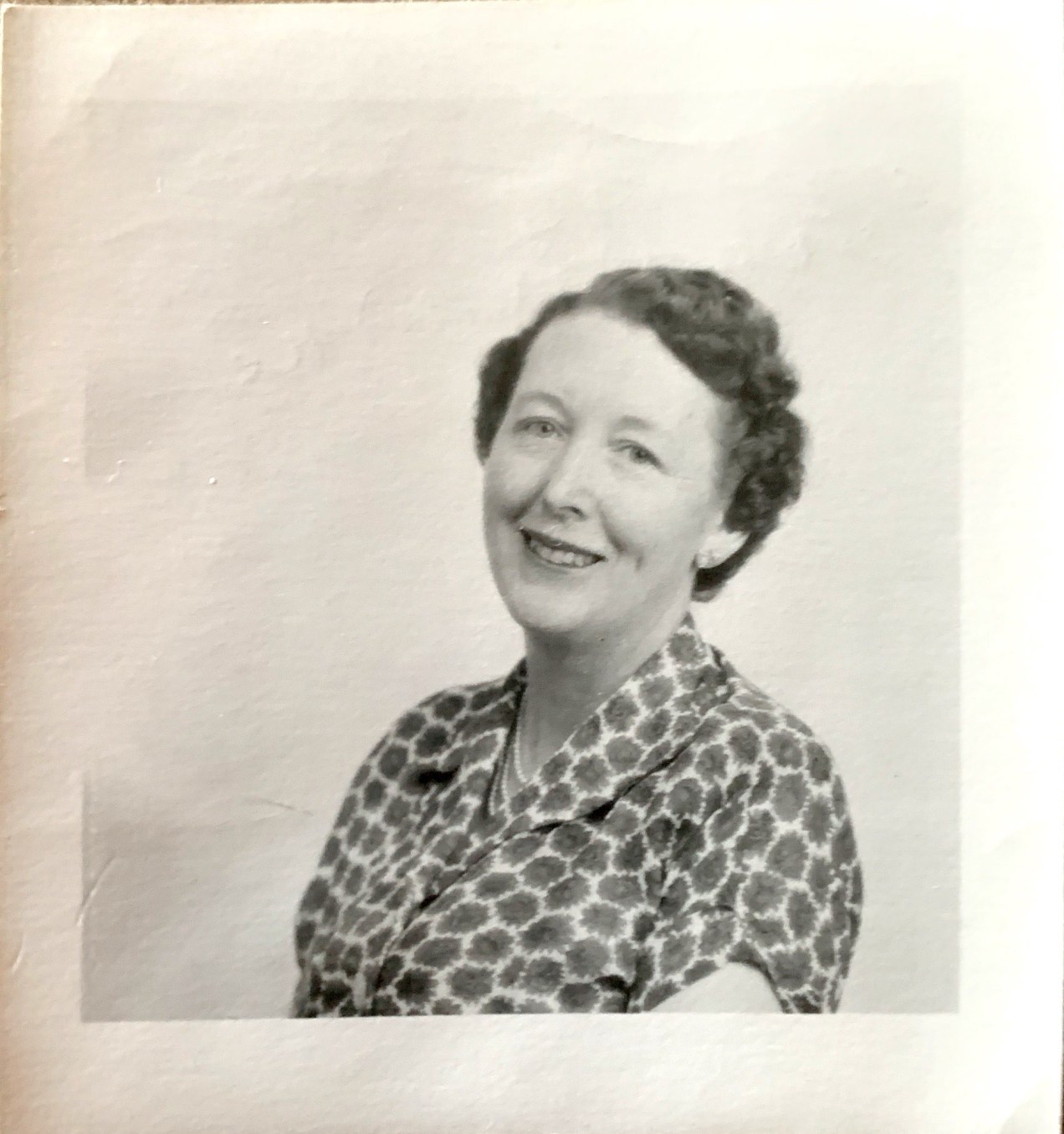
In August 1954, Mrs. Barkley wrote a letter to my mother, who was still in hospital recovering from polio. I have always particularly enjoyed Mrs. Barkley’s letters. She had such a lovely, warm way of writing, chatting away about the ordinary happenings of life in Jumping Pound. Her letters make me feel rather like I’ve been invited into her kitchen for a cup of tea.
In this particular letter, she was telling Mom about the haying.
Apparently, things weren’t going quite as smoothly as one might hope.
“Carmen and I had to get pulled thru a creek at the Kaster place one day and I got stuck in a creek in Mr. Wallace’s field yesterday. Just broke one saucer hitting the bumps in all our trips that really was not too bad the way we had to go at times. I guess they will come to the house for the few dinners left.”
Just one broken saucer!
I remember reading that for the first time and stopping.
A saucer?
Of course, I knew the women took meals out to the men working in the fields. I’d grown up hearing stories about haying and branding, and Grandma had written about it herself.
But somehow, it had never occurred to me that they were hauling actual cups and saucers across the countryside.
Not just the food. The dishes!
And apparently across creeks that were quite capable of swallowing the vehicle delivering them.
I don’t know what I’d imagined. Perhaps a tin mug and a sandwich, or something along those lines. Certainly not a travelling tea service.
Although I must admit, tea does taste better from a proper cup.
Feeding the haying crew
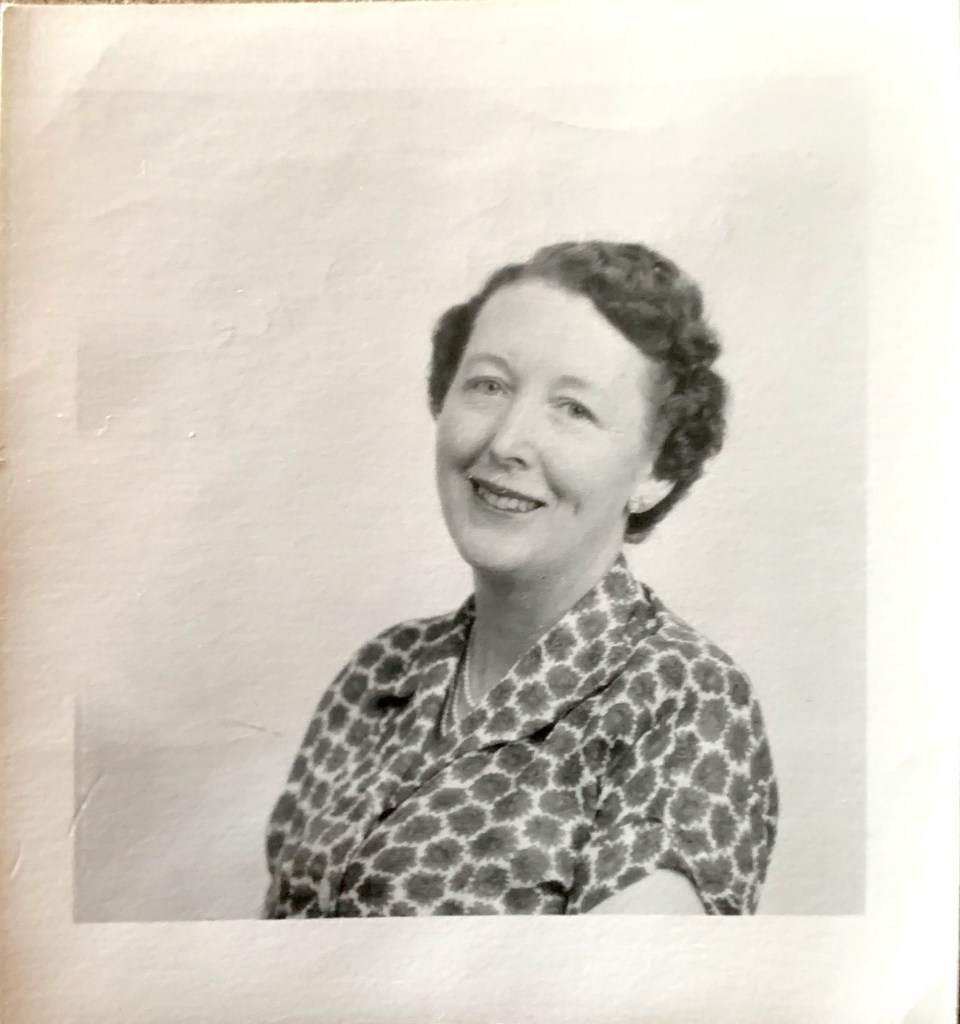
Edna Copithorne, whose recollections of ranch life remind us just how much work went into feeding the crews.
Grandma Edna wrote quite a bit about feeding the men during haying season.
She remembered the teams of horses heading over the hill each morning, thirty-two horses between three neighbouring outfits, and the men changing horses at noon.
And while all that was happening out in the fields, there was an enormous amount of work going on in the kitchen.
Grandma wrote:
“A hearty breakfast of porridge, meat and eggs, huge plates of toast and homemade jam was ready at seven am. By then the men had their horses in the corral, and we would have the lunch box almost ready for the field.”
And what a lunch box it was!
“Their lunch consisted of six or eight big loaves of homemade bread with a variety of fillings, two pies, and cake. This was enough for their morning lunch and a noon meal and afternoon lunch. They drank cold tea.”
Six or eight loaves of bread.
Two pies.
A cake.
And tea.
For nine men working in the hayfield.
And remember, those were homemade loaves of bread. Somebody had already mixed the dough, kneaded it, waited for it to rise, baked it, cooled it, sliced it, and made the sandwiches.
The pies and cake didn’t appear by magic either.
Nor did the breakfast dishes wash themselves.
I get tired just thinking about it.
And then there was branding
Haying wasn’t the only occasion that required an enormous amount of cooking.
Grandma remembered:
“We would take tea and lunch out to the men in the morning, then hurry in to prepare a big, hot meal for about 25 or 30 and sometimes 40 sat down to that meal.”
Forty people for lunch!
And then she added something I particularly like:
“And there were always some faithful lady friends who came to help me with the meal too.”
I love that she remembered those women.
Just as the men worked together to get the branding done, the women worked together to feed everybody.
And, in many ways, that hasn’t changed.
Branding is still a big undertaking around here, and feeding forty or more people is still very much part of the day. The women are still working hard, the kitchens are still busy, and there are still pies being made.
Some things haven’t changed nearly as much as we might imagine.
Hot coffee, doughnuts and chicken pies
Grandma wasn’t simply cooking at home, either.
When the cattle were being moved from Jumping Pound to Grand Valley, she was out delivering meals to the riders.
I’ll let her tell you about that.
“Trailing cattle back and forth across the Bow river and by Cochrane to Grand Valley was no easy feat. It always seemed to be done when there was snow on the ground and was a long, cold ride.”
And then came the food.
“I used to time it so that I’d catch up to them just before they reached the river and I’d give them hot coffee and fresh hot donuts. Then I would race home and pop in the oven an individual chicken pie full of good vegetables for each rider, a dessert, and more hot coffee. I would meet them for the noon lunch just north of the railroad track where there was a good spot to hold the cattle.”
Hot doughnuts, individual chicken pies, dessert and coffee.
Delivered twice, in the snow, while the men were moving cattle.
Her homemade doughnuts were legendary, by the way.
I have always thought Grandma was an extraordinarily energetic woman.
The more I read her stories, the more convinced I become that she must have been absolutely exhausted.
Back to Mrs. Barkley’s saucer
What I particularly enjoy about Mrs. Barkley’s letter is that she didn’t seem to consider any of this especially unusual.
She was busy with the haying, tending the garden, waiting for strawberries and raspberries, and expecting visitors.
And in between it all, she found time to write to my mother.
After reporting her adventures in the creeks, she moved right along to the berries.
“Have been expecting some more good strawberries but as yet they haven’t arrived. The raspberries I believe were better than ever. I just had to go to Cochrane for them.”
And then she asked Mom about the other patients in hospital.
It was all part of an ordinary letter, written in the middle of an ordinary summer.
I think that’s what makes these letters and Grandma’s recollections so interesting to me. They weren’t trying to record history. They were simply describing their lives.
It is easy to look back at photographs of the old ranches and admire the teams of horses, the haystacks, the cattle and the men working in the fields.
And rightly so. It was hard, physical work.
But I find myself increasingly interested in the work that doesn’t always appear in those photographs.
The women who were up early enough to have breakfast ready at seven. Who baked the bread and pies, packed the meals, loaded the dishes, negotiated the creeks, fed the crews, brought everything home, and did it all again the next day.
And the women who are still feeding the crews today, carrying on a tradition of hard work and hospitality that stretches back generations.
Mrs. Barkley probably never imagined that, more than seventy years later, somebody would be sitting here marvelling at her broken saucer.
But I am.
And I think she did remarkably well to break only one.


Bless her heart, and Mrs Barkley’s too, they were amazing! I feel quite lazy beside them!
Me too!! It’s quite humbling really.
I completely agree with you! They were strong women, I can see your grandma standing at the stove right now, and how she and your grandpa always made us feel so welcome. I know how important they were for my mom, and how kind. And they made all that kitchen work normal, they were integral parts of the ranch teams. I’m cooking tonight from the Betty Crocker Picture Cookbook that your mom gave mine as a wedding gift, so they all seem very near…I cook regularly for groups so I have a good idea of the organisation involved in 3 hefty meals plus snacks every day! Do you have her donut recipe, and if you do would you share it with me please?