
Grandma was always talking about people “running around like chickens with their heads cut off.”
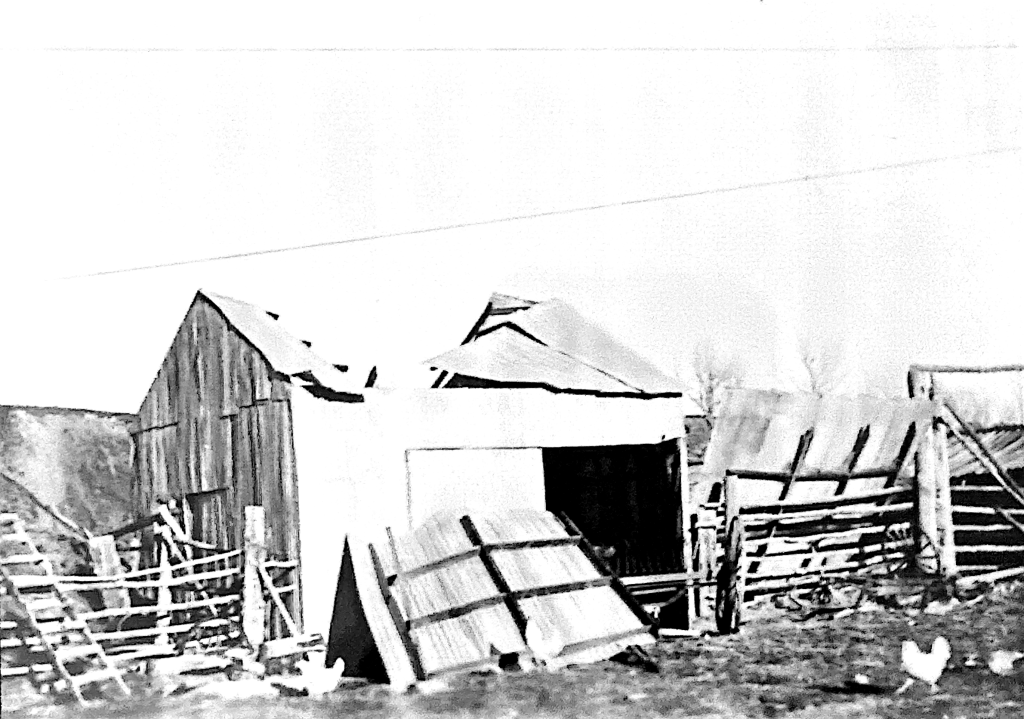
I hadn’t thought about that expression in ages. But there I was, looking through photographs of the Great Fire of 1936, and what should I find but a bunch of chickens wandering around Nicoll’s yard.
The buildings were damaged, fences were down, and there were the chickens.
I have absolutely no idea what they were doing.
Were they running around in a panic? Were they completely oblivious to the destruction around them? Or were they simply going about their usual chicken business?
Who knows?
But I could almost hear Grandma.
And that is one of the things I love about going through her old photographs. Sometimes it’s the smallest, most unexpected detail that brings back a memory.
The Stories on the Backs of Photographs
Grandma was very good about writing things on the backs of photographs.
Names, dates, places. Sometimes just a few words, but usually enough to give you somewhere to start.
I’ve become increasingly grateful for that habit as I’ve worked my way through the family photographs and papers.
She left me a pretty good trail to follow.
These particular photographs show some of the destruction caused by the Great Fire of November 1936, which swept through the foothills west of Calgary.
I’ve shared them before, but recently I’ve been looking at them again, along with Grandma’s handwritten descriptions.
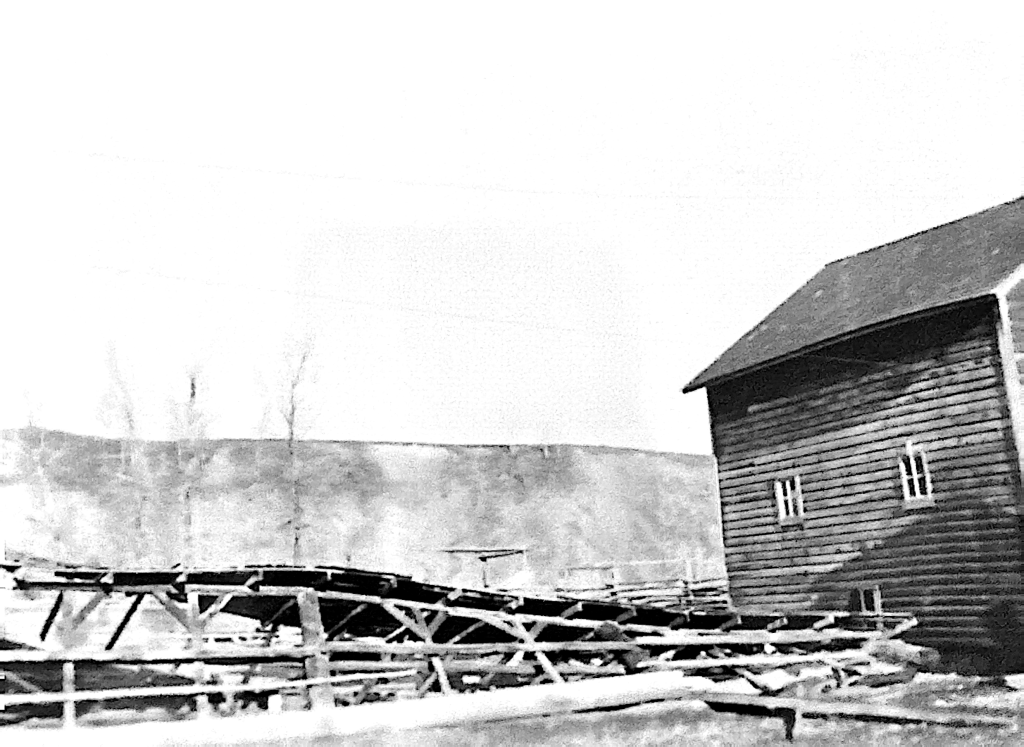
The two photographs of Nicoll’s buildings are particularly interesting because Grandma specifically identified the damage as being caused by the wind.
The tremendous winds that drove the fire were destructive in their own right.
Without her handwritten captions, it would be easy to assume the damage had been caused by the flames.
The Photograph Grandma Wished She’d Taken
There’s another photograph I’ve been thinking about.
One that doesn’t exist.
Grandma once wrote that she regretted never getting out with her camera to photograph the men and horses leaving for the hayfield in the morning.
And what a photograph that would have been!
She described three neighbouring haying outfits heading over the hill at about the same time each morning, with 32 horses between them. Some were tied to the tails of the horses in front.
Most were young broncos, only recently broken to harness.
Grandma remembered that the stories of their adventures in the hayfield could have filled a book.
I can imagine!
There was nothing particularly quiet or orderly about this kind of morning commute.
And that was before considering the work involved in feeding everyone. Breakfast was ready at seven, and Grandma and the other women prepared enough food to keep the men going throughout the day.
It was all part of everyday life on the ranch.
But I would have loved to see that photograph.
Hay Valley After the Fire
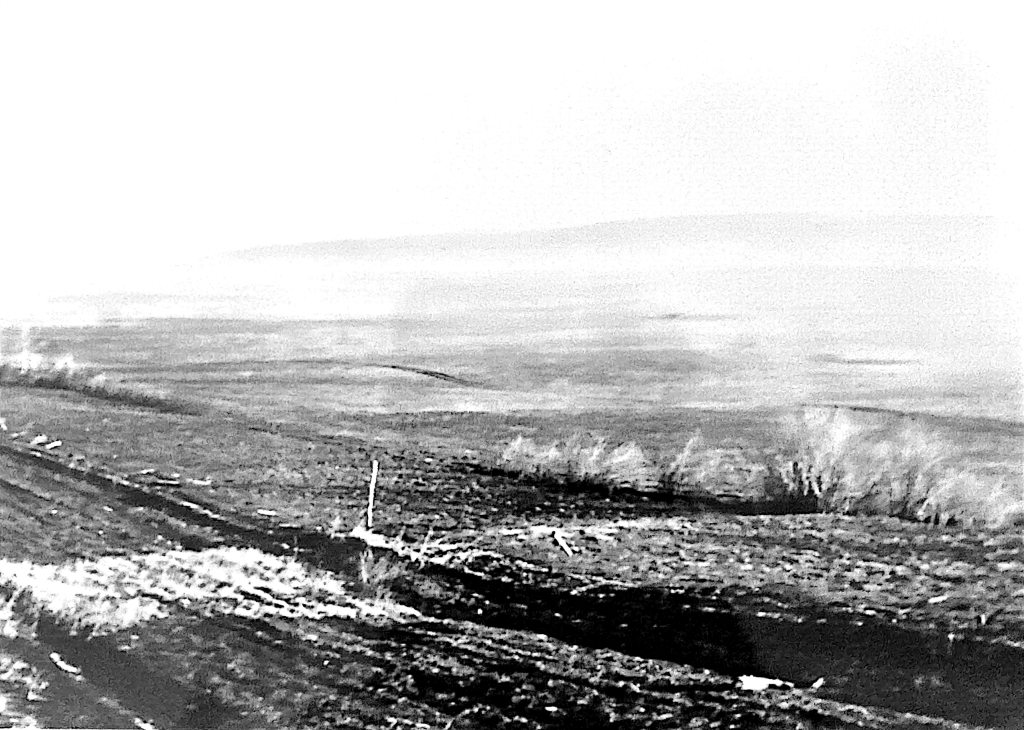
Among the photographs Grandma preserved are several showing Hay Valley after the fire.
And here’s what makes those photographs particularly meaningful to me.
This is the same valley where those 32 horses and the haying crews headed off to work in the mornings.
Grandma never got the photograph she wished she’d taken of that busy procession.
But she did leave us photographs of the valley after the fire.
The ground is blackened and bare. The countryside looks almost unrecognizable.
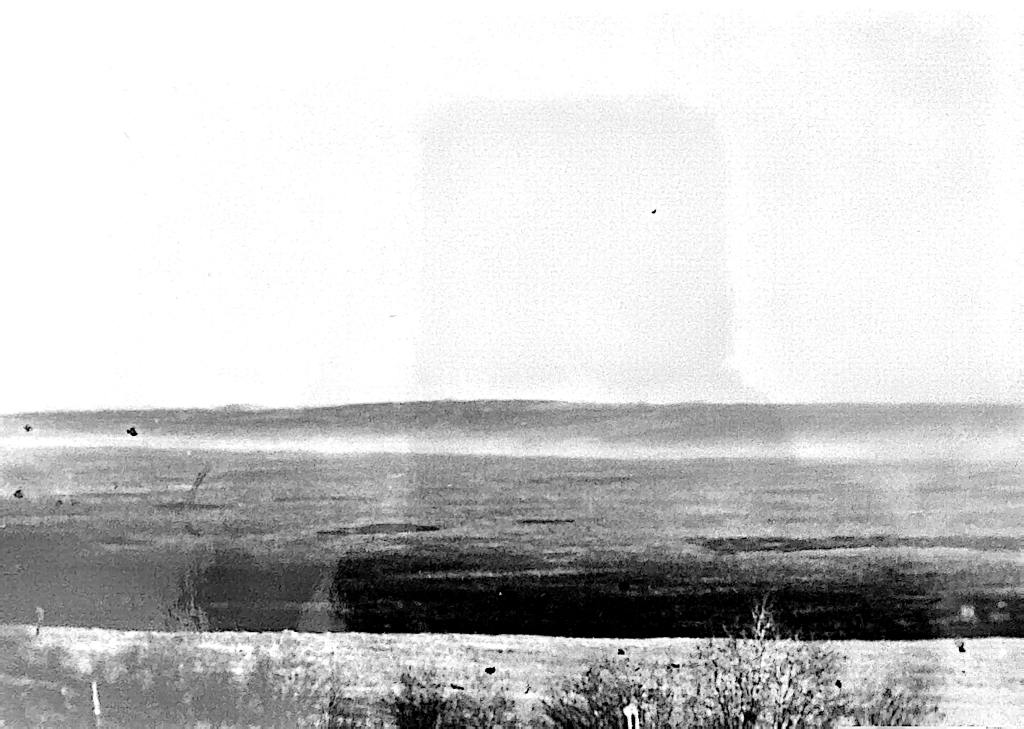
Another photograph shows what remained of haystacks in Hay Valley.
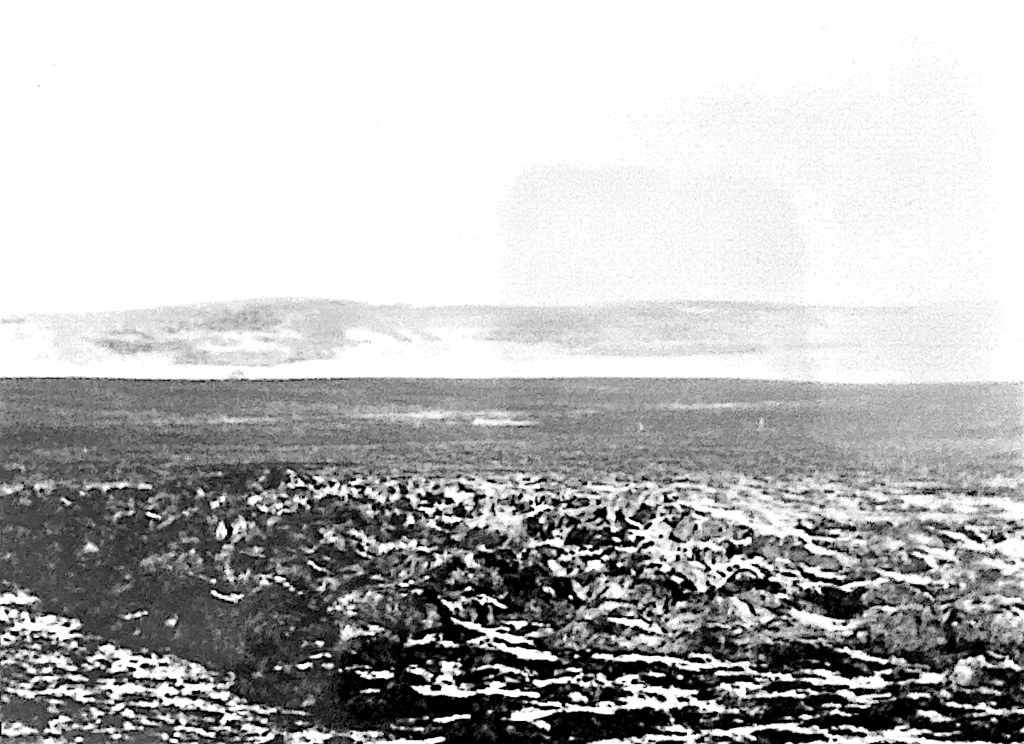
I find myself thinking about all the work that went into putting up that hay.
The men, the horses, the long days in the fields.
And then the fire.
For ranching families, hay wasn’t simply a crop. It was the winter feed their livestock depended on. Losing it meant that the consequences of the fire would continue long after the flames were extinguished.
These photographs don’t show us the fire itself.
They show what was left behind.
What Remains
Grandma was 28 years old when the fire swept through the countryside in November 1936.
Nearly ninety years later, I can look at these photographs and recognize the places she knew.
I can read her descriptions of the work that went on there and imagine the horses heading over the hill in the morning.
And, thanks to a few chickens wandering around a damaged farmyard, I can still hear one of her favourite expressions.
I wish I could ask Grandma a few more questions about those days.
But I think she’d be rather pleased to know that I’m still interested in her stories.
And that she can still make me laugh.
Photographs from the family collection of Edna (Brown) Copithorne (1908–2004). Original handwritten captions by Edna. Photographs digitally adjusted for clarity.
Related reading
Edna’s Story 12 — Haying on the Ranch
The Great Fire of 1936 — One Young Mother’s Escape from the Flames

