happiness

Edna’s Story 23 (FGK 140)

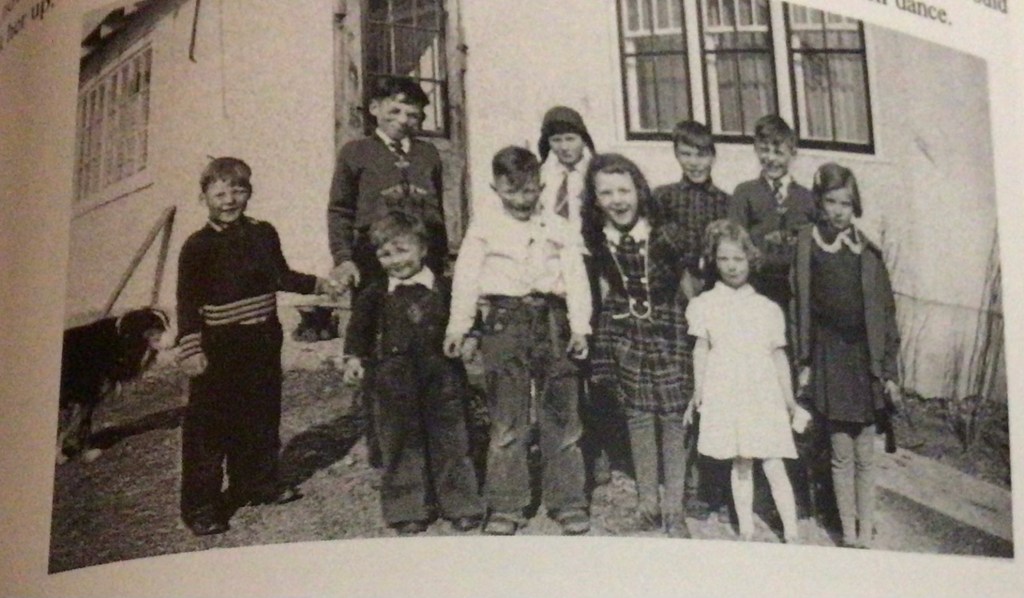
The Copithornes are a large, closely-knit family and our family turkey dinner parties usually had twenty or more sit down to a meal. We usually tried to do our entertaining like this in the winter before calving in April. The children were always included in these parties and often in the dances at the community hall. They learned to dance and mix freely with their elders, there didn’t seem to be such a generation gap as there is now. No one enjoyed a square dance more than Margi when her cousin Lawrence would ask her up. They looked quite small in the circle but they certainly knew their dance.
The evening of our 20th wedding anniversary was a bitterly cold night and Clarence and Irene invited Kumlin’s and us over for dinner. We had completely forgotten it was our anniversary and Percy said we were crazy to think of going out over snowy roads on such a bad night. But Kumlin’s insisted we go with them. When we got there there was quite a crowd gathered waiting for us. The ladies usually head for the kitchen to help serve the meal, but they made Margery Buckley and myself sit in the living room with the men. Then they took us to the bedroom and draped old lace curtains over us like veils and gave us each the cutest nosegay bouquet made from cauliflower, onions, etc. When they led us back into the living room our husbands were standing up each wearing a boutonnière of onions and Irene’s Dad, Don Robertson, was wearing a collar backwards and a silk brocade black house coat and he read of a new comical take off on the wedding ceremony. They shook rice and confetti on us and presented each of us with a very, very lovely tea set. It was a party we’ll never forget!

My sister and I usually got our families together for Christmas dinner and very often the Frank Whittle family joined our circle, in fact we often went to their home too for Christmas and I still use many of Kay’s good recipes. Before Christmas was a very busy time as I raised from 50 to 100 turkeys and we killed and plucked them all ourselves. My fingers would be sore from plucking but it was nice to have all that extra money, especially at Christmas. One Sunday when George and Gertie invited us up for dinner in the summer, I let my half-gown turkeys out early in the morning intending to lock then up then about 11am. When I tried to find them they were gone. We found them sitting in the willows up at the hall and there were 17 of them lying on the ground with just their heads snapped off. The coyotes were a real pest and loved those stupid turkeys. The owls used to kill any that were left roosting outside too.
Standard
happiness

Edna’s Story 22 (FGK 139)

I remember Mom telling me how thoroughly annoyed she was (at 5 or 6) with Aunt Irene when she showed up on the scene and took away her beloved Uncle Clarence. But then, Mom said, she got to know her and also fell madly in love with Aunt Irene- a love that lasted the rest of her life. My parents both loved Aunt Irene and Uncle Clarence and I can see why, they were both lovely people. Uncle Clarence died when I was fairly young, but I remember him as a man who loved to make people laugh. We were fortunate enough to borrow “Chubby” for a while when I was about 4 so that I could learn to ride. One time I was in the field with Uncle Clarence and Chubby came over looking for attention. Uncle Clarence held his head and said to me “you see this big bump on his nose? Well that means his nose is out of joint because he’s not getting enough attention. It’s very important that you spend time petting his nose every day” and he laughed and laughed, and damned if I didn’t have to spend the rest of the summer petting his nose just in case he wasn’t teasing me.

Frank pulled out of the CL outfit in 1944. Percy and Clarence missed him because it is always cheaper to run a big outfit than a small one. You used almost the same number of men and the same machinery. But they still worked together for some of the big jobs. When the war was over in 1945, we quit raising hogs because the income tax slapped on us then took all the profit. By now we were able to contract a lot of our haying to farmers who were glad to do it while their crops grew all summer. This took considerable of the stress of cooking off my shoulders as they would look after themselves, usually camping right in the field.

Clarence got married to Irene Robertson in 1946 and the ranch was divided and we were on our own. We missed Clarence a lot, the children did especially, but he wasn’t far away and we could visit often.

Percy got Griffin Bros to come in with their huge machinery and clear brush off some of his land. This was sort of a pioneer project in our part of the country. The cost was drastic and so was the job of picking roots for years afterwards. But he has grown some wonderful crops on that land.

I stopped making butter and took the cream and eggs to “Swifts” in Calgary and often bought bread instead of baking it so often. We still had several steady men working for us and living in the bunkhouse. All through the years we made the most delicious homemade ice cream with the plentiful supply of cream we always had on hand. Sunday mornings the boys would take turns cranking the ice cream freezer. Every Sunday morning we had really good buttermilk pancakes for breakfast too, such mounds of them with Roger’s Syrup. When roads were passable I would go to church in Cochrane taking the children to Sunday School and taught Sunday School for many years.

Standard
happiness

Edna’s Story 21 (FGK 138)

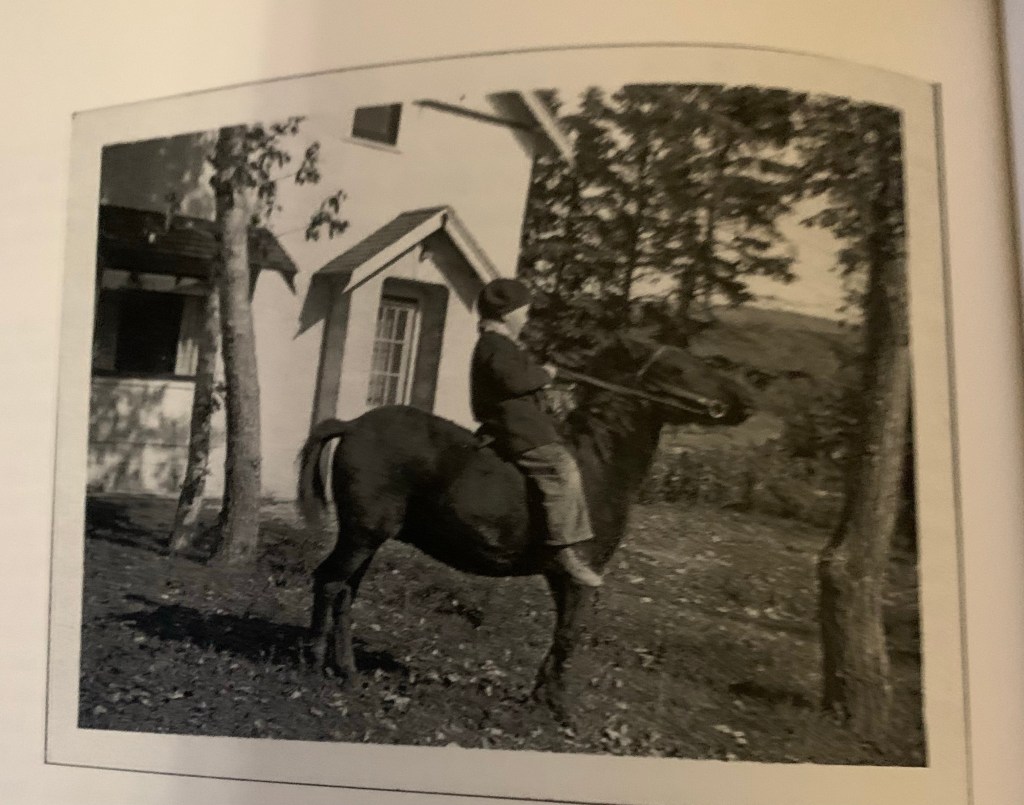
I arranged for Sheila and Marshall to ride down the two miles north to the Brushy Ridge road and tie their horses in the brush and be picked up by Mrs. Wark who was driving her children to Brushy Ridge School every day. They attended Brushy Ridge for Marshall’s grade 3 and Sheila’s grade 5 in 1945-46. Margi was old enough to start school in 1946 and they had a steady teacher, Miss Thomas, in Jumping Pound School so the children started there again. We bought a lovely little horse for Marshall from Freda Permal and called him “Pinkie”, and Margi rode Buck. Nicoll’s had a field of grain planted just opposite our house and Buck sure loved to swipe his share of that when riding by. Margi was so tiny she had quite a struggle climbing on. Sometimes Buck would get impatient and swing his head around and boot her on with his nose. I think Clarance has a picture of him doing this. Then Ellen Norris came to board here in 1946-47 and rode to school with the kids, teaching in Jumping Pound School. We felt fortunate to have her and enjoyed that year. But in the fall of 1948 Miss Demisick came to teach but left mid-term and we were very fortunate to persuade Mr. O’Brien to come and teach in Jumping Pound.

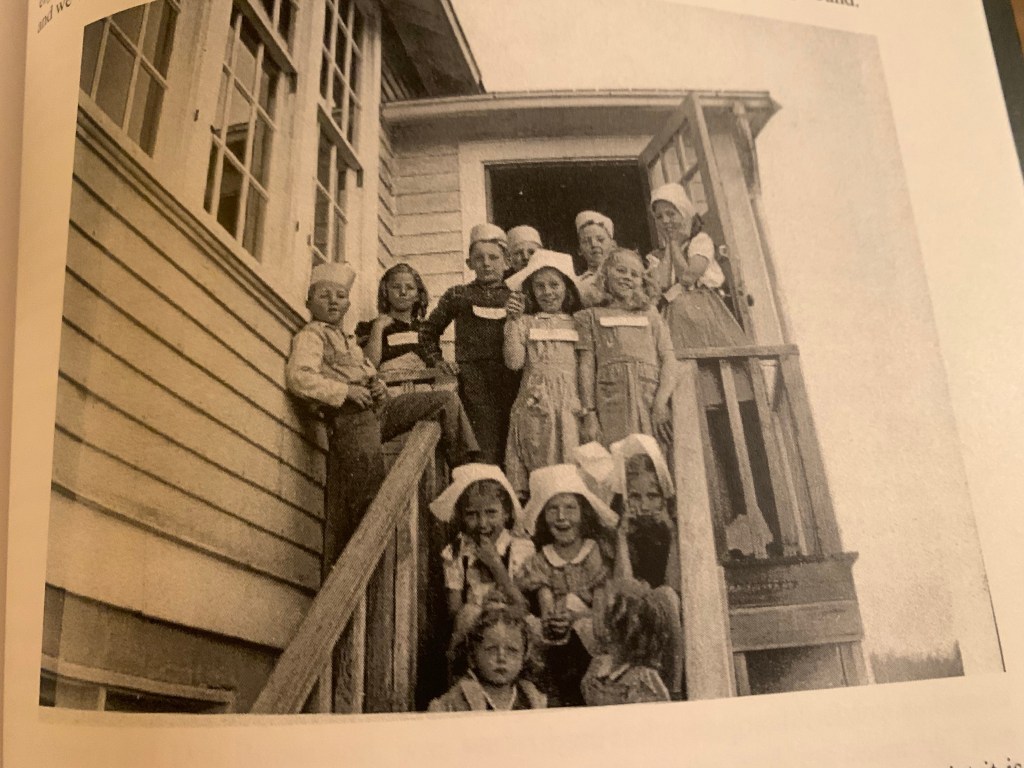
Mr. O’Brien did so much for the children and the social life in the district it is difficult to tell just how far reaching his influence really spread. He had been a sergeant major in the army, a scoutmaster of many years experience and had taken a course in drama. All these talents and experiences were put in action immediately and the students experienced the unaffected pleasure of discipline, responsibility, and a scope for their own create originality. The fame of the Jumping Pound Christmas concerts was so wide spread the community hall had crowds far beyond its seating capacity, standing room only. I remember one concert where one part was a quadrille on the stage by the students to the tune of a current favourite at the time “Buttons and Bows”. The crowd just went hilarious, stomped their feet, clapped their hands, and sang their loudest. Another time he used an Alberta artist’s talent of a play taken from the book “Johnnie Chinook” a local story. And it was a big success. He formed a Red Cross Society among the students, made them elect their own president and other officers in the correct parliamentary procedure. All this besides their regular schoolwork. And for the first time the students learned how to enjoy well organized sports at recess. Every so often the students would invite the parents to the school and entertain them by having them take part in spelling matches etc. We became involved in many of the students’ activities, especially helping with the concerts and enjoyed the social life to match. The annual school picnic was an elaborate affair where presentations were made to students graduating etc. All the speeches and work was done by the students themselves.

Mr. O’Brien would just stand in the background. But the results of his guidance were made manifest in so many ways. For a little one room rural school house the ultimate achievements of most of its graduates is quite impressive. Six ended up with a degree in education, one her R.N, one a B.A. LL.B., one a B.Sc. M.A., Ph.D and five were graduates of an agricultural college.

Standard
happiness

Edna’s Story 20 (FGK 137)

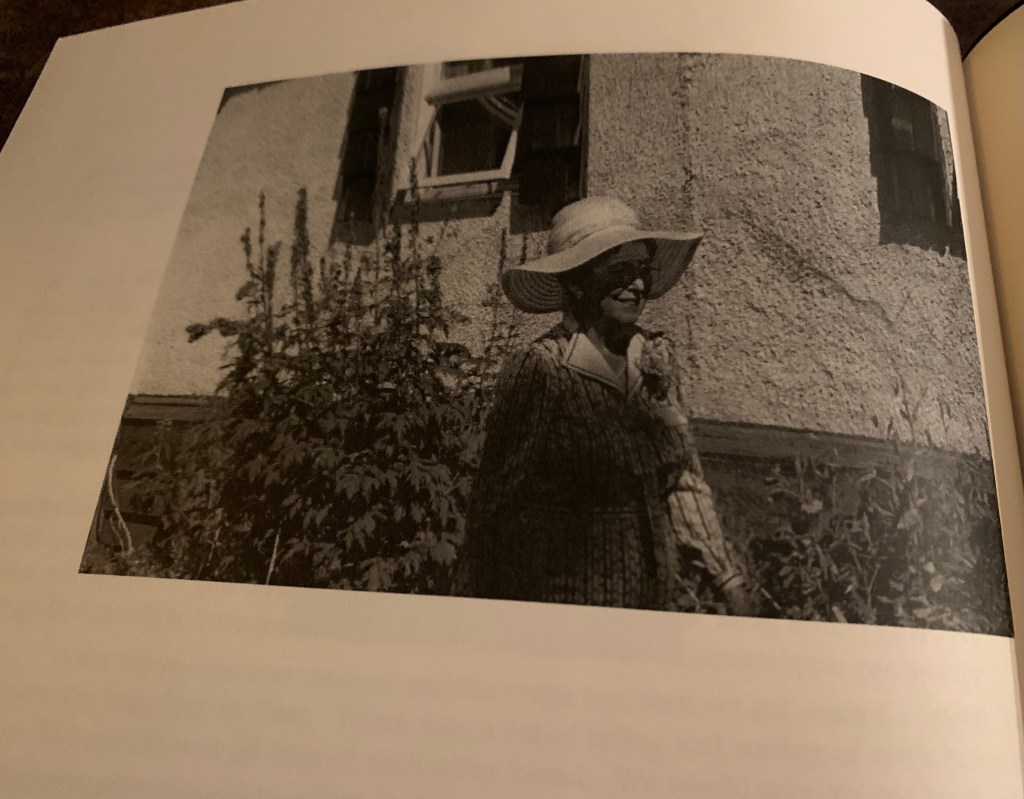
There are so few photos of mom before polio – I love seeing them. I do have to ask, as a kid who regularly got in to massive amounts of trouble from both Mom and Grandma for climbing things and leaving for day long horse rides without saying where I was going – why did I get in so much trouble since clearly this is a generational issue? One I have passed down to the next girl in our generational line as well (ok, as the parent of that one I can see how sometimes it can be a bit worrisome).

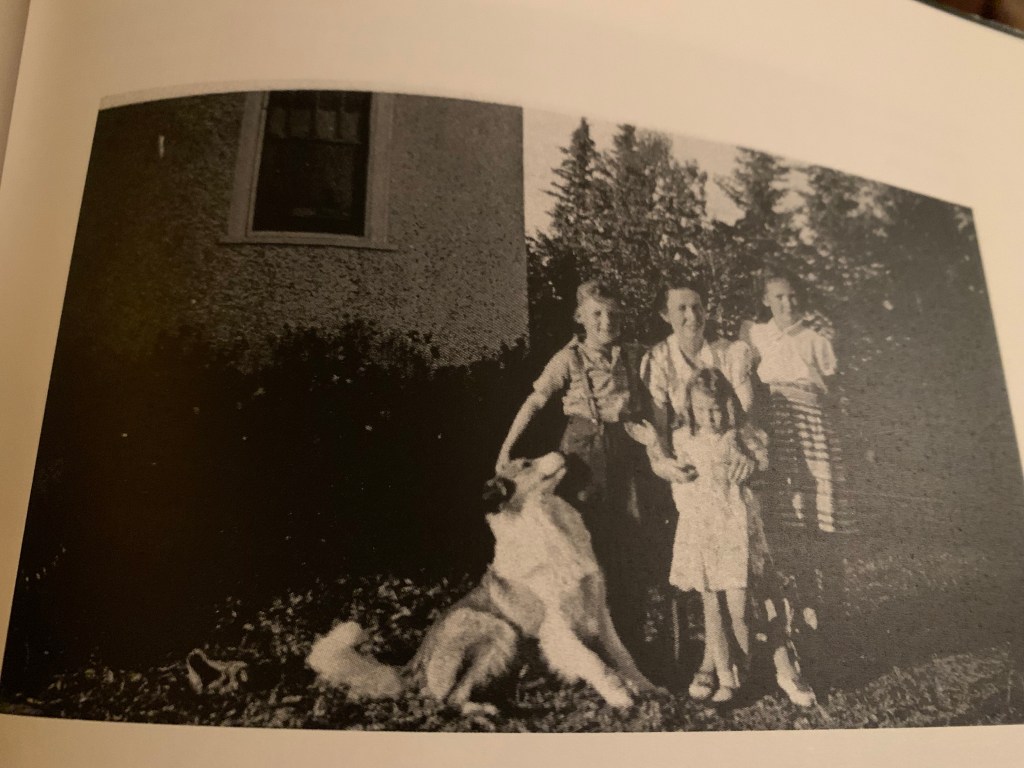
About 1943, Percy built a big new garage and near it a nice new bunkhouse. The garage has an upstairs in it so it is quite high. When he was shingling the roof, Marshall as usual was right beside him trying to help. They heard a little voice and looked around and there was three year old Margi at the top of the long ladder climbing onto the roof too. Marshall was nearest her so Percy told him to grab her and hold her until he got there. As soon as Marshall did, he got an awful scape on his hands. Margi fought to come onto the roof too. Poor old Robert stood at the foot of the ladder wringing his hands and crying “Oh my God” over and over. They got her down safely. Another time I checked to see where she was and could get an answer quite close but couldn’t see her. She was only two and a half years old then but had climbed to the top of one of my very tall trees she had her arm around it, standing there looking down at me. Another time I found her on the roof of Annie’s two story house. As I said before, Margi was an extremely lively child. One night when she was about two years old, we had a very busy day branding. That evening she was watching the boys put iodine etc on all the wounds from wrestling calves etc. Percy and Clarence had to go out to do some more riding after supper and after I got the kids to bed and to sleep (I thought), I also hit the hay and went sound asleep. When Percy came in, there was Margi sitting in the kitchen all by herself dabbing iodine on herself here and there and she also had the little aspirin bottle beside her with the top off. Our medicine cabinet was in a place where I had to climb on a chair and reach over the ridge to get into it. How she ever climbed up to it I’ll never know and I certainly put in a bad night worrying about her, but she was fine, thank goodness.

We decided to turn our lean to eating area into a kitchen as it was three steps down from our tiny kitchen and the steps proved very awkward. Mr. Mervin Wallace, the carpenter, came out and he built that kitchen with loving care. I was so proud of it, it was beautiful and quite convenient but could have been larger. it was all white and blue with accents of red here and there. It had a long low window in the west and I made cottage style curtains out of white and blue polka dot material with a wide border of white eyelet embroidery. By now I had a gas-served refrigerator. Mr. Wallace also built me a sun porch for my houseplants. From 3:30 on in the afternoon, I used to just wear a hole in that window watching for the kids to come riding out from the bush at Nicoll’s field a mile or so west of us. I would always have a dish of dessert or a bowl of soup waiting for them and would listen to them unload all the problems of the day, then all was forgotten and the real enjoyment of the day would begin for them. Each one to his or her liking, such as curling up with a good book to read or outside to play. The school was now called Jumping Pound School and it had the misfortune of having a succession of teachers such as a new one every few weeks for a while. It was all very hard on the children. We live only five miles from Brushy Ridge School where Mrs. Callaway, an exceptionally talented teacher, was teaching.

Standard
happiness

Edna’s Story 19 (FGK 136)

You know, I used to complain bitterly about walking the kids to the school bus in the dark and the cold. AND we were living so much further south than here (RI and VA) that we didn’t even have the Alberta cold to deal with. But here’s Grandma and Grandpa walking down the hill to help their kids cross the creek with their horses. Grandma was so gutsy. I kind of knew that when I was younger, but the older I get and especially now reading the letters and her stories- there didn’t seem to be anything that she was afraid of. Or at least nothing that she let stop her. That’s true of all of them – just getting to school took courage.

By 1943 when Marshall was old enough to start school, the Clemons Hill School was moved over to a spot south of Harry Copithorne’s – west of Bateman’s. Marshall rode a very fine old character of a horse named “Buck”. Buck could run very fast, could jump quite well, and was especially skilled in looking after himself, which is a good characteristic in a horse. By now Sheila was riding a beautiful little pinto called “Paint”. I remember one morning when the water was running over the ice in the creek and Paint was just terrified to step into the water knowing there was slippery ice underneath. Percy and I were down trying to get Paint to lead the way. We chose a narrow spot between the bank and the island in the creek but Paint still balked. Buck was getting impatient with it all. Finally I caught a glimpse of Buck out of the corner of my eye and he was all hunched up to jump. I yelled to Marshall to hang on just as Buck jumped from the bank to the island. Poor Marshall, I’ll swear he flew away up in the air as far as the reins would let him but seconds later he landed back in the saddle and led the way for Paint to follow across the creek. He and Buck had many escapades that first year at school.

One day when out robbing crows nests he was galloping across a muskeg and Buck stumbled and threw Marshall off onto a broken sliver of a willow. It cut such a gash over his eye and bled so much, the teacher sent someone up to Harry’s to phone me to come and get him right away. It was too muddy for me to get there by car. The men weren’t home. The only saddle horse available was one Chick Coolen had asked Clarence to break for him. It was in the barn and fortunately Clarence had given it a long ride the day before. I was very worried about being unable to ride it, but it didn’t buck when I saddled it and once I was on it I didn’t give it time to think about anything but go. Percy and Clarence came home shortly after and were very worried when they heard what I was riding. Marshall and I were heading home when we met them in a field, driving the Jeep truck. They sneaked up on my horse, grabbing it and ordered me off in no uncertain terms. Poor Marshall got little attention. We decided to doctor it ourselves, as this was the second time he had a wound like this and near the same spot. The other time he was trying to keep up to his dad walking across a corral that had been full of cattle and muddy the day before. The cattle tracks were frozen that cold morning and Marshall had both hands in his pockets and couldn’t save himself. We took him to a doctor and got several stitches in it. This time we teased him and said the doctor would likely only put a zipper in it. But it did leave a scar.

Standard
happiness

Edna’s Story 18 (FGK 135)

I remember Grandma telling the story of bringing the wild horses to the corral. I was always very firmly “team horse” and as I’ve gotten older and more things have changed I’m glad that we now have other ways that we can work with a horse to let us ride them rather than “breaking them”. However, given the time and the situation I’m not really sure what else there was to do. My little demon Shetland pony Tango, while he wasn’t a wild horse, also headed off to the fox farm after he finally attempted to kick Dad in the head – instead landing both evil little hooves on each shoulder. Apparently him trying to murder me on a daily basis while I rode him wasn’t quite enough – but the boot to the head was the straw that broke the camel’s back.

About the time I spoke of when I bought Sheila and Marshall sleds, we had what we call open? winters. In the fall it would rain, then freeze, and then rain again.

Those were the years when our range was infested with wild horses. We would haul blocks of salt up to Sibbald Park and other ideal areas to feed the cattle and the bands of wild horses would come down and drive the cattle away from the salt and also eat the cream of the crop of grass to be found there. Our men all rode bigger and stronger horses than in most districts because they needed a wonderfully strong and intelligent horse under them to be able to race across the muskeg, fallen timber, and badger holes without piling up. And they had to stand an all day ride.

The fall when the ice formed over the pasture was hard on the wild horses. Our men decided to put new shoes on their mounts and go after those slicks and clear the range of them. They were successful in rounding up several hundred and bringing them down to the big corral at the Star, then here. The fact that the saddle horses were shod and the wild ones weren’t was a great advantage. But no one could match the cunning tricks of escape those creatures knew. When they got them to the Star corral they had to rope the leaders of each band of horses. They had to put several ropes on it to hold it and get it down. Then they put a rope through its mouth and under its jaw with a tourniquet in it and twist hard enough to hurt enough to keep the pony’s mind on fighting that and only that. They turned them out and headed for home. What a ride that was! Fences meant nothing to that herd of horses. Only the solid log corrals would hold them. I’ll never know how they got them here but they did. I went out to the corral to see them and have regretted ever since that I didn’t take a picture. They were small and scrubby little horses, their hooves were long and turned up. Their mane dragged in long ratty masses to the ground and so did their tails. When anyone would dare step into the corral they would charge him with their mouthes open to bite and would wheel and kick so fast you could hardly see them. Just a long-haired shaggy bundle of dynamite.

After getting them here, then and only then did the men start to wonder what they would do with them. I can tell you that I was kept busy. for the next few days it was not unusual to have dozens of extra men for meals. The government men were here to see that everything was legal. There were scores of Indians and whites who tried to claim what their thought might be their horses now they were safely available. Nearly all were slicks (no brand) and just had to be turned over to the government to be sold as fox meat (fox farms were popular then). But getting them anywhere was a major problem for any but the most skilled horsemen. When all the dirt settled and they were gone, our men nearly sat down and cried when they saw the miles of broken fences to be repaired. The range was a better place for cattle for the next few years.

Clarence did manipulate another wild horse drive a few years later. His was a sheer case of having to outwit them. He built a trap back there somewhere and managed to bring down a fair number. A few were quite good looking horses and he was at the age when he rode broncs, so he had fun trying to ride some. His friend Chet Baldwin nearly got killed out in our corral trying to ride them too. So the fun cooled off.

Standard
happiness

Edna’s Story 17 (FGK 134)

I read these stories and I have to ask – If the generations before us knew what little asshats Shetland ponies were, whey did they make us ride them??? Aren’t we supposed to be making life easier for the generations that follow us??? I suppose it must have been an early method of toughening us up haha. Here’s A link to a write up about that war prison camp Grandma mentions.

One fall a cattle buyer who bought our steers, gave Marshall a Shetland pony when he was about four years old. I have never liked Shetland ponies but Marshall was very happy and wanted to be on it all the time. One fine afternoon when I decided to ride across the creek and get the milk cows in, I let Marshall ride his pony and come with me. My horse stopped half way across the creek to have a drink and I looked back to see how Marshall was doing. Clarence was building a fence nearby. The Shetland had stopped at the edge of a deep pool to have a drink too, and I could see both Marshall and the saddle were slowly sliding over his head. I called to Clarence just about the time Marshall plopped into the cold water. The dumb Shetland sat on the bank like a dog sits down and it had the saddle on its head like a hat. Clarence and I both headed to the rescue but things happened too fast for us. Marshall no sooner hit the water when he bounced out again and was in a howling rage. It all looked so comical. Clarence and I just went into helpless laughter which only made Marshall furious. He walked home in a huff and we were so weak from laughing at that crazy looking pony we could hardly get the saddle off. Later that pony ran away with Sheila one day and threw her onto a big rock and broke her elbow.

My father had sold his farm and rented an apartment in Calgary. While Sheila was in the hospital with her broken arm – it had to be broken a second time to get it right – my Dad visited her every day and read stories to her. He also helped Percy cut crop a few times when help was scarce. He loved the children dearly and always called Margi “Peggie”. The last day he visited us in November 1942, Marshall and Margi clung to his legs and begged him to stay but he had two companions with him and returned to town. That night he died of a heart attack.

As the war advanced, our lack of manpower became a real problem. The French Canadians came to work in the harvest fields but were unused to our ways. One year we had a harvest crew of soldiers and they were very good. The Indians helped us a lot as long as the work wasn’t too steady, and we always liked working with them. During the war there was a war prison camp up at Kananaskis and every now and then one or two would escape and we were about the closest area of civilization. We were nervous but usually the persons were quite thankful to be captured again after a night or two in this rugged country.

Standard
happiness

Edna‘s Story 16 (FGK 133)

I’m starting to understand why when we were young, my cousin and I didn’t get into more trouble the time we were camping and accidentally sunk the Suburban into the creek. Not to say we were praised for it, and she may have been in more trouble than I was, but I remember being terrified of how my uncle would respond when we came walking all the way home from the campsite the next morning. He just went and got the tractor and pulled the vehicle out. Then we all agreed to never mention it again – except here I am mentioning it. 38 years later (you can do the math to figure out how old we were at the time) it’s still kinda funny.

On Friday afternoons I used to ride over and teach a short Sunday School class. Central United Church gave us some of their old hymn books and Marge led the singing.

I gave Sheila and Marshall each a nice sleigh for Christmas and strange to say we didn’t have enough snow for the next two years to get sledding.

Clemons Hill School often heard small social gatherings for entertainment. I remember one box social our young people went there and we had a lot of laughs over the almost innocent mix up in the identity of the boxes. The first admirers bid up hard earned money then got the wrong box. Sometimes our young folks would get together and drive in their jalopies to the dances at Bragg Creek. They had to drive through the river to get there and one night one car stalled in midstream. The boys gallantly carried the girls ashore but complained bitterly about the hefty ones. We would hear all about those events the next night at supper time, and that way shared in their entertainment.

One night when they were going to a show in Calgary they had a flat tire and no jack. They tossed a coin to see who would go to a nearby farmhouse to borrow one. The boy who had to go was not in a very pleasant mood to begin with but he came running back with a big dog after him and the whole seat of his pants torn out. The others in the car laughed so hearty it didn’t improve his mood for a week or more. Another time one of the boys who owned an old Model-T Ford coup was driving to a dance in Cochrane one dark night and one of Edge’s black bulls was sleeping on the road. Bill couldn’t see it and hit its rear end just as it was getting up. It put his radiator just about in his lap. Bill had such a humorous way of talking he kept us all in laughter listening to his escapades. He went all through the Blitz and Holland invasions getting into scrapes like that and is still talking about them. There was such a gang working here and at the neighbours all the time, but made much of their own fun.

Standard
happiness

Edna’s story 14 (FGK 131)

Our water here still comes up from the well by the creek to the old house (Annie’s house mentioned here) and then across to Grandma’s house (where I am), then over to the cottage. It also is the water source for the barn and for my cousin’s place.

Chapter 3

The War Years

We finally dug a ditch to Annie’s house and go the water in 1938. Just a cold tap in the kitchen and a slop bucket beside the sink for a year or so. Then we dug a septic tank east of the house and put in bathroom fixtures and hot and cold water. That lightened the workload but we were still very, very crowded, especially at meal times. Finally the men had time to dismantle an old house in the area and built a lean-to over the kitchen door where we put a big table and used it as a dining room, down three steps from the kitchen. About then we got a battery-set radio. It was wonderful to get the world news every day, but becoming very disturbing to hear it. Then one day in the fall of 1939, the news that we were all dreading to hear came over the air. We were at war! It really shook us more than we ever expected it to. The happy carefree talk at mealtime was changed a lot. The whole outlook of our operation as a ranch was changed. Two of the men joined up and went overseas. From then on we just hired older men and the Indians helped us when we needed extras. The government urged us to raise hogs and grow as much food as we possibly could. I began to buy my chicks and turkey poults from the hatchery and raised larger flocks of poultry. Before this we had so few eggs all winter I always put the summer surplus eggs in water glass to preserve them for use all winter. A rare treat was to have fresh eggs for breakfast Christmas morning.

Percy decided to go into hogs properly. He built a prescribed round brooding house with a stone in the centre and separate pens out from it. It really was a neat setup; it housed ten brood sows. We had a little mill run by the old John Deere tractor with lugs on it, Model D, and chopped our own grain. Those pigs were an awful amount of work; extra chores before and after the day’s work. The men fenced an area down to the creek for them to range on but every now and then they would get out. I remember a couple of younger boys on the crew just couldn’t sleep in the bunkhouse because the two older ones snored so loud. They said one snored so loud they raised the roof and then the other one let down again. So these boys took their blankets and slept out on the hillside on a fine night. Once they were awakened by a big old sow rooting against them. The snorers sure kidded them after that.

When the ten sows were furrowing someone had to be on the job day and night. One young sow went mad and tried to destroy all her little family. She was frothing at the mouth and tossing the poor little creatures in all directions when Percy went in. He picked up three that were still alive and brought them into the house to see what I could do for them. Two just lay still and groaned but one had a large triangular rip in its side and almost two feet of entrails hanging out. It was squealing quite lively. I got a needle and thread and wound the intestines around my fingers and carefully tucked them in and swerved it up and fed it warm milk. I kept it in a box in the kitchen for a few days, the other two died. Finally it got too lively so we gave it to a gentle sow who could handle one more. That little pig grew up and raised two families of her own before we sold her, but she always had a funny hollow in one side.

Standard
happiness

Edna’s Story 13 (FGK 130)

I don’t remember Grandpa’s legendary sneezes, but Mom used to tell stories about how epic they were. It has become a family competition with me and the kids to see who can best carry on that tradition and I’m pretty sure some of our sneezes shake the very foundation of the house.

Percy always sneezes terribly loud, you can almost hear him a mile away. He often came to the end of his patience trying to teach the junior rake boy how and where to drive his rake. One day when the boy was in the wrong place away across the field, Percy called him into the stack and gave him a good lecture and sent him off to where he was supposed to be. He just got there when Percy sneezed. The poor kid came galloping back to the stack thinking he had been called in for another lecture. The men often laughed over that, tired and all as they were when they got in at night, they had many laughs over the supper table.

In the evenings, Percy repaired all the breakdowns and the mower men sharpened their knives either evenings or before breakfast. Our crew hauled the XC hay valley too. That wild prairie grass was very nutritious, we were always able to winter our cattle on it without any supplements. We could even winter our calves on it without feeding them any grain.

Standard