happiness

Pigs Living High on the Cow – Percy’s version of the 1936 Fire

It’s funny how the same situation can elicit such different recollections – here’s Grandpa’s version of the story of the fire. I have previously posted Grandma’s version here and another version here, as well as some photos here.

You’ll notice there is no mention of Grandma trying to outrun the fire in her car with her toddler and her baby bump. It is, though, a really good description of how it must have felt for him, and all of them, after the fire when they were trying to figure out how to feed and care for their cattle.

We had serious droughts which created feed shortages but the worst situation I experienced was in the fall of 1936 when a disastrous fire burned all our feed and most of the pastures. That evening when everything was burned and things looked hopeless, Ken Coppock, Sec. Manager of the Western Stock Growers paid me a visit and told me to come and see him as he would help to figure out a way out of this predicament. At this time, there was a lot of straw stack, some three and four years old up in the Olds district. Ken contacted a man up there for me who acquired enough straw to winter what cows I had to get through the winter. The government was shipping cattle at the time free of charge from southern Alberta which was dried out, and so Ken got me on the band wagon as well. There was some losses, a lot of defending on what kind of a farmer was looking after the cattle. There were about five hundred or more head and these had to be placed in small lots around the country at different farms. One place in particular, the cattle did not do well because they were not getting enough water. Roads were blocked for a couple of weeks and I was unable to check this particular herd until several cows died, which were then hauled up to the pigs. Instead of cows living high on the hog, the hogs were living high on the cows.

It was a happy day the following spring when I trailed them home from Cochrane. It took some of them longer than others to make the trip, but they sure knew their way home.

Standard
happiness

The Police were waiting for me (a Percy story)

I have discovered Grandpa’s written history. In his handwriting, which is some of the most beautiful handwriting (I’ve enclosed a sample at the bottom of this post.) I am presently reading/transcribing his description of how he built the barn that still is used here today, but this little story came right before and I quite enjoyed it.

Imagine driving cattle from Jumping Pound into Calgary and down Macleod Trail these days? Even back then, what a long ride!

Every fall we would ship our steers from Cochrane to wherever their destination was. These were usually three year old. Everything would be nice and quiet until we came to the bridge that crosses the Bow River. There was always trouble as they refused for a long time before deciding to go on the bridge. One year they absolutely refused and swam across below the bridge. The buyer was a tight fisted character and when we corralled them at the stockyards he accused me of watering them before they were weighed.

During the thirties when prices were low we sold to a feeder in Calgary and to save freight charges we trailed the steers to Calgary. Mr. W. Mackie had a feedlot in East Calgary close by the government elevators. He sent a drover Bert Bishop out to meet us on the outskirts of the city and steer us through the city to the feedlot. The cattle were getting more and more excited as we neared the residential districts and I remember Bert Bishop saying that all that needs to happen now is some lady comes out and shake her tablecloth. We crossed them on the bridge at Elbow Park and when turning the corner to approach the bridge there was a new house with newly made lawn and nice rope fence around it. We got the first few head around alright but those following up cut across the corner and what a mess they made of that lawn and fence.

The McLeod Trail was the next hurdle but we eventually got to the feedlot in good time. Upon arriving, Mr Mackie was waiting for us and also a policeman. Mr Mackie said the Police were waiting for me and I said I was not a bit surprised. However, he was just a personal friend. The occupants of the nice lawn etc must have been away at the time because I never did hear from them.

Standard
happiness

A History in Photos 26 (FGK 183)

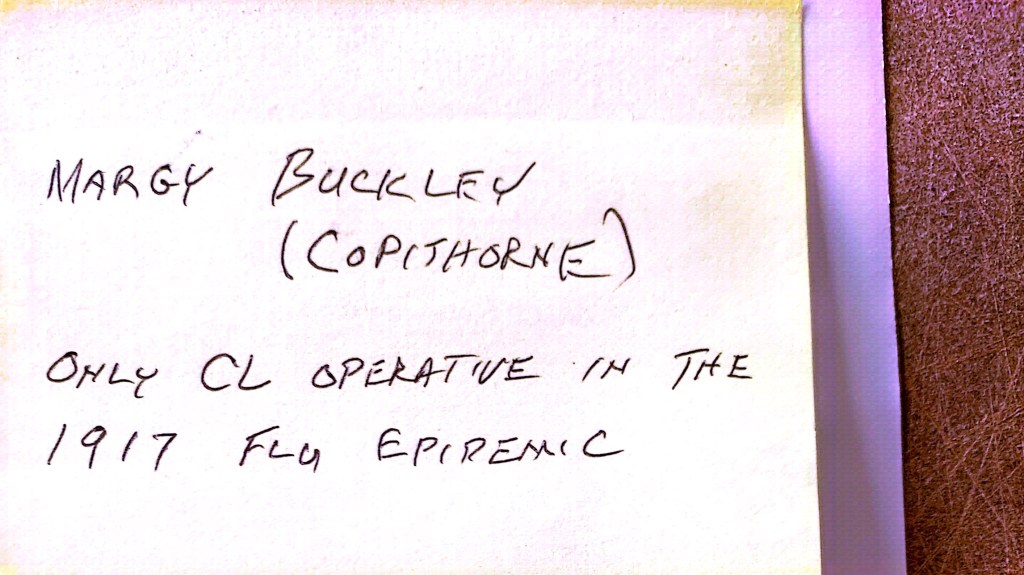
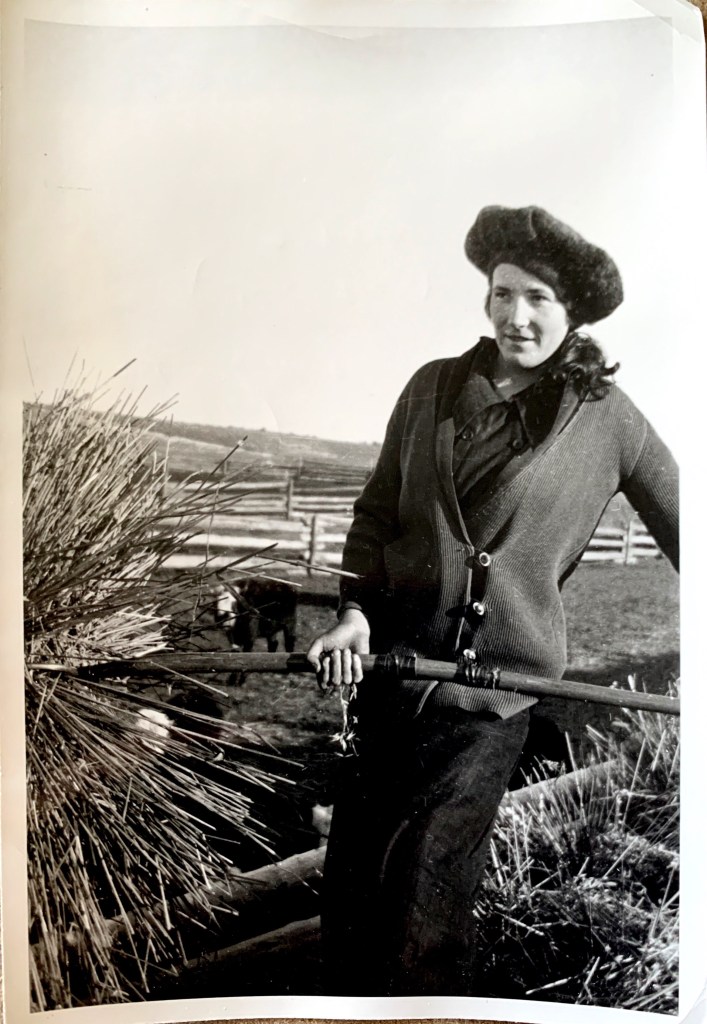
How fantastic is this first photo? I know I’ve seen it in other publications, and probably read the story behind it, but I’d forgotten until my uncle told it again at Christmas. Margy Buckley – the only person left standing during the 1918 flu pandemic. There she is out feeding cows and looking more stylish than I will look at any point today.

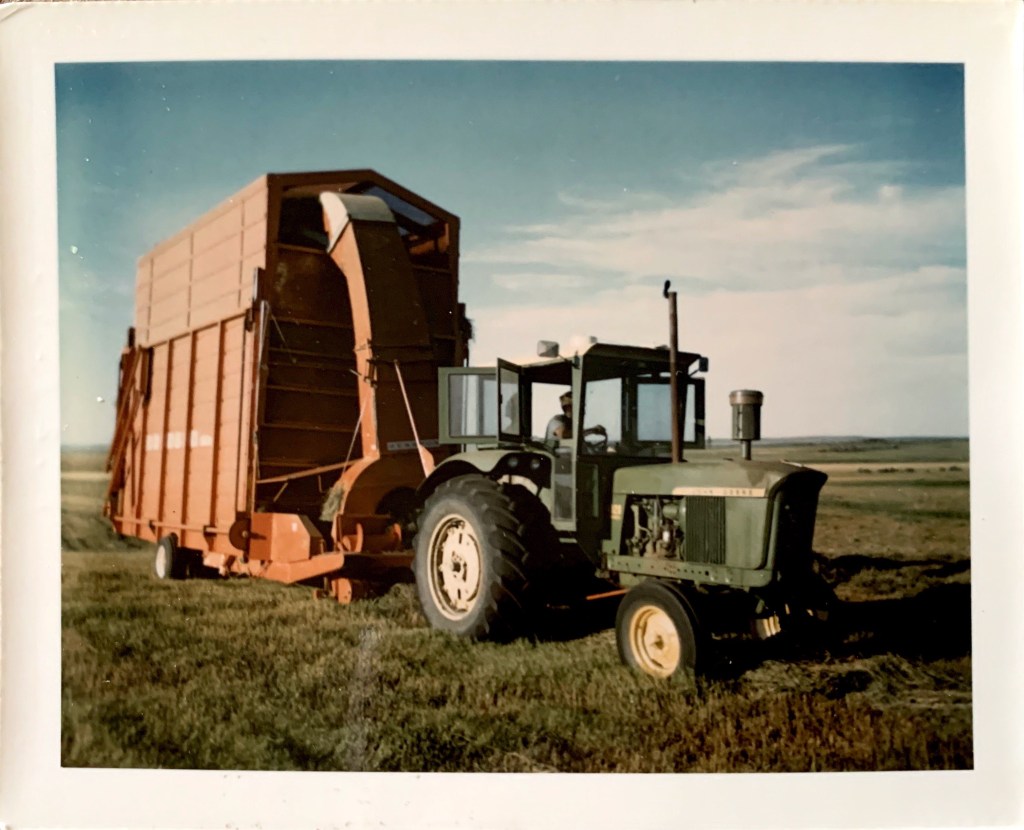
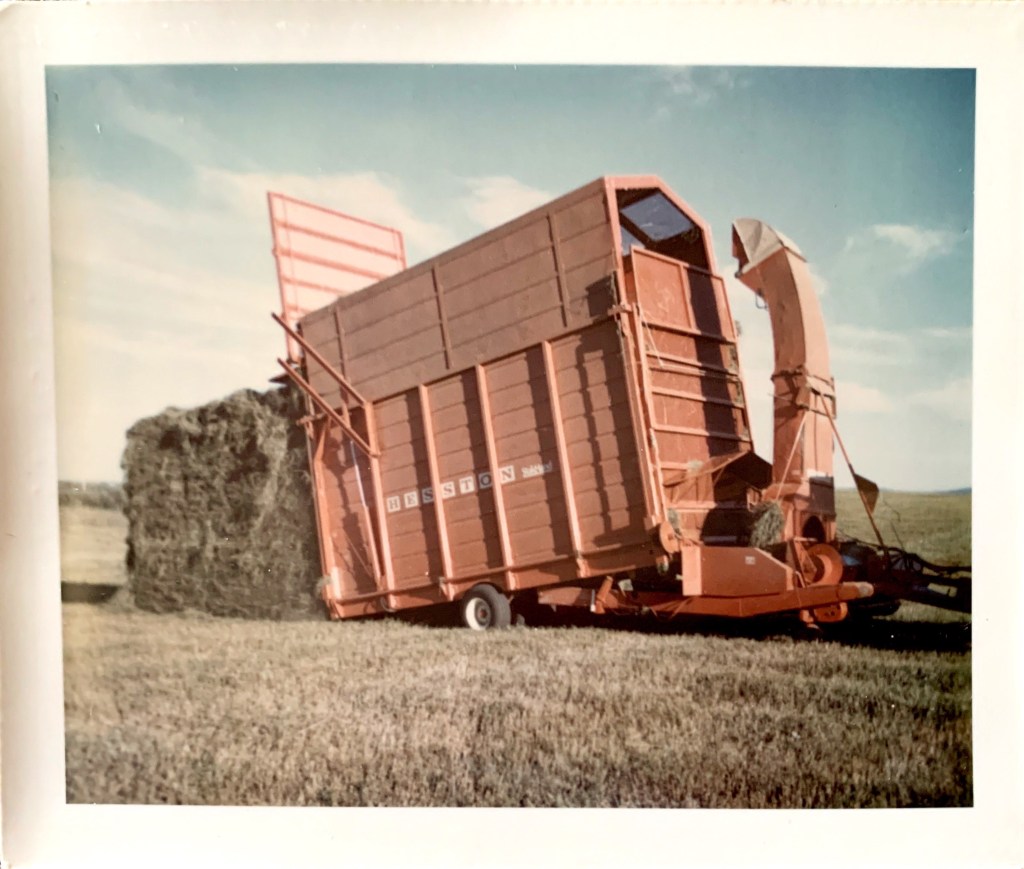
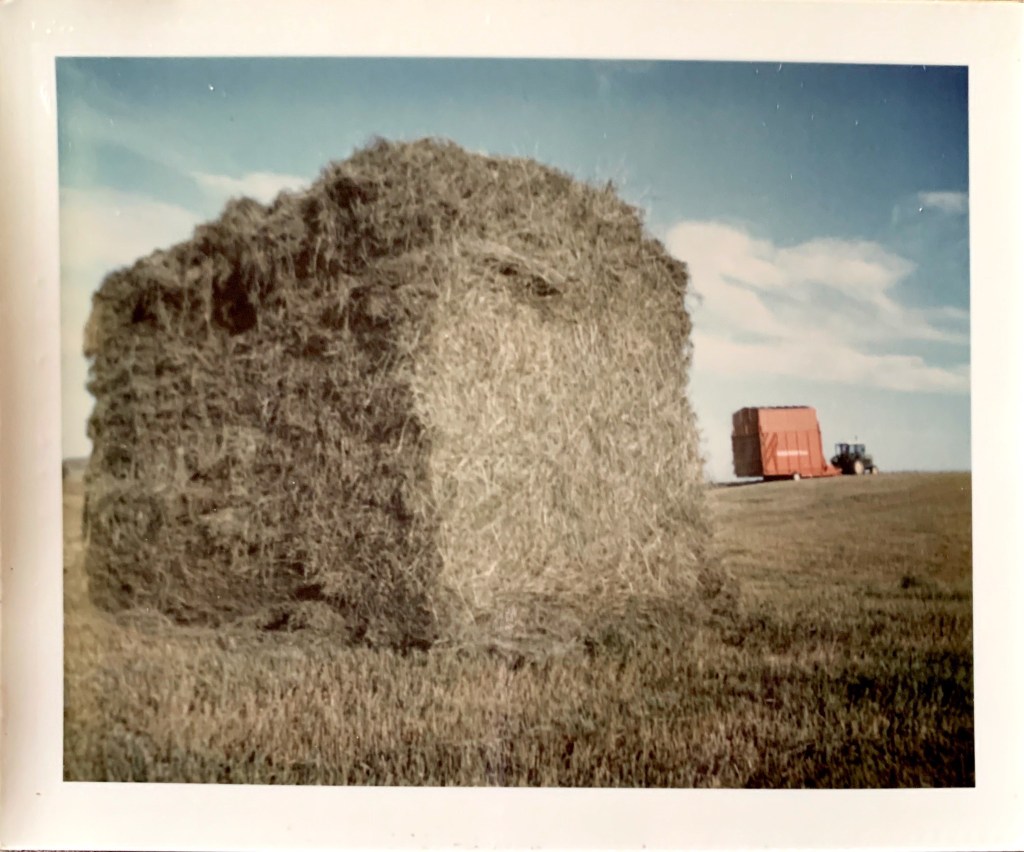
Remember the summer Uncle Marshall fell off the bailer and broke both his hands? As a kid these things seemed huge and I couldn’t believe he fell off one- as an adult they still look gigantic and I can’t even imagine what that fall must have been like. There’s a lot to be said for the inner strength and toughness that one needs to be a rancher.
Standard
happiness

A History in Photos 18 (FGK 175)

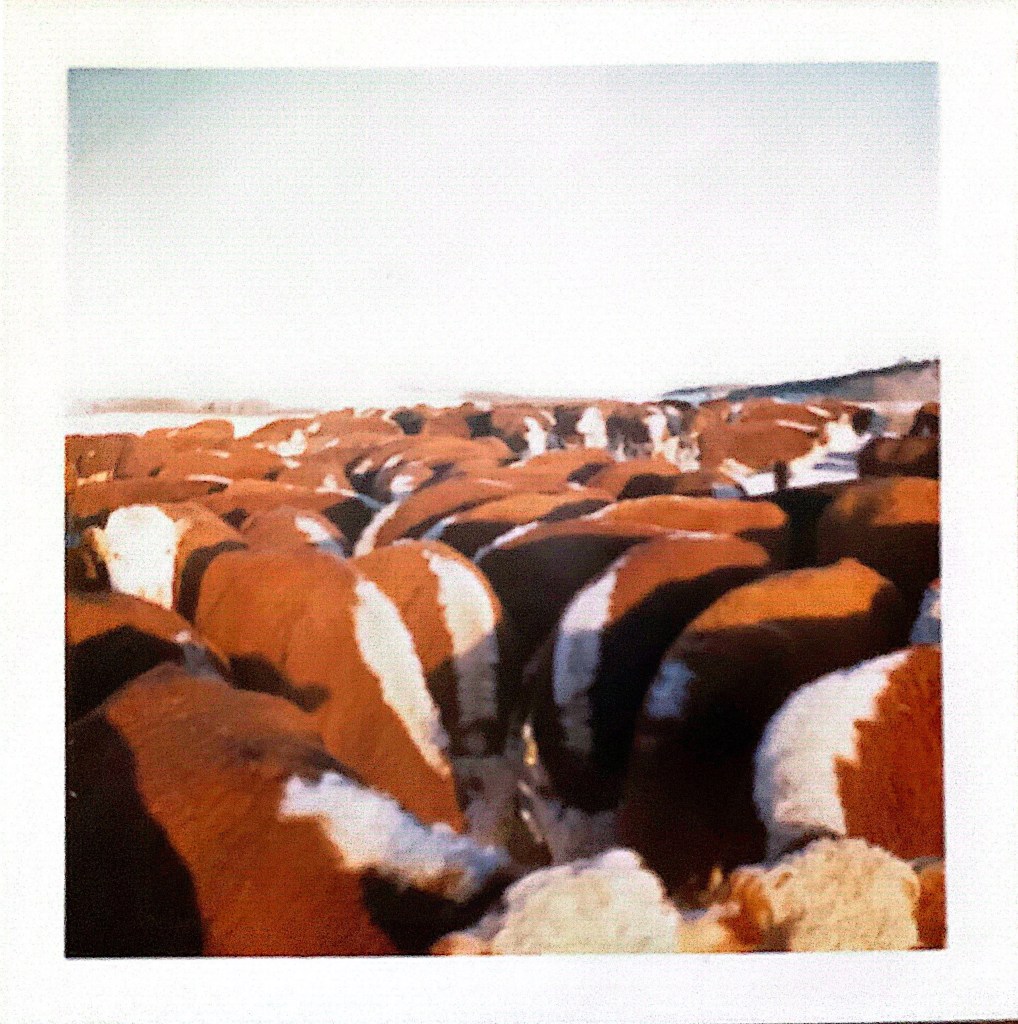
Cows!
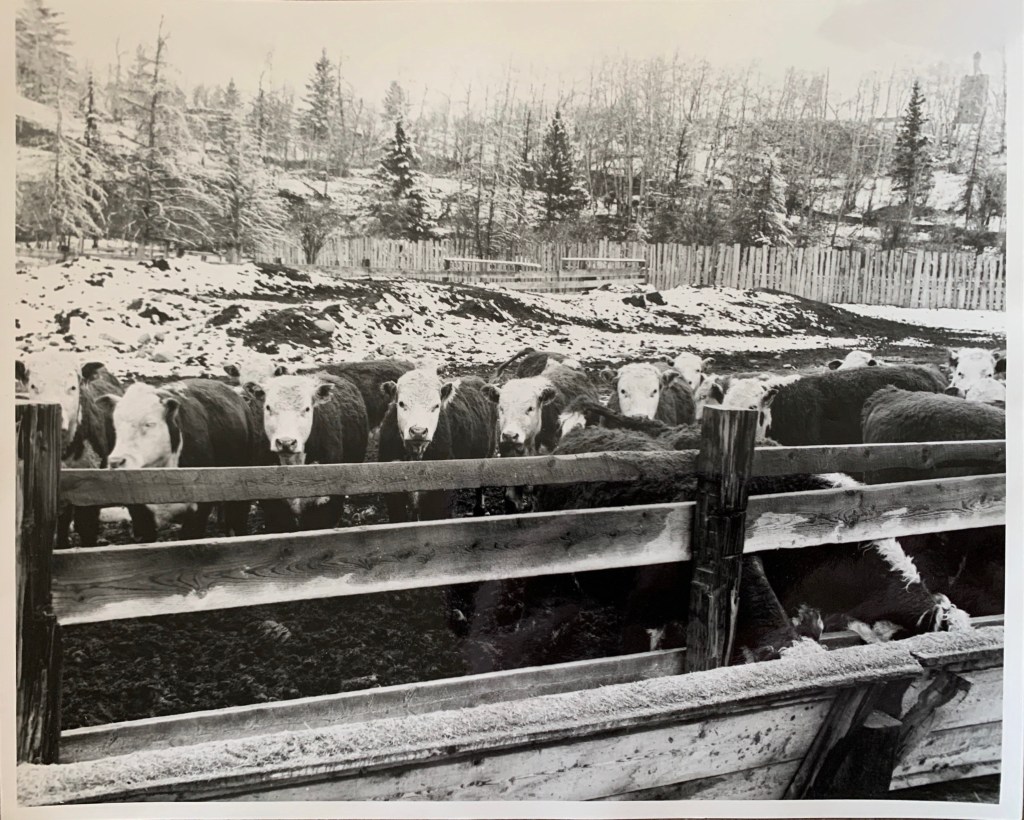
The feedlot at Marshall’s
More cows!
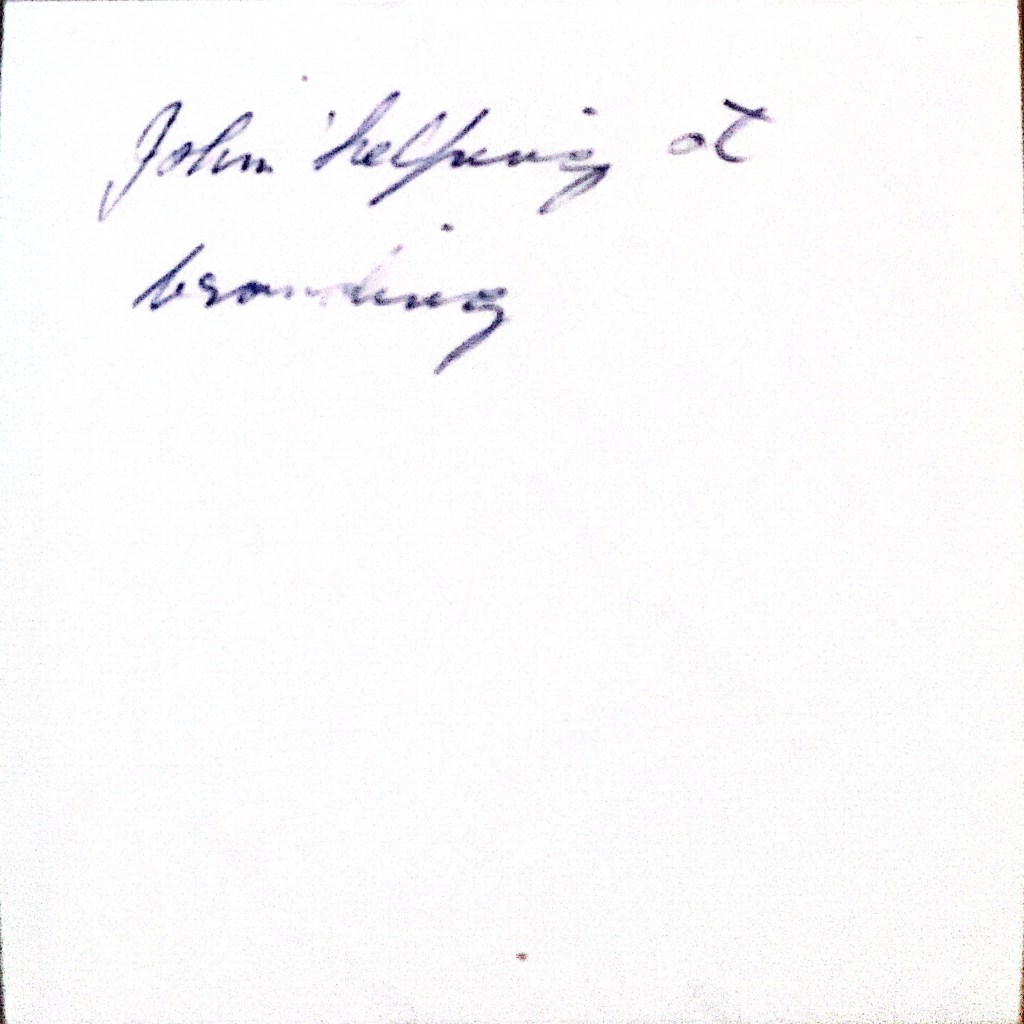
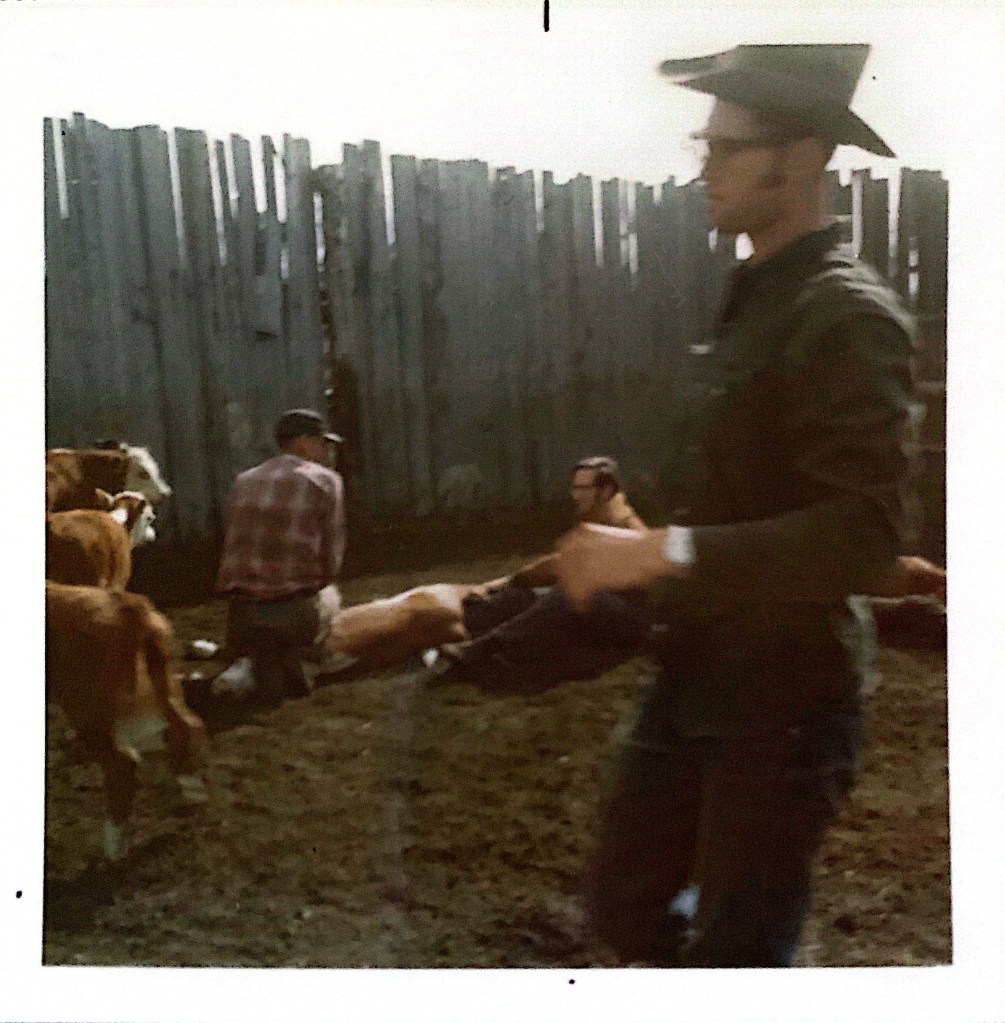
I wasn’t sure if the John Grandma referred to here is Dad. If it was and if she wrote “John ‘helping’ at branding” with the air quotes – I’d just like to say – nice shade Grandma. Perhaps they are just ink spots, it’s another John, and I don’t see my dad in this photo at all.
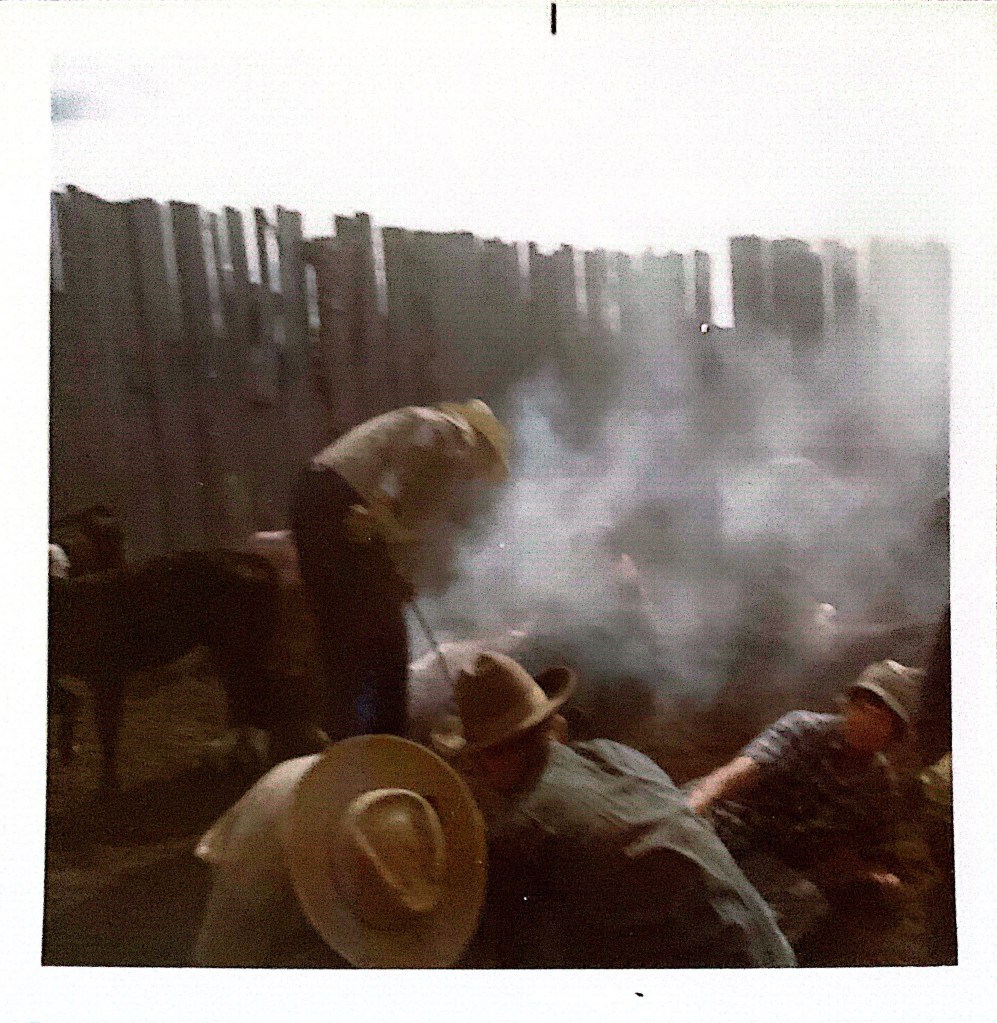
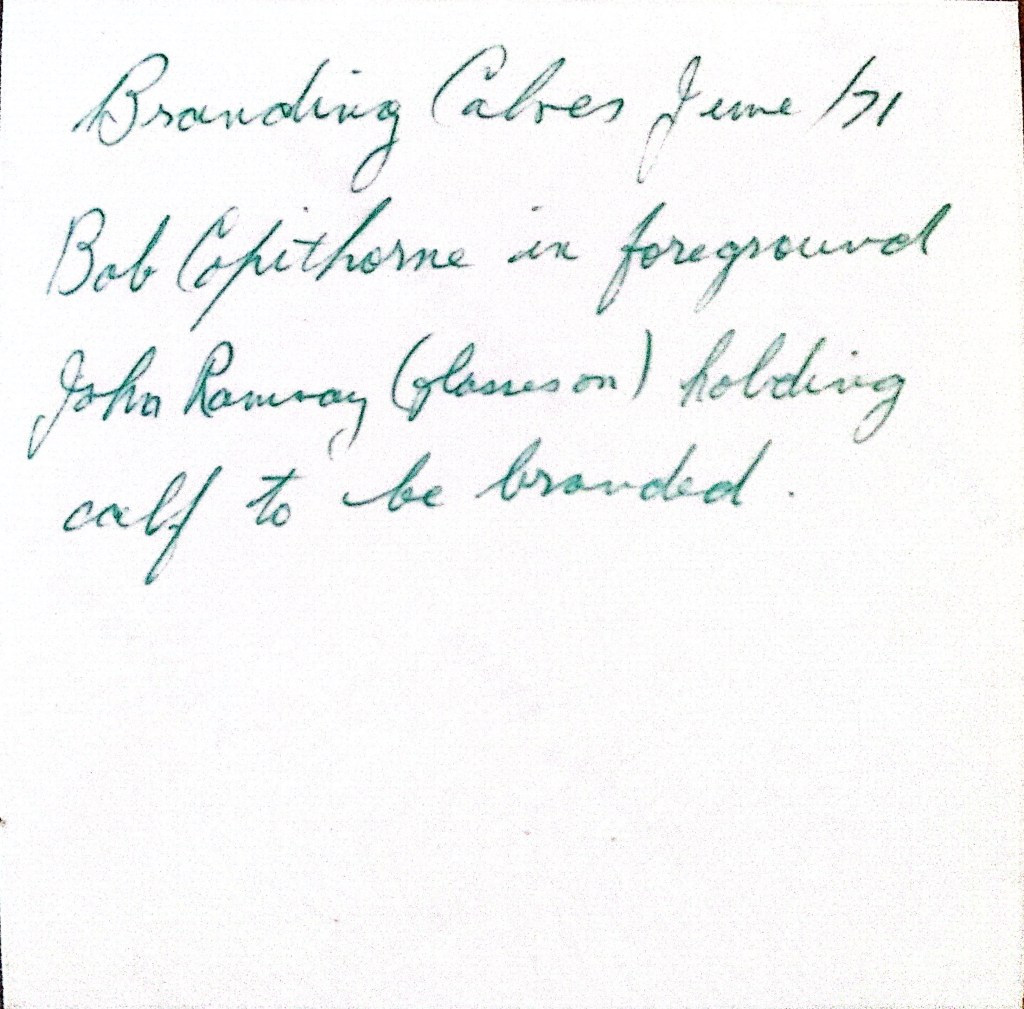
This photo has Dad in it. He didn’t help with this sort of thing much – between being not a rancher and having allergies to all things ranching (animals, smoke, hay..) he could only do this in small doses. Anyway….. Branding calves June/71. Bob Copithorne in foreground. John Ramsay (Glasses on) holding calf to be branded.
Ken Eklund
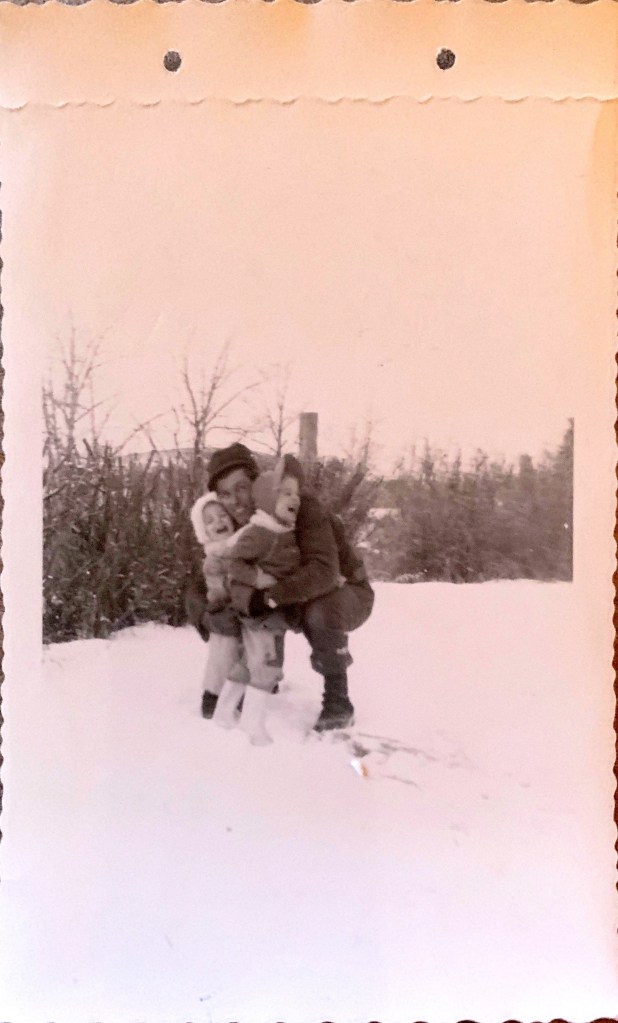
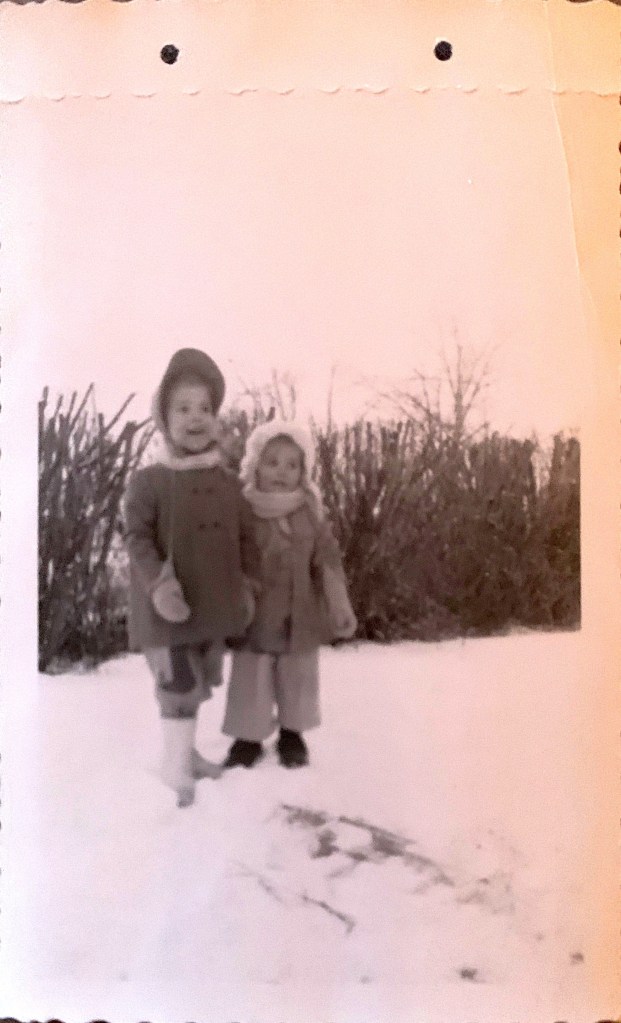
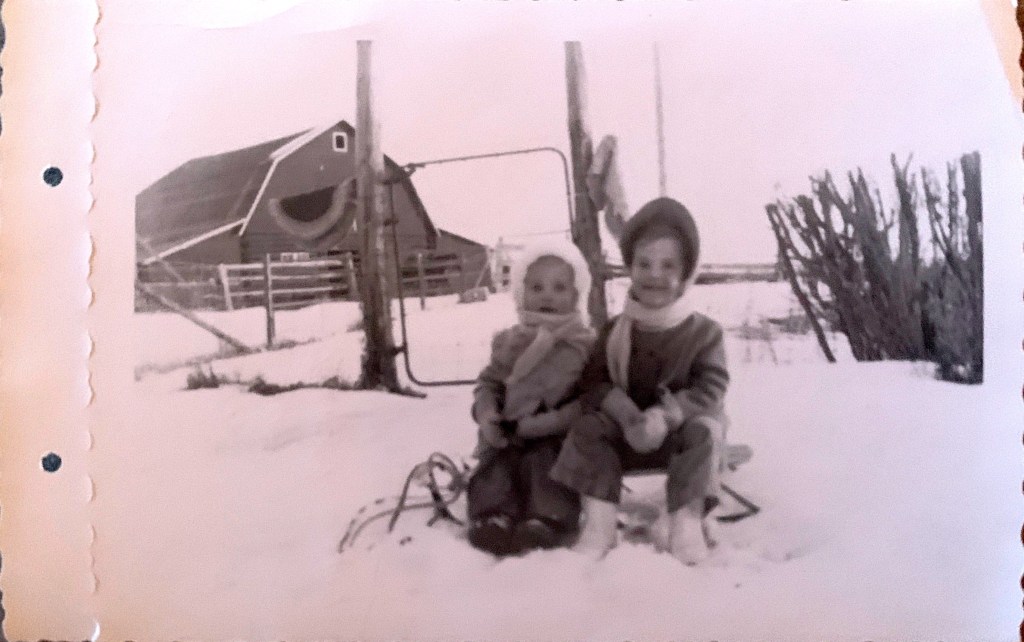
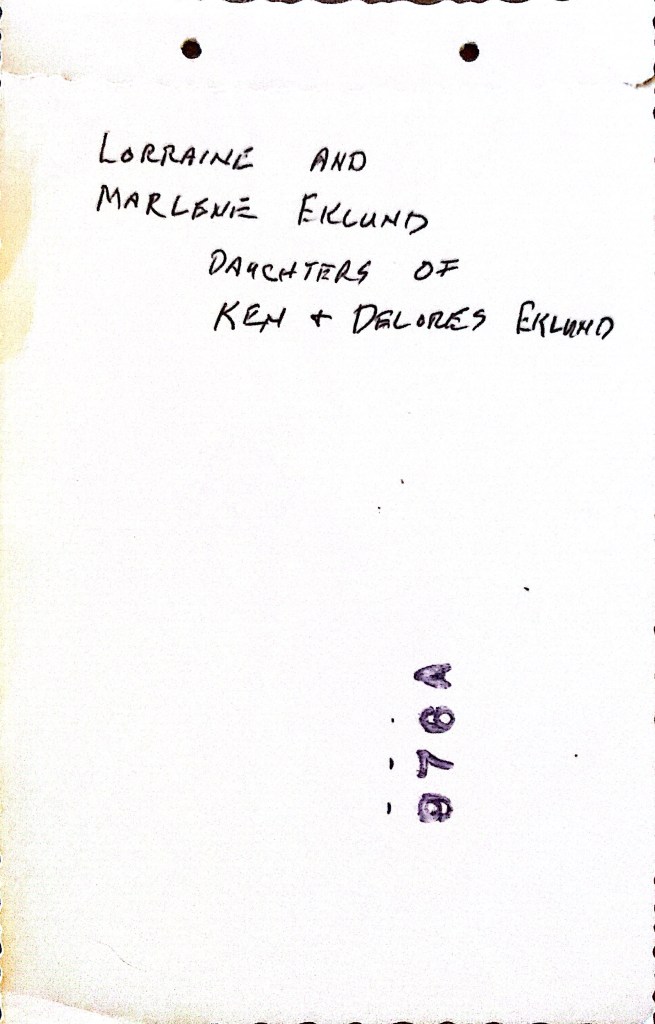
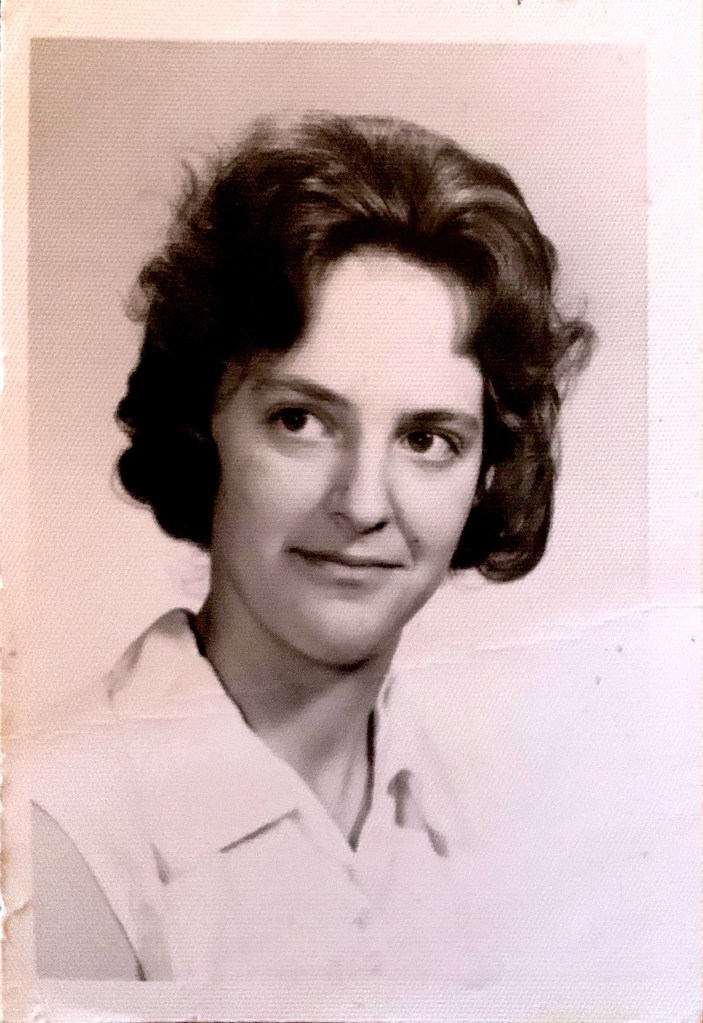
Lorraine and Marlene Eklund. Daughters of Ken and Delores Eklund.
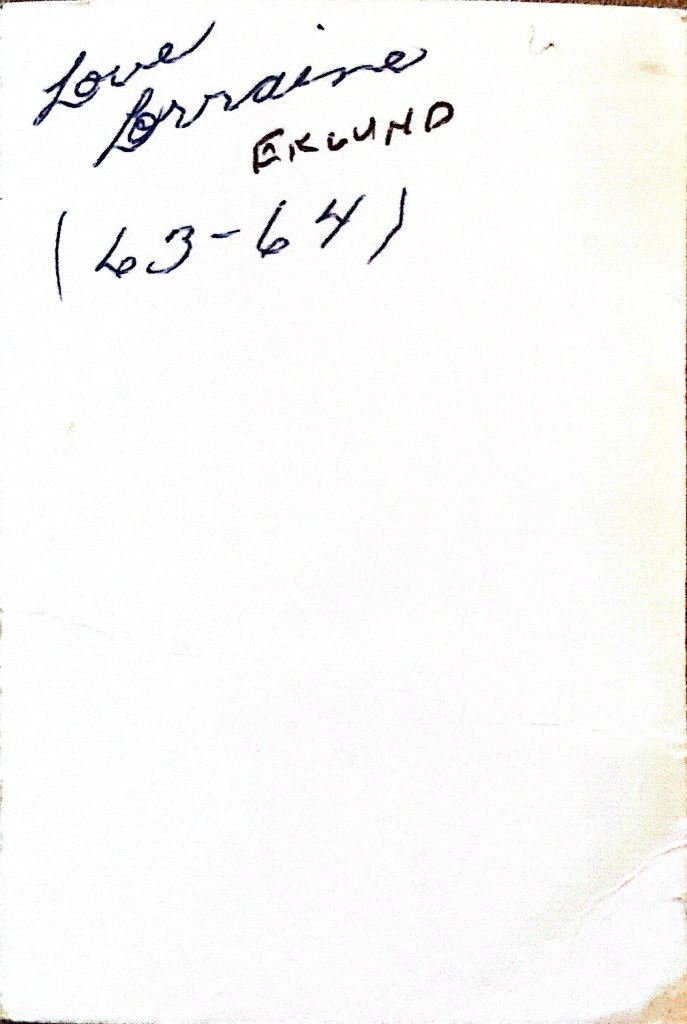
Lorraine Eklund 63-64
Standard
happiness

A History in Photos 6 (FGK 163)

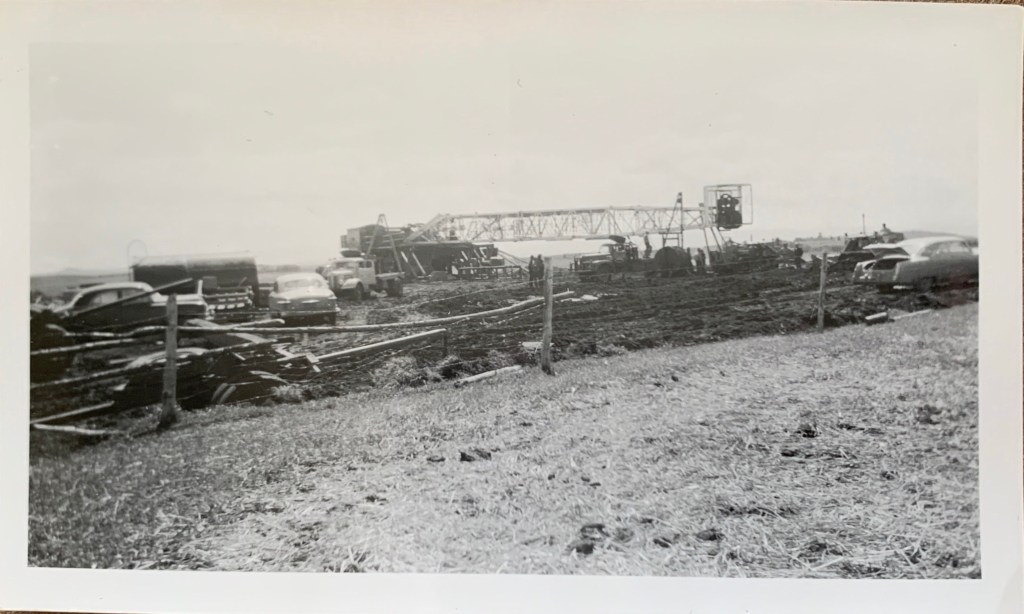
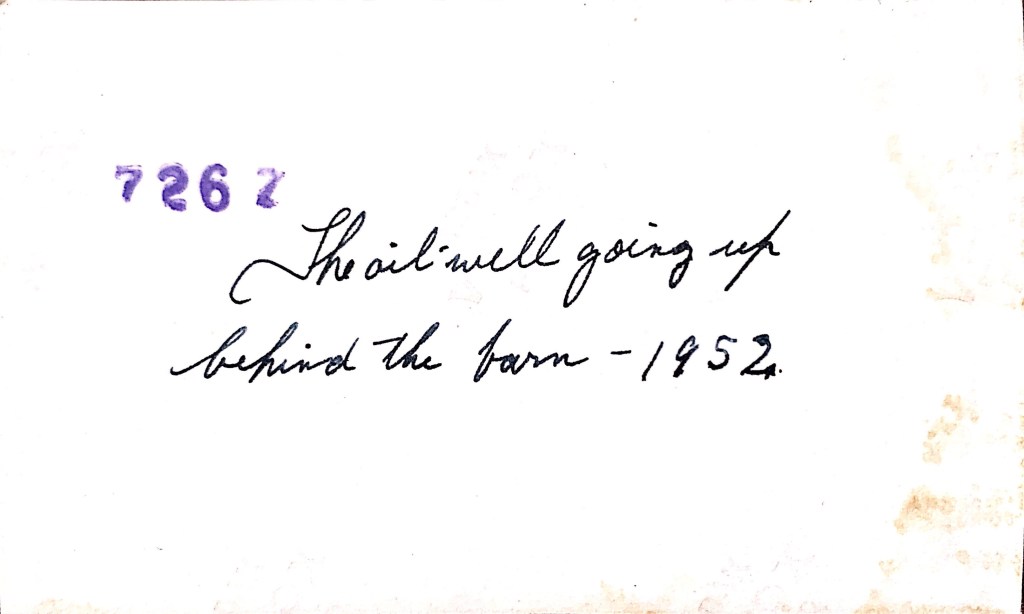
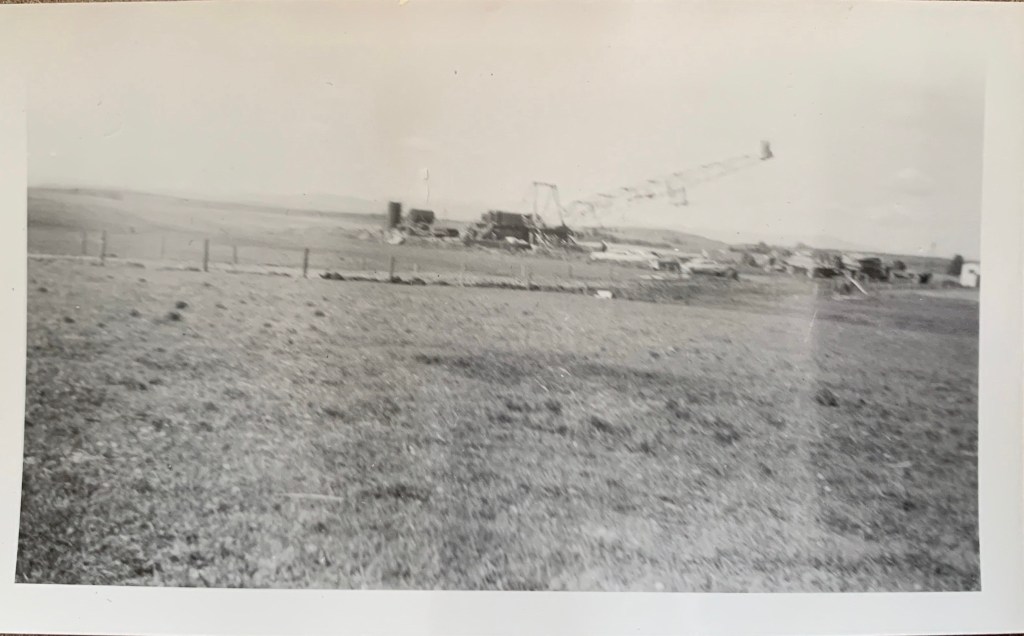
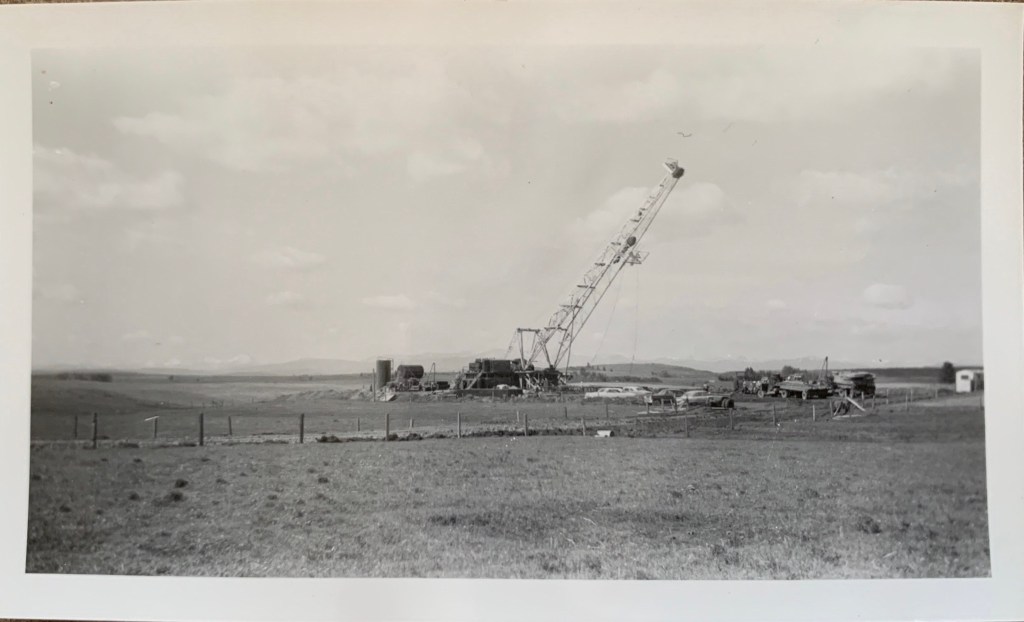
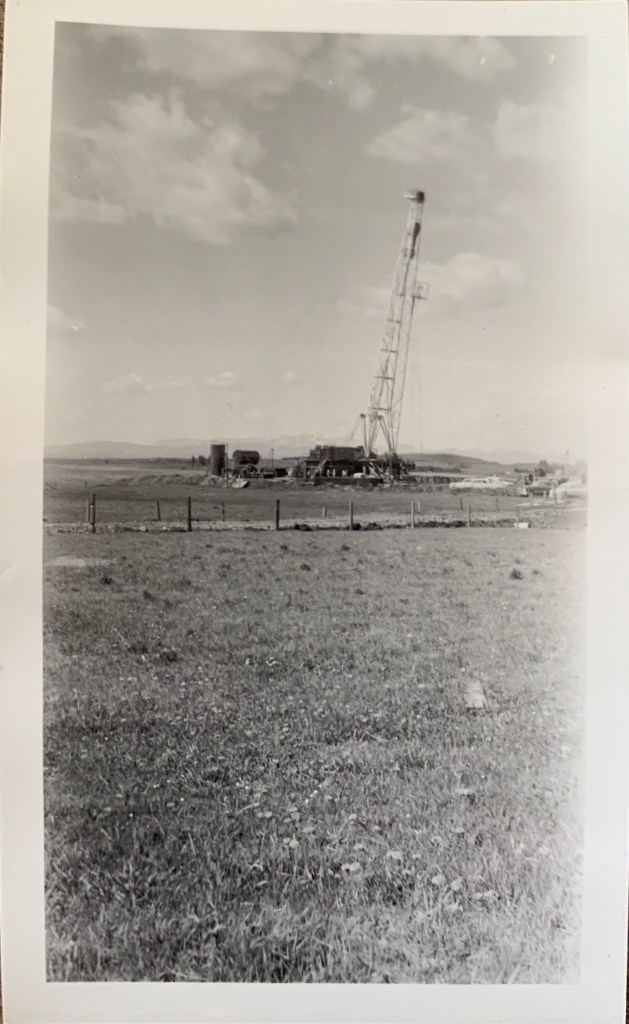
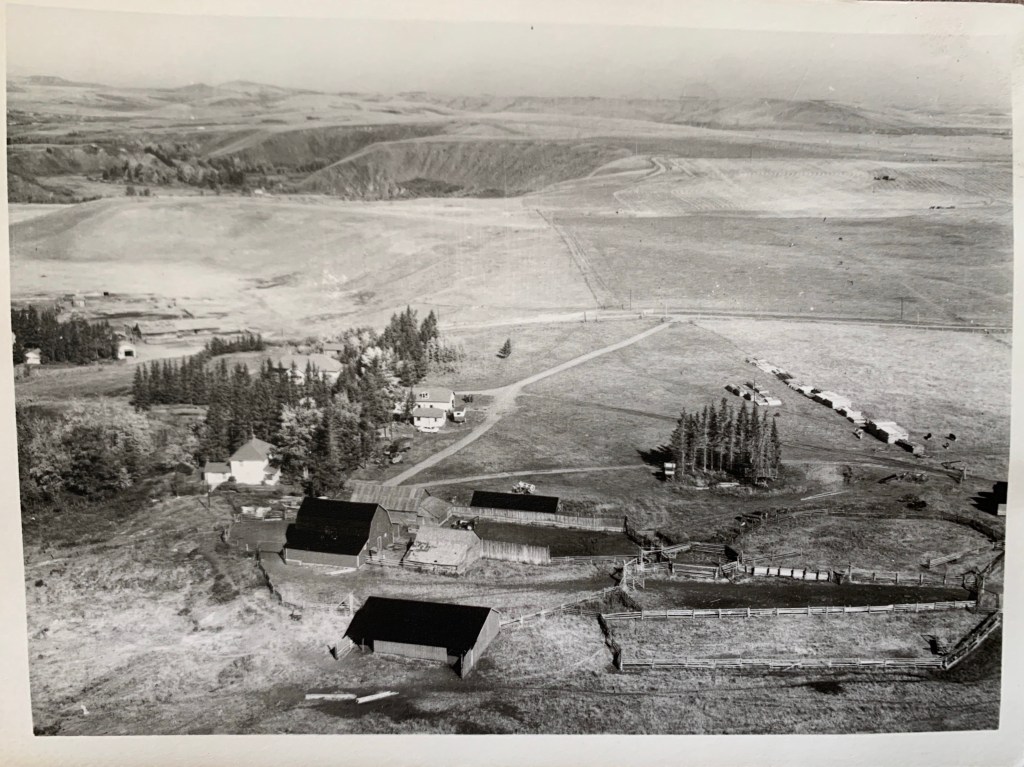
The oil well going up behind the barn – 1952.
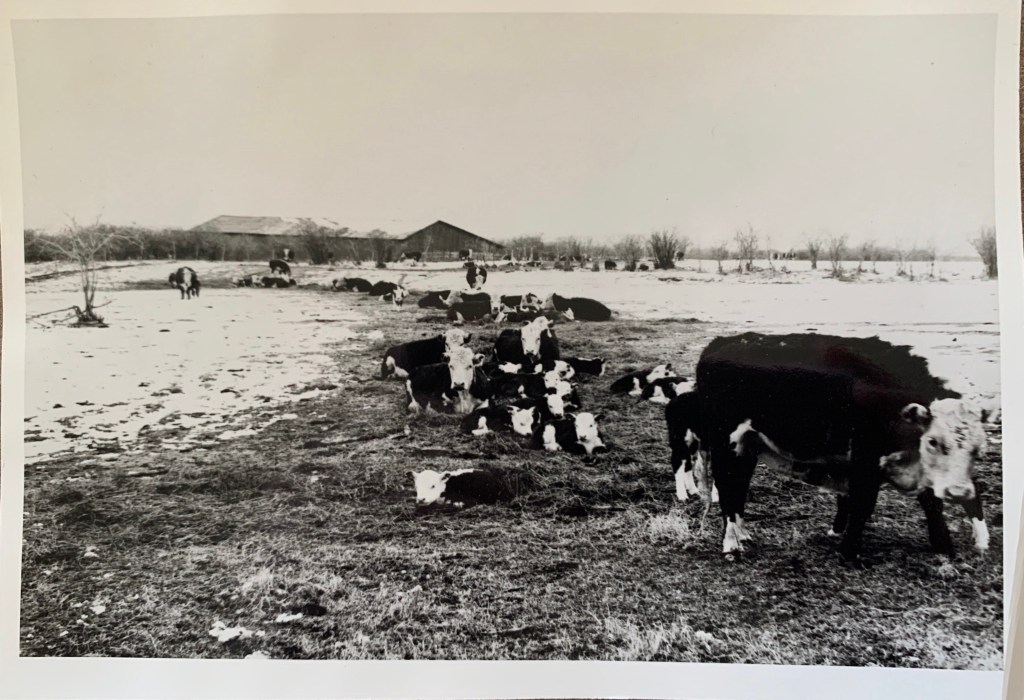
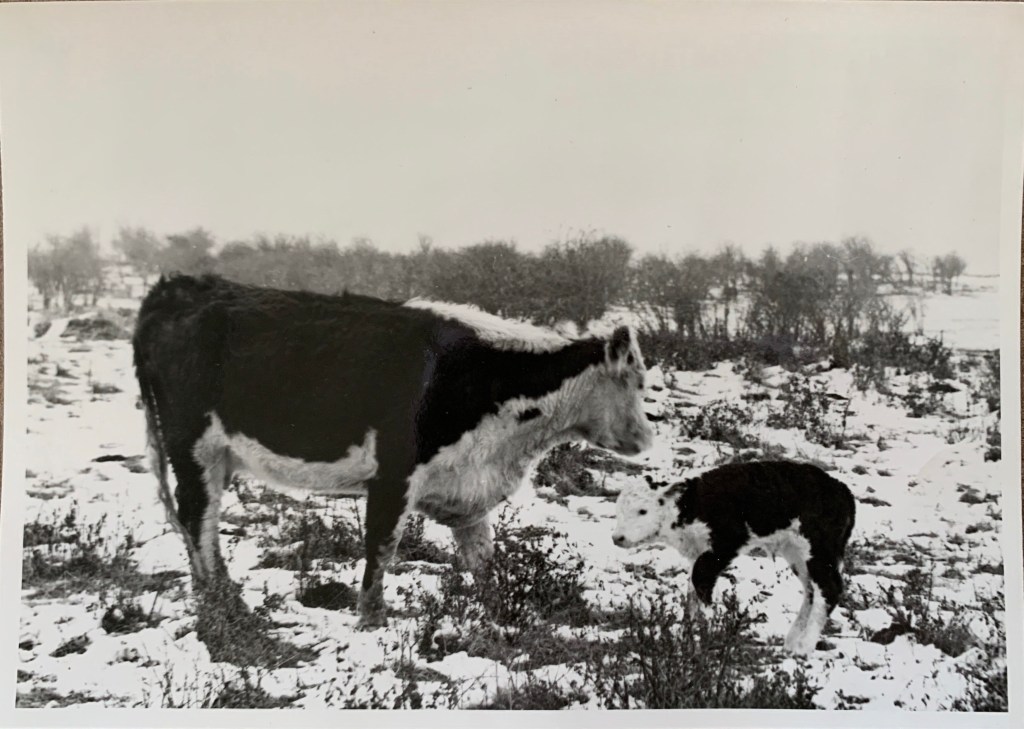
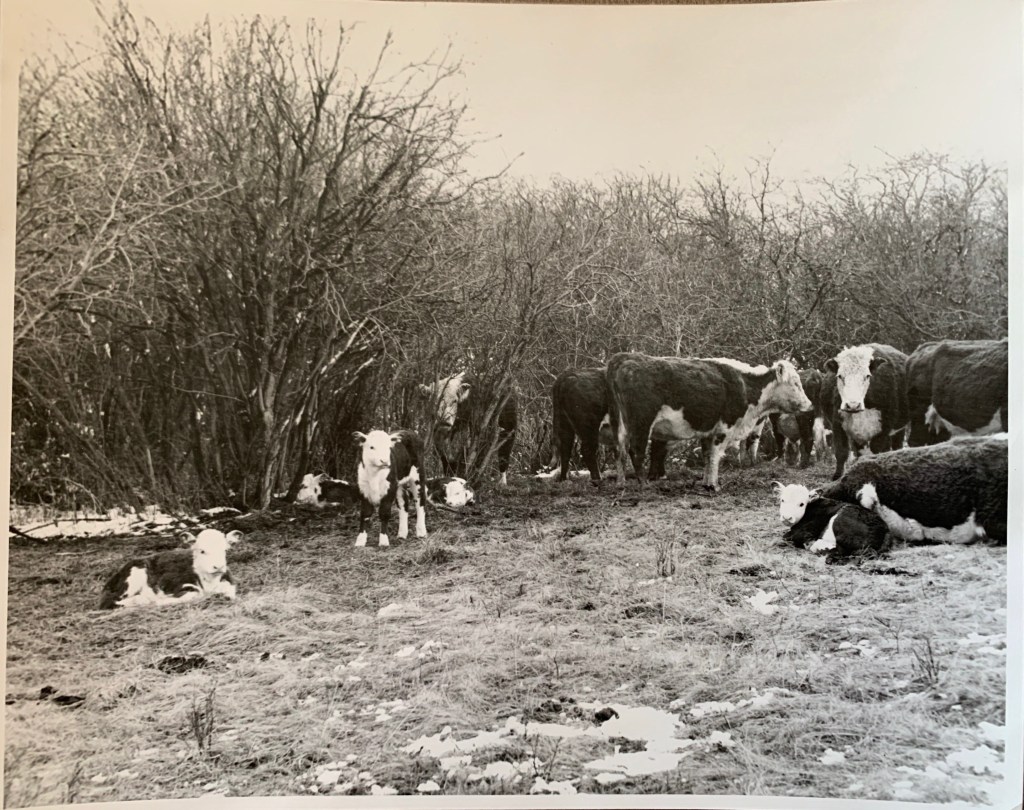
Spring calving 1955. Herefords.
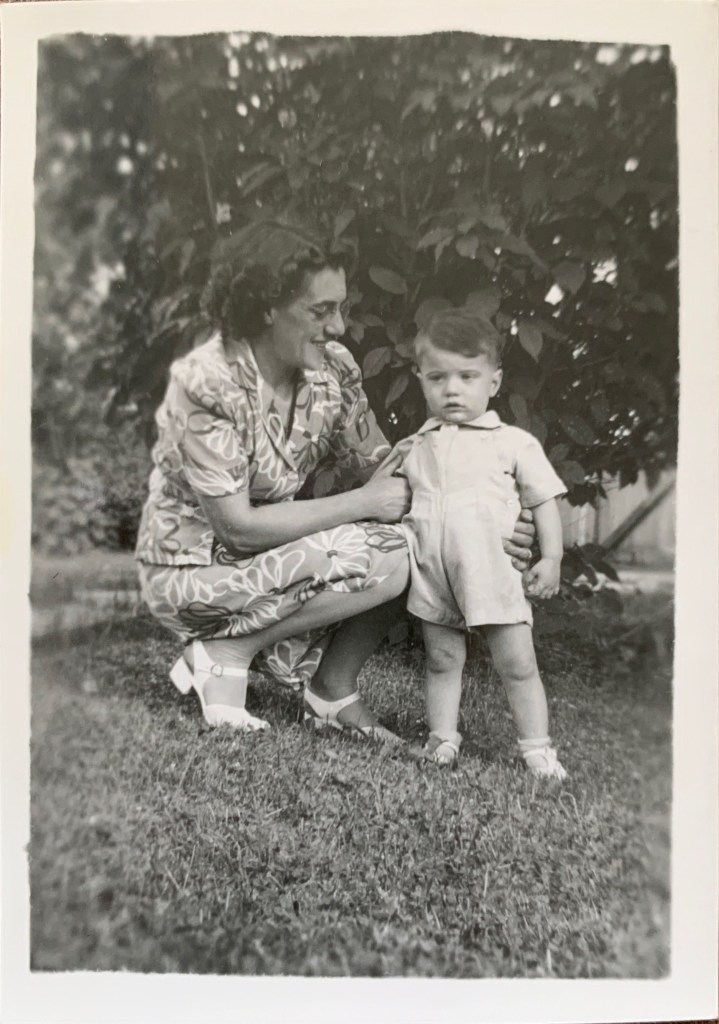
Jean McKenzie-Grieves and son in the summer of 1945. She was grandma’s best friend from Cochrane who moved to Innisfail. And it was just while going through these photos at my uncle and aunt’s place that I realized that since mom’s middle name was Jean that she was named after grandma’s best friend.
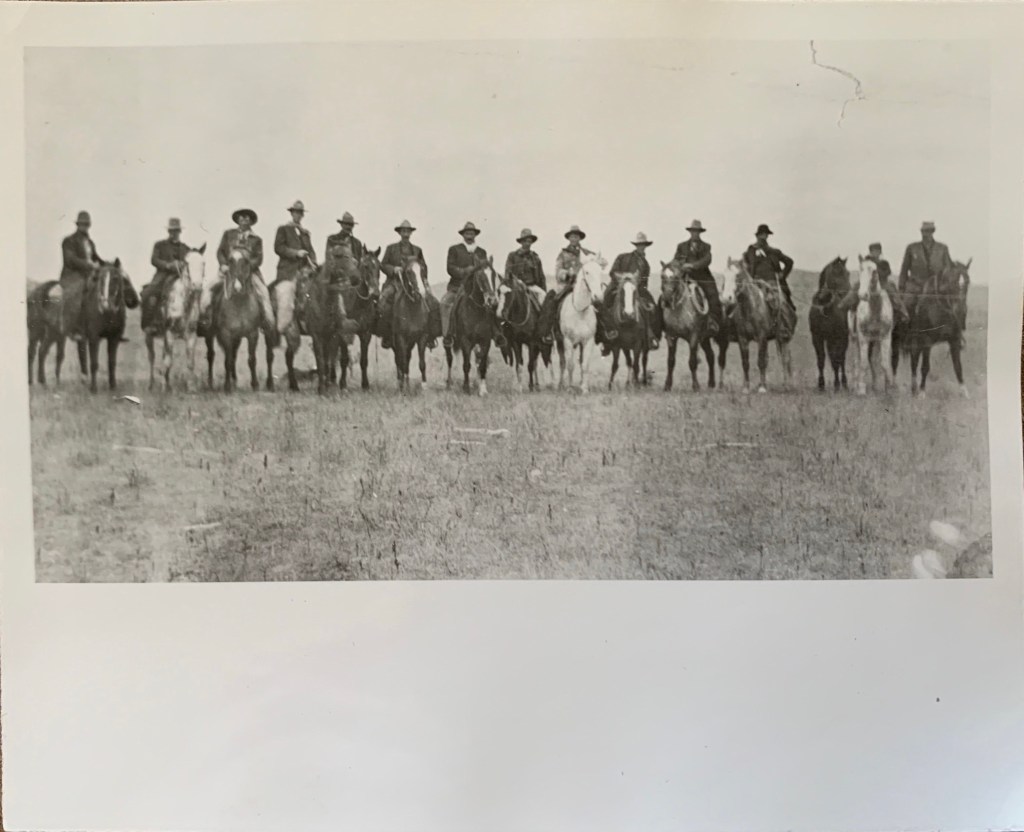
Jumping Pound riders on cattle round up.
Standard
happiness

A History in Photos 5 (FGK 162)

There is a real mixture of photos today: cows, ancestors, horses, home, and mom during the hospital years when she was so sick from polio.

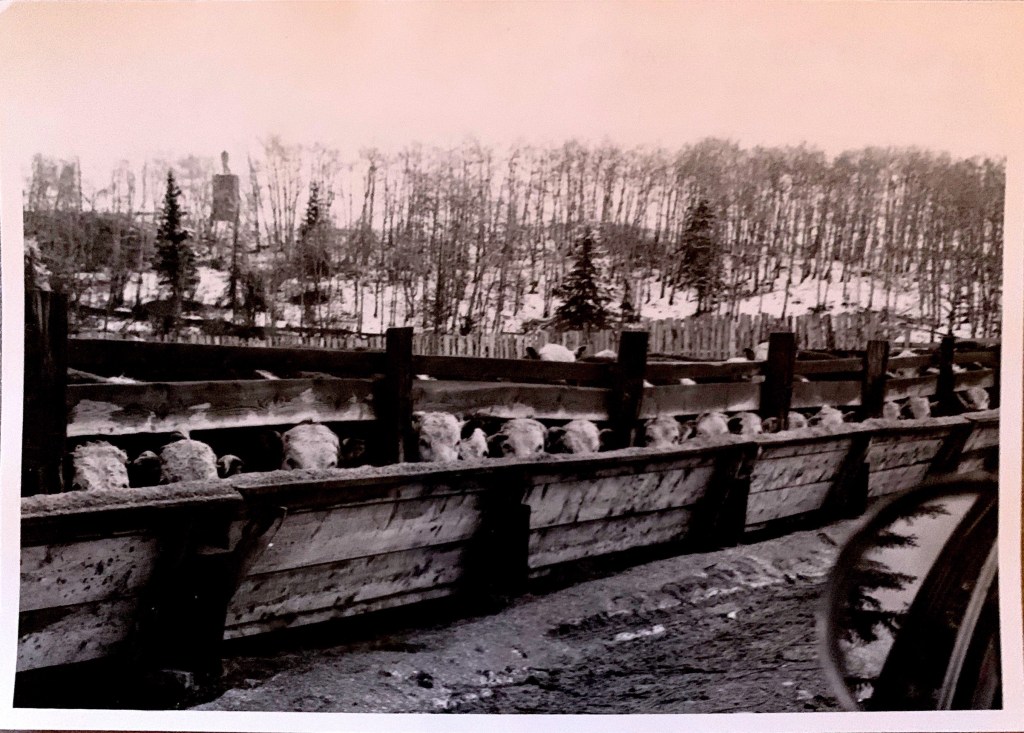
Marshall Copithorne’s Feedlot
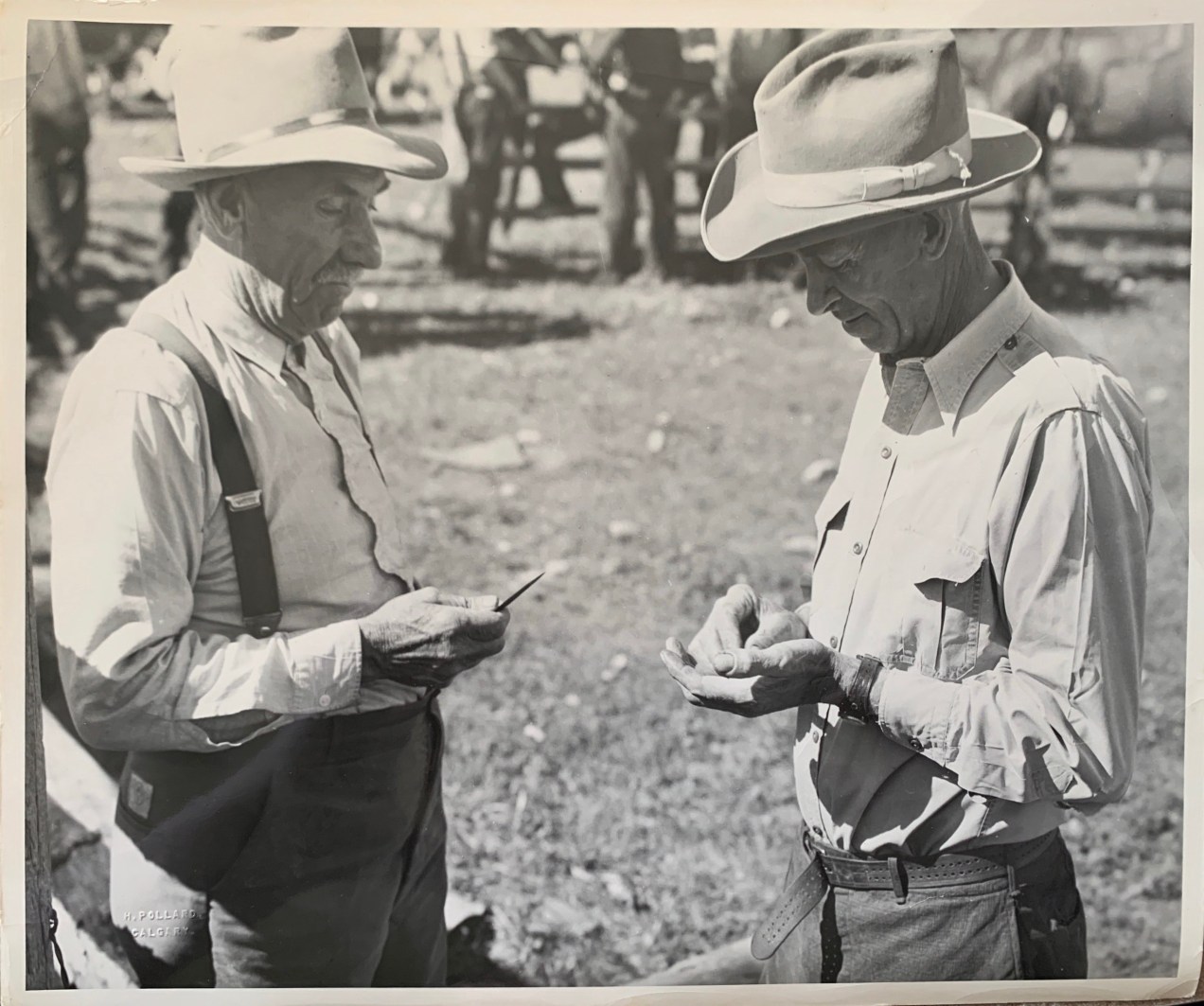
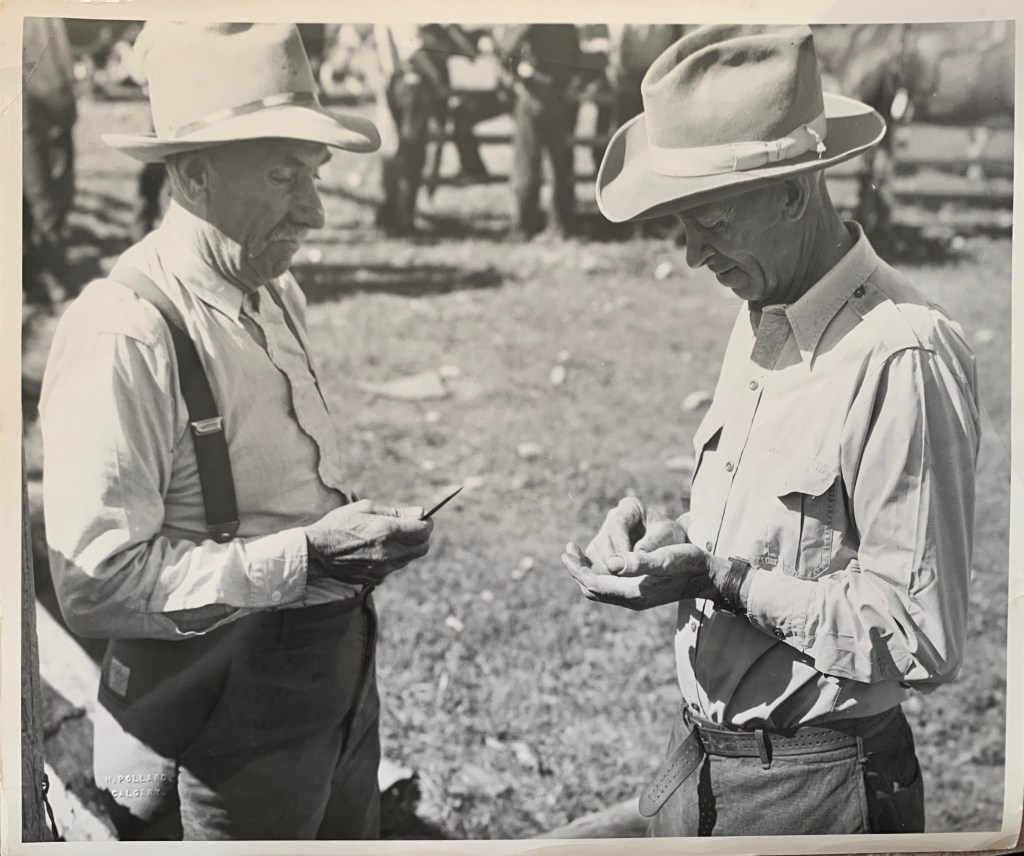
Sam Copithorne and Jack Copithorne. Photo copyright H. Pollard Photography, Calgary. If this was a more modern photo that would be a phone in his hand haha.
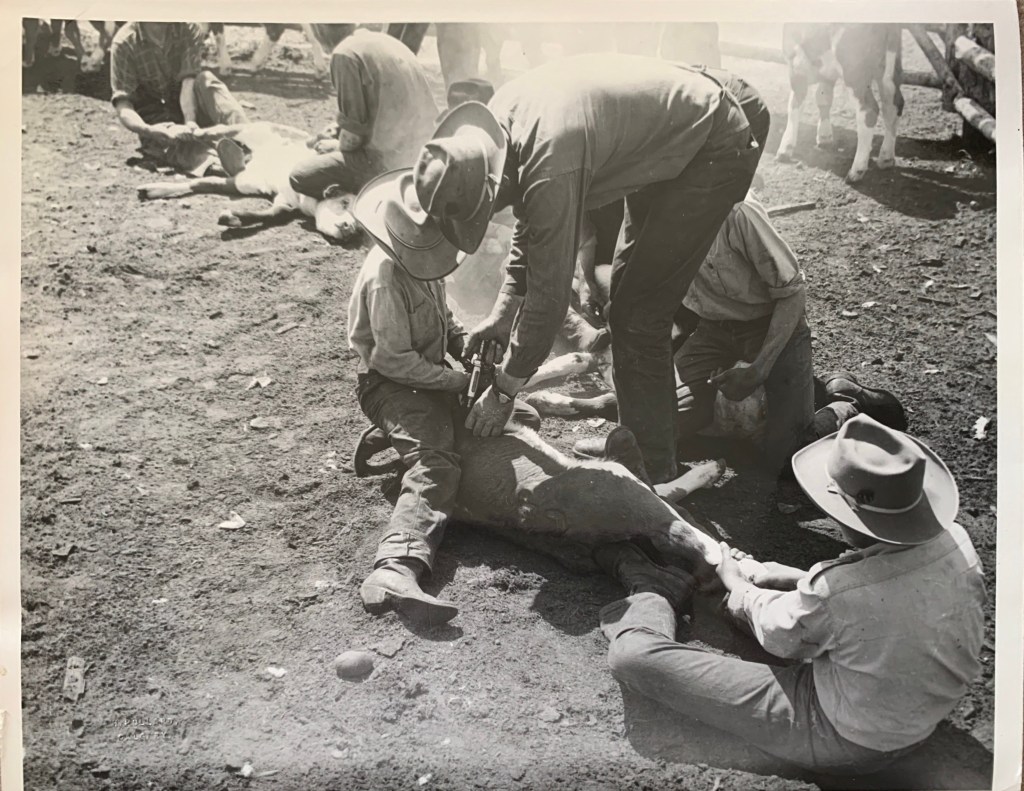
At the far calf: Albert and possibly Ferad. Branding: Marshall Copithorne. At head of close calf: Jack Buckley. At hind legs: Clarence Buckley. Photo copyright H. Pollard, Calgary.
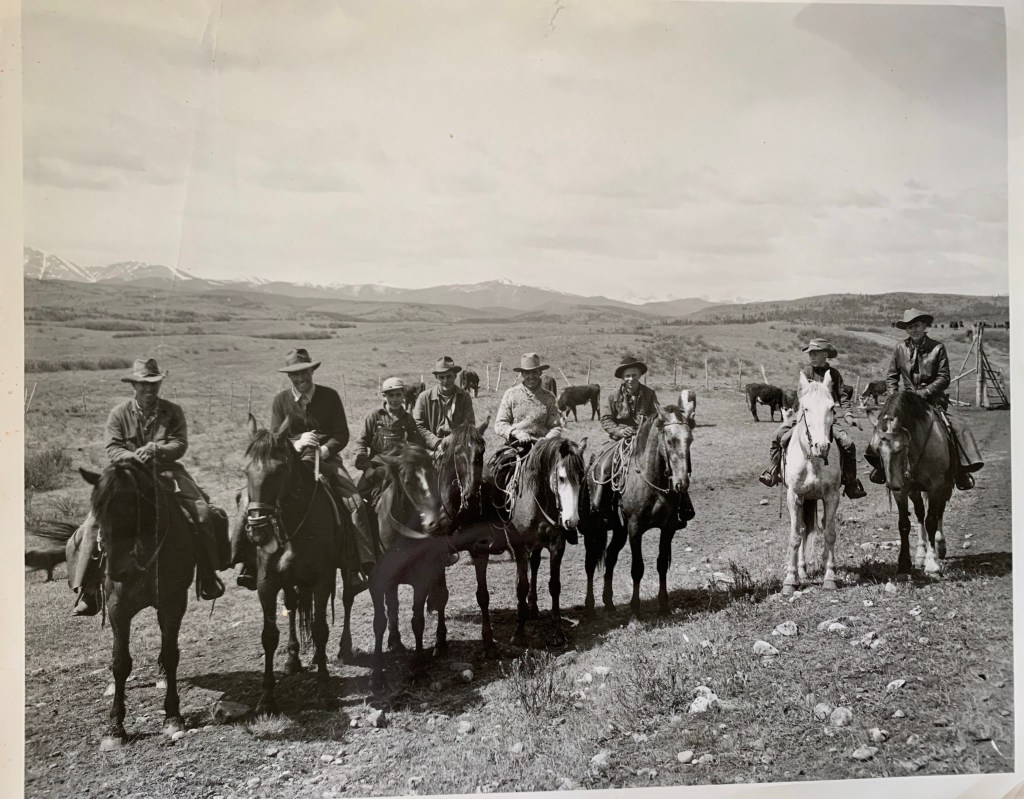
Left to Right: Len Kumlin, Clarence Copithorne, Billy Nash, Joe Chee, Percy Copithorne, ? Kumlin/Lazy J employee, Marshall Copithorne, Jim Copithorne. Photo copyright H. Pollard, Calgary
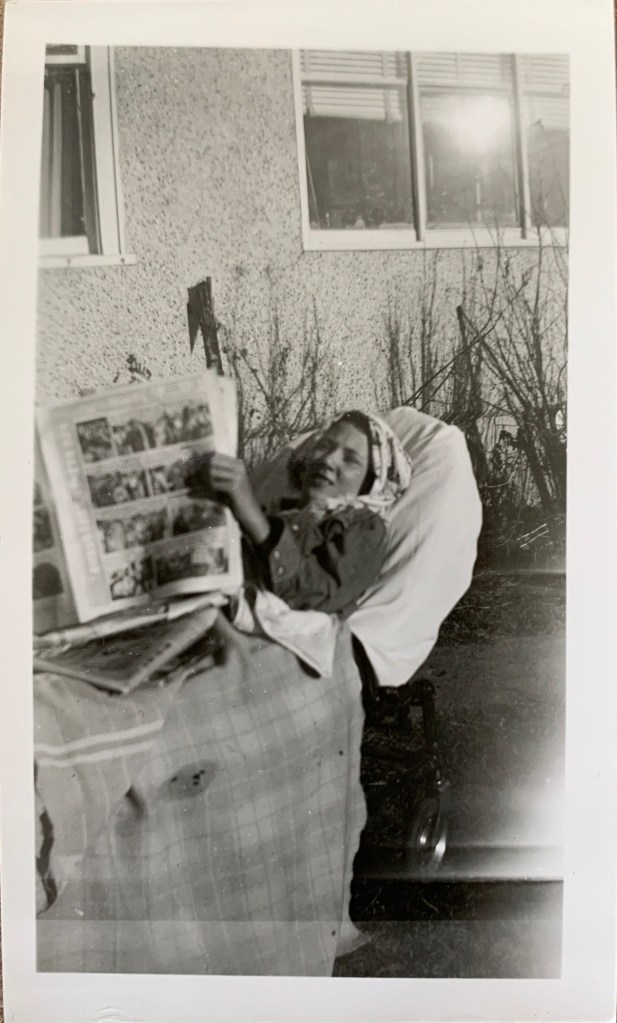
Mom enjoying some outside time in a hospital bed (presumably on a stay at home from the hospital after polio) outside of Grandma’s house. This photo is pretty powerful for me. There aren’t many photos of mom during this time, this may be the only one I’ve ever seen of her.
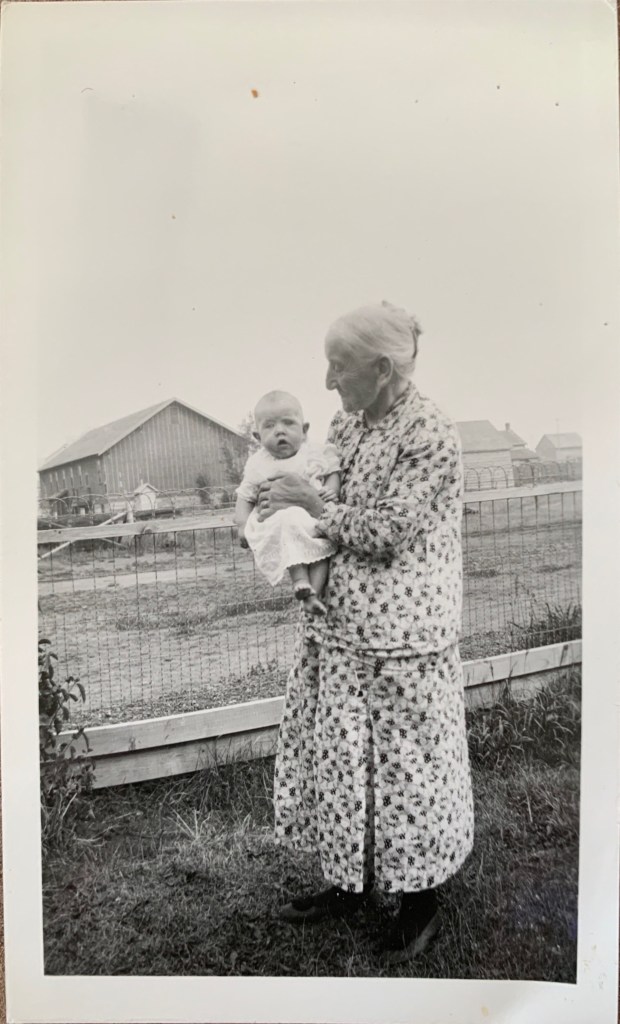
Unknown woman and baby
Home sweet home
Standard
happiness

A brief history of the Copithorne family 3 (FGK 153)

As far as I know my cousin still has Sophia’s sidesaddle and it’s in working condition. I remember she used to use it to ride in the Stampede Parade when we were younger.

“Well, it was tough going. Dick and John carried on mixed farming. They used to make butter and bring it into Calgary twice a year to trade for goods. No money in those days. You had to leave at daylight to make the trip in one day. There wasn’t money to pay for feed, so they took what they needed for the four-horse team, and of course, no money either to pay for a night’s lodging.

“They used to trade with I.G. Baker, probably the first storekeeper in Calgary. They did that right up to 1895.

“They had a great big barrel churn; it used to hold fifty pounds of butter and you had to have a man on beach end to turn it. There was no cream separator in those days. Them milk was left to set for 36 hours and the cream was then skinned off.

“They used to pack the butter into big wooden tubs and when they took it to the store, a man used to poke a broom handle right down to the bottom of the tub and then smell the butter on the stick. That was the way he graded it.

“They had about fifty hens and were able to trade the eggs, too.

“Dick had got married by then to Miss Sophia Wills of Springbank, and the women had lots of work. No fancy gadgets to help them with the washing and cooking and sewing. The women helped cut firewood sometimes, and the men also cut down trees to make A-fences and X-fences. We used to work in the bush all winter.”

Dick and John went out of mixed farming in 1898 and into beef cattle. Herefords. It was difficult to get a good sire so they raised their own and tried to improve their stock by culling. It was a good thing when the Calgary bull sale started, Sam remarked, because a rancher could get good animals then.

Asked how Jumping Pound got its name, he said it was one of the places where the Indians stampeded the buffalo. The animals, terrified and crazed by the Indians rushed to the cliffs and plunged over, breaking necks and legs as they crashed to the bottom. There was a good price for buffalo hides so the Indians were intent on collecting.

It wasn’t all work and no play. Men and women used to hunt coyotes and great was the competition to see who had the best saddle horse. They’d forgather with their hounds and off they would go across the country; no fences to bother with in those years. Percy, who is Dick’s eldest son and a substantial cattle rancher in the Jumping Pound district says, “I remember my dad mentioning Mr. Kerfoot and Captain Gardiner, father of Clem and Teddy Gardiner, as some of the enthusiasts. My mother used to take part also and was considered a good horsewoman. My dad said that very few women could sit on a bucking horse in a sidesaddle, but she had preformed the feat on several occasions. I still have her sidesaddle which is in excellent condition. There were also the kit-foxes to chase, a nearly extinct species of animal now. The men too, went out hunting lynx, for these great wild cats were a constant menace to the cattle. Sam Copithorne killed 21 lynx in the spring of 1907.

That was the year John and Dick made a trip back to Ireland, and Sam went over in 1911. He stayed three months, but Sam just didn’t care for Ireland; he said, “You couldn’t give it to me.”

Standard
happiness

A Brief Story of the Copithorne Family 1 (FGK 151)

I found this interview with Sam Copithorne and thought it could be fun to share. At the end of the stories, I’ll post the information to source it, but this is written by Dora Dibney – I have no idea who she was. I always wondered (but not badly enough to ever ask lol) who Grandpa was named after – and it looks like it was after one of his uncles. Enjoy!

A Brief Story of the Copithorne Family

(Dora Dibney)

“Now look,” Sam Copithorne remarked, “there’s no use writing a story about me. I’m not a pioneer becuase I didn’t come out to this country until 1904. It’s my two brothers you ought to write about, if you HAVE to write about the family.”

“Where was I born? Oh, in Clonakilty, that’s in County Cork, Ireland. My father had a dairy farm, dual purpose Short horns and we milked about 25 cows. Guess we had about 120 acres.

“Besides John and Richard, I had four older brothers: James and William and Robert and Edward. We had one sister: she was the eldest. John came out here in 1883 and Richard came out four years later in 1887.

“James went to Central Africa as a missionary and before that he was in the civil service. but he was in Africa, oh less than a couple of years when he got fever and died.

“John was the first to make a move though. He just decided to come to Canada so my father got him a lot of letters of introduction to people in Montreal, but he never used a single letter.

“He didn’t like Montreal so he bought a ticket through to Winnipeg. Well he looked for work and somehow or other he met a man who wanted someone to drive eight mules. John had never had a thing to do with mules, but he waits sure he could drive them so he got a job and $10 a month. That was doing farm work.

“It wasn’t long after that that a man came to the farm and he bought the mules. He couldn’t drive them so John got the job of taking them to Brandon.

“That was the time of the rebellion I, so John volunteered for the army and he was sent to live with the Indians and watch their movements. Well, he lived with them for a long time; he took part in their powwows and he got so he could talk Cree with the best of them.

“He lived with them so long that they nearly forgot he wasn’t an Indian. They used to call him Wapoorshwian which means Rabbit-Skin-Robe. I remember him telling us about the way they used to eat. They’d put all their meat into one big pot and they’d sit around and fish it out when it was cooked. Sometimes they’d fish out a piece of dog meat and then they’d remember and say “white man no eat dog” so they’d find a piece of rabbit meat for him.

Standard
happiness

Edna’s Story 30 (FGK 147)

By now Sheila had graduated very successfully from Grade 12 and had her application accepted in the university to become a teacher but suddenly decided she would try the nursing profession instead. That Christmas, Percy and Marshall were both very sick in bed with the flu and Sheila was on night duty in the General Hospital. However, she wanted to come home for Christmas Day and we both wanted to see Margi for the few minutes they would allow us. It was a cold, snowy day and poor Sheila looked so grey from being on duty all night but we had to sit in the cold empty basement of the Red Cross Hospital for hours before they let us see Margi for a few fleeting moments. That was one of my worst Christmases.

While Sheila was still in Mount Royal, one weekend she brought a girlfriend home with her and they wanted to go to the Friday night dance in Cochrane. Percy and I were in such distress over Margi, we just didn’t feel like going dancing so we asked Slim if he would mind taking the kids in and looking after them. Marshall went too just for the fun though he didn’t like dancing. When they got there, Slim took his nice suede jacked off and Marshall’s coat and they locked them in the car before going into the hall. Slim was an excellent cop. I’d swear he could tell you how many fillings a motorist had in his teeth a mile away. That night he spotted a car driving around Cochrane without its lights on so he followed it on foot until he got all the particulars such as make, etc. By then it was time to go back to the hall and take the kids out for supper. But when he got back they were sitting in the car waiting for him. He wanted to know how they got into the car when he had locked it but they said it was open, he just thought he had locked it. Then people all around him began to complain of the same thing, purses and coats were missing. Marshall’s and Slim’s fine suede jackets were gone. Even our own family didn’t know he was a cop but Percy and I sure laughed and teased him about that. However, he went into the police in Cochrane next morning and told them who he was and gave them a good description of the car. Both garages in Cochrane had been robbed. They were able to catch the car in Banff, a stolen one from Saskatchewan and they caught the thieves.

Slim was a big fine looking man 6 feet 6 inches tall. Marshall was at the aggressive age. Sometimes he would come to the table defiantly, with his hair uncombed or his hands not too clean. I would ask him to spruce up a bit and he’d say “Oh, I’m all right.” Slim would just get up quietly and tuck Marshall under his arm and hold him under the laundry tap in the back kitchen. It didn’t have to happen very often. We had an equally as big and tall Swiss man working there then. One cold rainy morning Harry was late coming for breakfast. Finally he burst in the door just steaming with anger. He couldn’t find the milk cows and was out in the rain all that time looking for them. He lit on Slim and said “You sitting there all nice and dry! You should be out helping me!” He was quite right and Slim said so and would have gone, but Percy took Harry in the other room and told him all about Slim. From then on, Harry just idolized Slim and Percy knew where to find those cows. There’s a little pocket in the hill below the house where they often hid and strangers couldn’t find them.

Standard
happiness

Edna’s Story 26 (FGK 143)

Chapter 4 – The 50s

In 1950 we were a bit short of feed or were afraid we would be, so Percy arranged with Mr. F.E.M. Robinson of the Alberta Ranch in Pincher Creek to pasture our steers there for the summer. That was an interesting place, one of the first ranches in Alberta I think, and the rolling hills had wonderful grass for the cattle. It was a successful venture but perhaps unnecessary as it rained enough to give us grass at home. But we were becoming a bit cramped. In 1951 we heard that Mr. Chas Matthews was wanting to sell his ranch in Grand Valley. Percy and I talked it over carefully. Should we sit still and lead a placid life or work like mad for a few more years. I don’t believe you can sit still, you either go ahead or slip back. We went immediately over to see the place. We bought it the next day.
Trailing cattle back and forth across the Bow River and by Cochrane to Grand Valley was no easy feat. It always seemed to be done when there was snow on the ground and it was a long, cold ride. I used to time it so that I’d catch up to them just before they reached the river and I’d give them hot coffee and fresh hot doughnuts. Then I would race home and pop in the oven and individual chicken pie full of good vegetables for each rider, a dessert, and more hot coffee. I would meet them for the noon lunch just north of the railroad track where there was a good spot to hold the cattle. Sometimes the smell of the hot steel railroad track would panic the spooky cattle and they would have to scatter hay over the rails to get them cross. The bridge across the Bow was another bad place, it didn’t take much to spook them.

By this time the whole country was joined together by well built roads and the cattle rustlers thought they had it made. We were just losing too many as were the other Alberta ranchers. There seemed to be a syndicate of rustlers taking them across the border to the USA. In 1952, the Alberta government decided to place mounted policemen in Cochrane on a few of the ranches, secretly, to work as seemingly regular ranch hands. We were chosen to have one of these men and we nicknamed him “Slim”. Things really began to happen. A lot of comical things, and our share of tragedy.

The day after Slim arrived, Clarence moved his cows and calves to summer pasture. That means he drove them by here – strung out for a mile or more or dust and noise. The hullabaloo upsets the adjacent livestock considerably. That night a black and white milk cow of Kumlin’s went missing. Naturally you would expect it to get tangled up in all the excitement of Clarence’s cows and would be easy to pick out of a herd of Herefords. But Kumlins rode and roe and never found her and Percy kidded them about being so dumb and he went out, and rode and rode and couldn’t find her. Finally Len Kumlin went in and reported it to the police. Poor Slim had to hand in a report every week and did he ever take a ribbing for letting a cow be stolen from right under his nose the day after he arrived here. To end this little yarn, that cow came in with Clarence’s herd in the fall, and she had twins with her, we had many a laugh over that.

Standard