happiness

Grandma’s Account of the Great Fire of 1936

I was so incredibly happy to discover that I have Grandma’s story of the fire. I heard her tell this story often when I was a kid and it always fascinated me. How brave she was!!! And as I read this account I had to ask myself “was this were Grandma’s intense need for a cup of tea in a crisis came from??” At Christmastime I was sharing stories with my cousin about all the times Grandma needed to stop and have a cup of tea when things went wrong. My story was from when she broke her arm. The doctor was trying to get an X-ray done and was having trouble. Grandma also was having trouble as 4pm had come and gone without her mandatory cup of tea. She began very clearly explaining to the doctor that it was going to be necessary to stop what they were doing so she could have a cup of tea. She was feeling a bit faint you see. I ran out to the cafeteria and got her some tea – while it wasn’t up to par because it came in a disposable cup and tea belongs in a teacup- it worked it’s magic and even the doctor was impressed at the change in Grandma. X-rays were done, cast was put on, and we were on our way.

I’ve given you the first chapter of my life. Now as I’ve told you, I married Percy Copithorne in 1931 – really in the midst of the depression, the early beginning of the dirty thirties. I was fortunate to marry a man of such integrity and his knowledge of the country and cattle industry gave him and advantage in those terribly dry years. I think it was in 1904 Percy’s father got two CL brands for his cattle, CL on the right hip for his own, and CL on the right ribs for Percy.

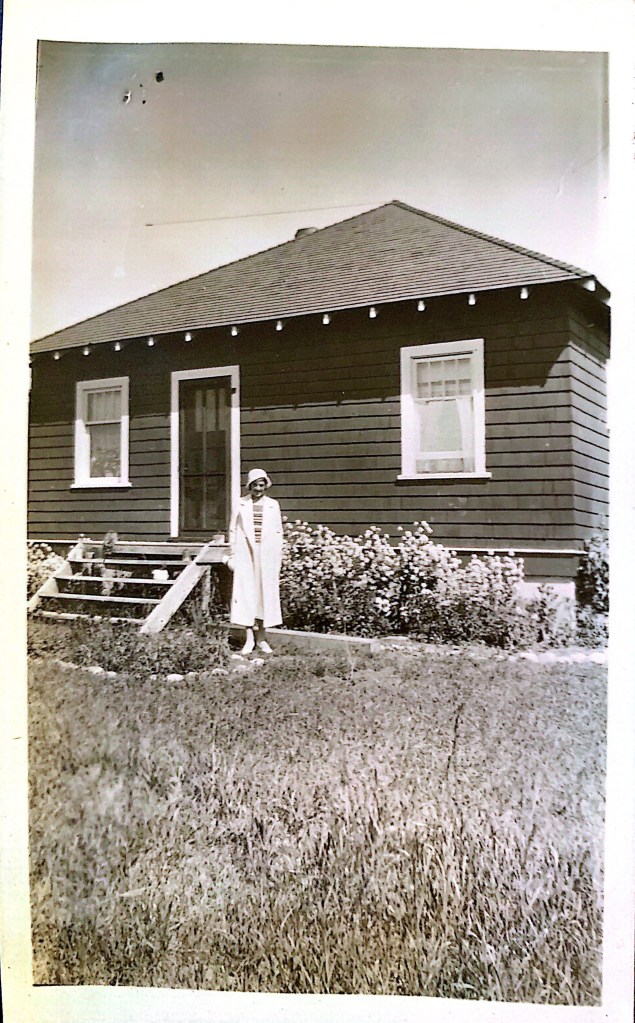
They built us a lovely little cottage near the established ranch home. The neighbours and half of Cochrane shivaried us and later the community put on a dance in the hall and presented us with a lovely silver carving set and several other matching pieces of silver. They are a close knit community and I loved them and still do. Percy helped build that hall in 1926 and to get it started he rode horseback after supper after doing a hard day’s work and sold shares to people in all the neighbouring districts. He later was secretary-treasurer for it for many, many years. The ladies in the district had a committee and took turns making all the sandwiches and cakes for the dances. We also scrubbed that huge floor by hand, carrying water up the in cream cans. Then waxed and polished it by hand. No electricity, we used those frightening gas lamps for light. In those days the hall was famous for its good coffee made in big copper boilers and for it’s good lunches. If you were thirsty for stronger drinks there was no bar but many had a flask out in their car.

Our home always had natural gas to heat it but there was no power nor running water for the first five or six years. Then we had a dealcoe engine then a wind charger to get electricity. It was a happy day when the Calgary Power hooked up to our place.

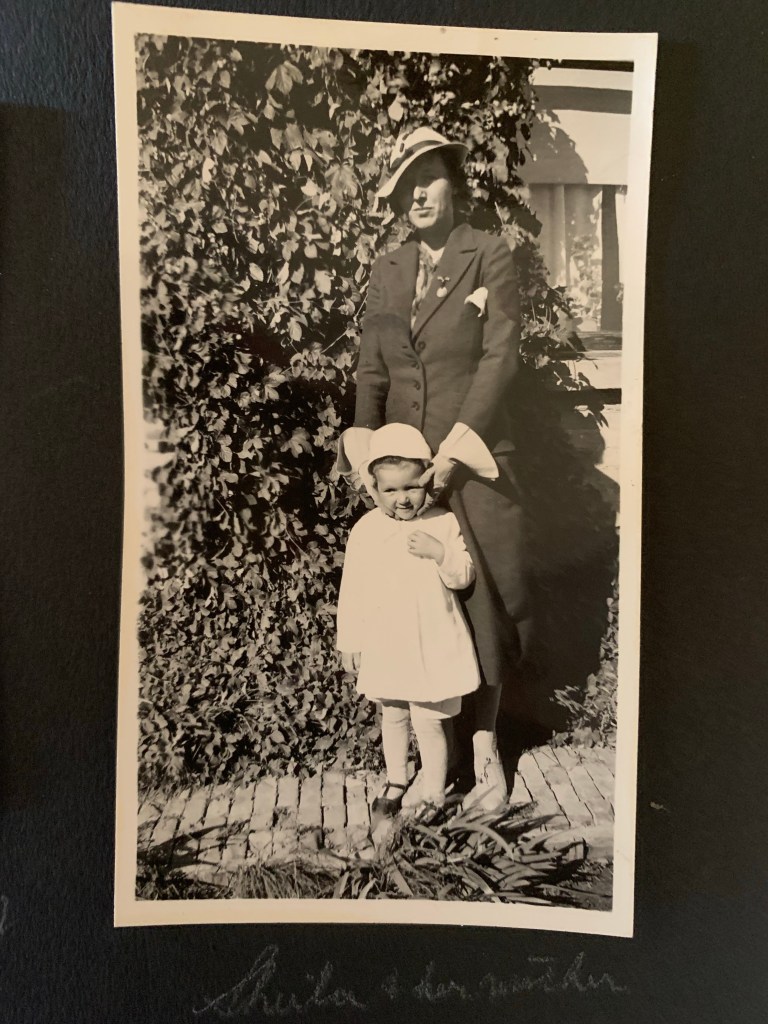
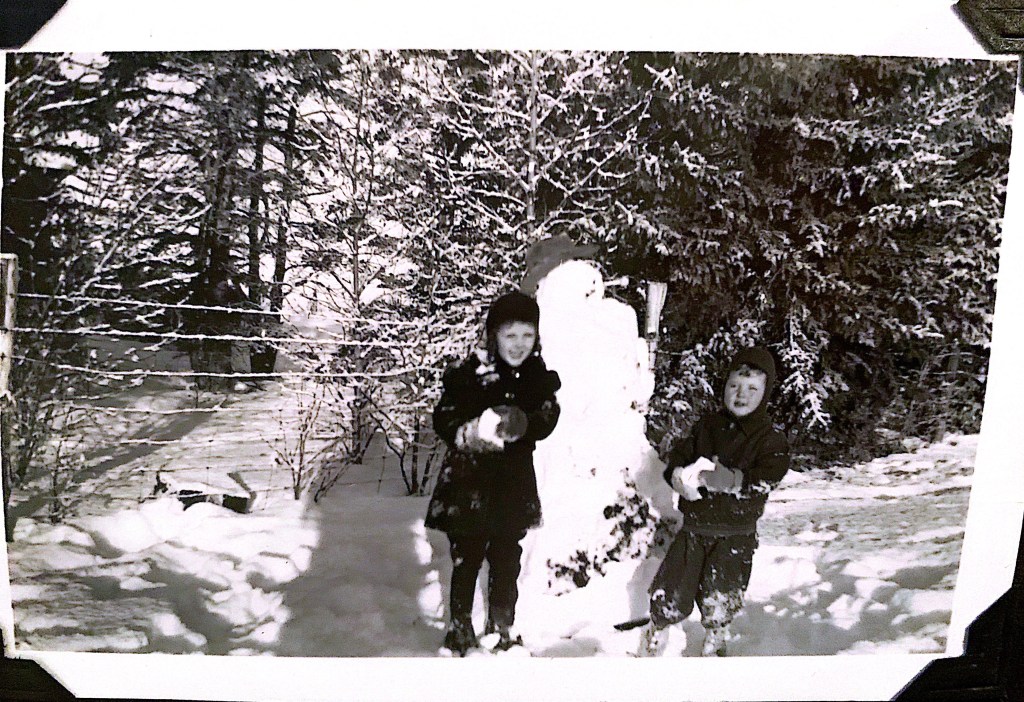
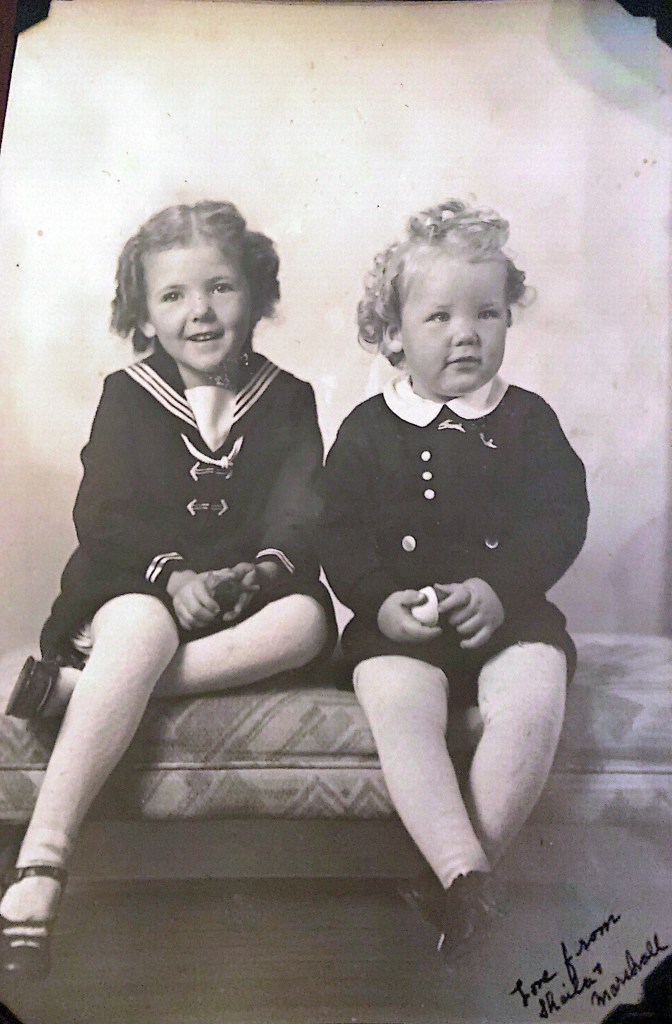
While my father-in-law lived I had no hired men to cook for, but he died in 1936. My first child Sheila, was born in 1935 and in 1936 our part of the country south of the Bow River experienced the worst prairie fire in its history. Late in the evening of November 18, we saw a very small puff of smoke up west in the part we now call Sibbald Flats. Next day the fire stopped at Bowness – a stretch of about 30 miles. Percy and Jack Copithorne left home on horseback about 4am the morning of November 19 and met the fire at Frank Sibbald’s. They spent a very busy day with many other neighbours trying to save homes and cattle. At times the wind was 90 miles an hour and the air was full of dust as well as smoke because it was the driest year our country has ever seen. The fence posts burnt, the cattle were blinded and burnt and lost. The telephone poles burnt and Ernie Crowe (?) our operator in Cochrane kept everyone on our party line (17 of us) in touch with conditions for as long as he could. I remember the last thing he told us was to go down and stand in the creek to save our lives. I was quite stout, expecting Marshall in March and I was advised to get int he car and try and drive to Cochrane. You jut couldn’t see where you were driving but when we turned north to drive to Cochrane, the Messer’s newly renovated house was all in flames, and a half mile further the Brushy Ridge school was all in flames and no sign of children. Also, Calaway’s dairy barn nearby was in flames. We turned east there to get to Calgary, knowing by then that the fire had swept across between us and Cochrane. Heading east down past Taylor’s their barn was on fire and rabbits and cattle etc were travelling with us, many were balls of fire bouncing along and the fence posts were on fire. We turned south on the first road allowance heading south, hoping to get on the Coach Road to Calgary. But down near Wallace’s the wind had blown a big hay stacker through the fence and it stuck on the middle of the road. We couldn’t even see it, the dust and cinders were so thick and we crashed right into the centre of it and had to stay put. As the boards on it caught fire, the young man who was driving for me would get out and rip the board off and it would sail away in the the wind all on fire. The cinders were so thick we kept choking. Fortunately i had a big jar of milk with me for poor little Sheila, and we used that to wipe our eyes and nose and mouth so we could breathe. I expected the car to explode any minute. There was a pail full of tools and loose hay hanging on the side of the stacker right beside me. Suddenly my side of the car was a wall of flames outside but it soon burnt out.

Early afternoon when the air was clearing a bit, Uncle Sam Copithrone drove down that road and was surprised to find us. He took Sheila and I into Vera Wallace’s for a cup of tea, then on home. Percy didn’t get home until evening. Imagine my worry for him, and of course he thought I was safe at home all that time. The fire jumped the creek, about a mile jump from one hill top to another and just north of our home. Our buildings were saved, but many of our neighbours’ buildings and livestock were lost. We had to shoot about 20 head of freshly weened calves, they were blind.

We didn’t harvest enough feed that fall but anyways it all got burnt in that fire. Ken Koppock, manager of the Western Stock Growers visited us right after the fire and he and Percy figured if they could get the cattle to the Olds district where there were lots of old and new straw stacks, they could save them. The government was shipping cattle by train from all over the dried out Southern Alberta, so we got them shipped up there but there were many losses.

As I said, I didn’t have the hired men to cook for while Percy’s Dad was alive. He died in 1936 and then I found myself cooking and feeding a gang of men in my tiny little house with two babies to care for as well. I had a very good girl to help me. When haying time came, they cut about a thousand acres of prairie land and would cover an average of a quarter section a week with a crew of nine or more men. I’m happy to say Percy’s young brother Clarence lived with us much of the time after his father’s death. He was only fourteen years old when his father died and he was like a big brother to my family. We began building bits and pieces onto our house when we could afford it and we were a happy family until Polio struck down my youngest daughter Margie in 1952 but she has lived through it gallantly. My children rode horseback to school up to grade nine. Then Sheila and Marshall went to Mount Royal College and from there on into their careers and managed to graduate from Stanford and then law school in spite of her handicap.

Standard
happiness

Cochrane in Grandma’s Childhood (early 1900s) part II

Cochrane had a very famous race track a mile and half west of town. A turn track which means it was grass and easy for the horses to run on. And it was a mile around it, and it was very level. The big ranches all over the country brought their fastest horses to race on it and the big horse ranches brought in horse from all over Canada and England. The Cochrane races would last two or more weeks. Special trains came in loaded with people for the races and the trains parked down near the track.

The Indians camped all around the hills near Cochrane and they had special Indian horse races too. It was all very exciting. They had a big grandstand down there and long fancy barns for the valuable horses. Friends of mine had a home near there and they had a brick yard – a big hole in the ground where you dug out clay and sand and baked in in huge ovens and made bricks to build houses with. Many of the houses in Cochrane today and the Kerfoot and Downs Hardware store is made out of those bricks, they are very strong. But these friends had a lovely little stream of water running through their yard, and it was such fun to play in and catch minnows. And near the stream was a little log building – no windows, dark inside and cool – where they kept their milk and cream and butter. And the roof was made of earth with lots of grass and flowers growing on it. I loved to go in there on a hot day and drink buttermilk.

While I was a small child, one autumn, night when the grass was tall and dry, a man was riding up out of Cochrane where the Catholic is now (*this is now the Anglican Church as the Catholic Church has moved), and he was drunk and he threw his lighted cigar down to the ground. Can you guess what happened? The west wind picked it up and in a flash, all of the hill was a roaring big fire. Everyone was terrified the whole town would be burnt.

Do you know what a gunny sack is? Grain bags. The men raced up the hill with buckets of water and “gunny sacks” which they dipped into their buckets of water and they beat the edge of the fire near town. Our well was one of the few wells that wasn’t pumped dry. The women tried to pump the pumps all night. Everyone was afraid to go to sleep. Little wild rabbits were running down into town, some of them on fire. Next morning the whole big hill was black and dead looking but no one was hurt.
When I was a little older, we moved out to the ranch and I rode horseback to school in Cochrane. It was a lonely ride, there were no other kids with me. I rode down the steep hill into the Big HIll Creek and up into Cochrane. One morning it was so foggy you couldn’t see your way, but my good horse just knew where to go anyway. And I heard a coyote howling out in the fog, and the howl got closer and closer, it was awfully eerie, and suddenly I rode over the hill and there was the coyote sitting with his back to me and lifting his head and letting out that awful long- drawn howl. But suddenly he got a glimpse of me and jumped straight up in the air in the middle of a howl and disappeared into the fog.

Sometimes in the winter when it was very cold I drove my lively horse in a nice little sleigh something like Santa Claus drives. And once a kind neighbour gave me a lovely string of bells to put on the horses. I didn’t have time to put them on in the morning, so strapped them on before I drove home. Well! You should have seen my horse take off. She was just terrified of those bells and after standing idle all day in a cold barn, I just couldn’t hold her. All I could do was hold on and it was lucky for me there were no cops with speeding tickets in those days.

Out on the ranch, my Dad had to dig a new well for more water. There were machines to do the digging. You just got a shovel and dug down until you couldn’t dig any more because it was almost all rocks. Do you know what dynamite is? It’s very, very dangerous. It’s just like a stick about this long and this round but it’s not a stick, it’s a bomb that will blow up everything when it’s lit. It would blow the rocks 20 feet up the well and into the air. Then the men would go down the well and dig up the broken rock and haul it up until they had to put more dynamite down and they did that until suddenly they hit a nice stream of water running along way down deep. Now one of the men who helped dig the well was a man from England who knew all about rocks, he had been trained where to hit the rock with a special start hammer and the rock would split open. The rocks from that well were so interesting beau they were full of seashells, and petrified fish etc. I’m sorry to say that after those rocks were lying around in the air they just crumbled to shale or clay. But I sure wish I could get one of those nice round rocks, we call field rocks, and knew where to hit it and make it split open. I have here two pieces of frock from up in the mountains and just look at how interesting they are inside. I’ll pass them around to you to look at. Be careful they don’t drop on your toe. (I wonder where those rocks are – surely in this house where no one has ever thrown anything away they are here somewhere).

Christmas was lovely as it is now. In our home in Cochrane when I was a small child we had what was called a Winnipeg Couch. It could be folded p and put away, but when unexpected visitors came we would make that into a single bed or a double bed. Try and think what it was like to live with no telephone and no electric light. Our friends 15 of 20.miles out in the country would come to Cochrane for Christmas supplies. My dad always had room in the barn for their horses and plenty of feed for them too. And they would stay a few days and we sure enjoyed having them. Sometimes they would chop down a nice Christmas tree and bring it in for us but often we hitched our team to a big sleigh with hay in it and rugs on top. We would put big rocks in the oven to get them hot and warp them in gunny sacks to keep warm and we would drive out and pick our own Christmas tree. After it was set up in the house, we old pop corn and more corn and decorate the tree with that coloured paper. And Eaton’s catalogue had some fun toys too. We would mail an order away for our warm clothes too. For us girls, the Eaton Beauty Doll was the most marvellous thing. It’s eyes would move and it had beautiful golden curls on it’s head. But the sad part is they broke when dropped.

Eaton Beauty Doll

Killing and plucking the turkey was a chore too. The turkey gobblers were beautiful birds when they strutted. They’d put on quite a colourful show – you caught them with a long wire that had a hook on it, you just hooked that wire around one leg and caught the other leg quick. Then hung them up by the feet on a nail on the barn wall and pierced their head quick with a sharp knife so they would’ve feel any pain. The you started plucking the feathers out by the handful until it looked like the ones you see in the store today. You first carefully cut a big hole in its neck to pull out the crop. The crop is a little leather bag full of grain the turkey has eaten but not digested. Then you cut a hole in the other end below the tail bug enough to get your hand in – all the way to the neck and pull everyone out onto the table. You just pick up the gizzard, cut it free, and cut it open and drop out all the sharp Little Rock’s the turkey had eaten to grind up its food. Many people enjoy eating the heart, liver and gizzard. Then the whole turkey washed and washed and stuffed with good bread stuffing and sewn up ready for the oven. When I was a small child living in Cochrane the Indians used to bring in washtubs full of wild cranberries to sell. They sure go good with turkey.

Standard
happiness

Cochrane in Grandma’s Childhood (early 1900’s)

I was done. I was certain I was done. As I’ve mentioned I don’t go looking for this stuff, it seems to find me. Today I was unpacking a couple of trunks that had moved back with us from Virginia. I honestly don’t remember even opening them in the almost 8 years since we’ve moved back – but today I decided to dump everything so I could use the storage space. Ohhhh the treasures I found. Included was a book “Grandmother Remembers” that apparently I gave Grandma, and is very similar to another book I gave her called “Grandma Remembers”. It seems I really, really wanted Grandma to write down history. This book is brand spanking new – although it certainly is over 30 years old, maybe older. But inside she left some handwritten stories. I’m sharing the first one today – it seems she was presenting this to a group of school kids. Unfortunately it’s not dated, but it was before her memory and eyesight began to go so I’m guessing it’s about 30ish years old – making her 70 year recollections more like 100 year old recollections of Cochrane back in her childhood.

Gosh, I can hear Grandma’s voice as she’s telling these stories – her tone – how it would rise and fall as she emphasized something or got excited. When I was a teen I worked for a summer at Mackay’s. Grandma’s memory and eyesight was still sound and often she’d walk into town to get a scoop of ice cream and have a visit. On other days, I’d grab my lunch and head to the lodge on my break to visit with her. She told me story after story – and unfortunately in my teenage arrogance I thought I’d remember it all forever. I didn’t. But I feel like some of these stories are being brought back to life as I’m discovering these treasures.

I had to break this one into two parts, I’ll post the second half tomorrow. Enjoy!!

Girls and Boys- your teacher Mrs. Davis has invited me to tell you what Cochrane was like 75 years ago. Thank you very much of asking me to do that. There is nothing older people like better than to talk about their childhood. And believe me Cochrane was a very exciting place to live in 70 years ago.

There were no cars then, but some would famous horses came from Cochrane. Also just about every home in town had a barn with a milk cow in it and a few chickens.

These lovely high hills were just made for exciting hikes in summer and sleigh rides in winter. Every home had it’s own pump for drinking water, and a woodpile where you chopped firewood to heart the homes. For the winter time we had our favourite hill to sleigh ride down. I suppose everyone thought they had the fastest sleigh. I thought mine was the best. I would start at the top of Cochrane Heights and it was such a well packed trail down, it was almost ice, sometimes, I would be on main street before the sleight stopped. Just too bad if there was a team of horses coming down the road at the time. The horses would be terrified and run out of my way.

The poor Indians would camp off where the houses now stand on Cochrane Heights, and in those days they were really poor, and their kids were afraid of us and we were a bit afraid of them too. They were quite wild in those days and poorly clothed and hungry. Sometimes we would take gifts of food up to them and they would snatch it from us and run into their tent without saying thank you. You could hear the poor little babies crying in the tents, likely cold and hungry.

Everyone went to Calgary or Banff on the train when they needed to buy things you couldn’t get in Cochrane. Cochrane had a nice train station then, with a big platform on it and lots of people went over to the station just to see who got on or off the train because the train always stopped here. before you got on the train, the conductor, the man who took your tickets, would ring a little bell and shout or sing out “all aboard, all aboard”. That meant we would scramble on and get a good seat by a window before the train started, because it started with a terrible sharp chug and clatter and whistle. On the 12th of July nearly all of the people of Cochrane would go to Banff for the day. That was really fun. A big band would meet us at the Banff station and we would march down into the town of Banff. The zoo wasn’t in Calgary in those days, it was in Banff and I remember hearing the coyotes howl and the lions roar in their cages and the sound would echo up the mountains with an eerie sound. Going up to Banff, us kids could play up and down the aisle of the train and usually saw lots of deer and moose near the train tracks.

In the summer time, just about every kid had a horse to ride and had horses to drive in buggies or carriages. There was two big livery barns in Cochrane where they kept lovely horses you could rent to drive or ride. The Cochrane Lakes 6 miles north of here were full of water in those days and in the spring and autumn day or night there would be huge big flocks of wild geese fly over Cochrane town quite low, honking all the way because they were tired and they would land on Cochrane Lakes for a rest. The wild geese fly south in the autumn and spend winter in a warmer country, then fly north in the spring – far, far up north where there is often wild country full of lakes to swim on and where they make their nests and raise their young geese. They made such a noise when flying over Cochrane and the sky would be almost black with them there were so many. And everyone who could shoot a gun would drive out to Cochrane Lakes and bring back dozens of big fat geese to eat.

I had an older sister and she had a horse of her own a few years before my parents thought I should have one. This pony was what they called an Indian Cayuse and when we bought it it was terribly thin and quiet but my Dad soon fed it well and it got fat and mean. I guess while my sister was at school I would get it by the fence and jump on it’s back and ride it around the yard. We had a big yard with a big long clothesline in the yard because there were not electric dryers in those days. After this horse got fat it got meaner and I think it just hated me. As soon as I got on it, it would run to the clothesline and the wire sometimes caught me around the neck – it hurt – it always pulled me off and made me cry but in a few days time I’d try it again. I think it was the only horse I ever really, really hated. We called him Spider.

There were so many bachelors (men who had no wives) living in Cochrane and around the country years ago so there was always a Chinese Laundry in Cochrane. The Chinese gentleman who washed the clothes wore a long black braid of hair hanging down his back. Some of the wild cowboys would ride into Cochrane on Saturday night and thought it was smart to cut off the laundry man’s braid which they called a pig tail. But the policeman fined them plenty of money for doing that and even locked them in jail for a day or two. In the early spring there was a very nice Chinese gentleman who drove out to Cochrane from Calgary. He had a small thin team of old horses pulling a sort of van or house on a wagon. And he would stop and unhitch his horses and feed them in the centre of town. Then he would get two huge straw baskets out of the back of the van and they were full to the top with fresh green onions, lettuce, radish, and other things he had town in his glass house in Calgary. He had a long pole shaped so that it fitted his shoulders with a heavy basket on each end and he would trot around the streets singing – I never knew what – but us kids ran home to tell our mothers and to get some money to buy fresh green vegetables. OH MY, did they ever taste good! You never saw things like that in the stores when I was a kid, no refrigerators in those days.

Standard
happiness

Thinking of Grandma

It was 18 years ago today that Grandma left us here and returned home to God and to be reunited with all of those who had left before her. I will forever remember her last weeks as some of the most difficult, but also some of the most beautiful moments I’ve had in my life.

It was important to Grandma that she return to the ranch and that she not die in a hospital where nobody knew her. My parents and uncles and aunts arranged for her to come home to her house, and they set up a hospital bed in the living room for her.

Probably what I remember most is how the family gathered. It seemed like the house was full of her children and grandchildren – all of us eating, drinking tea, and sharing stories. I’ve always felt Grandma’s heart in this house, but never more than I did during that time.

There was even a moment – one that I call the “I’ll love you forever moment” where she wanted to join us all in the kitchen but was unable to walk from her bed. My loving cousin Ryan picked her up the same way I’m sure she had picked him up countless times when he was small, and carried her into the kitchen, gently placing her in a chair, so that she could be part of the fun. When I would read “I love you forever” to my kids I always burst into tears when the son carried his mother because of this moment. It was so simple and beautiful.

Dad called me at work when she died. Somehow they let the call go into my classroom so I got the news while standing in front of my students. At the time I was teaching mostly kids who had been labeled with behaviours so extreme they were not allowed into regular classrooms. I can’t think of a better bunch of people to hear the news with – most of these kids knew sorrow. They were so good and kind and all of them said something nice to me as a I grabbed my things and left for the ranch.

When the boy and I got out there (he was almost 3 at the time – I’d grabbed him from his dayhome) the house was much quieter. My uncles and aunts were there, grandma was still there although her soul was already dancing in heaven. My aunt headed out to the field for a quiet moment and returned with crocuses – it’s very early to have them here on April 5th and we don’t really get them here at all anymore. I remember we all just sat there, sharing stores and supporting each other. My other aunt knew Grandma well enough to know that she wouldn’t want to go out with her hair all a mess so she sat down in the living room at the bed and redid that fabulous updo that Grandma sported for as long as I could remember. Another beautiful act of kindness and love.

I have learned a lot about how to love and how to grieve from my family. And a lot about how important it is to have faith. I have faith that Grandma is in a better place that is filled with love and joy. I hope she looks down on us living here in her home and knows how grateful we are for the space, and for the memories that live within these walls.

From Grandma’s Kitchen has been a series of stories and photos that was created here in the kitchen she loved so much, but really it is has been a way for me to honour one of the greatest, fiercest, most loving and faith filled people I have ever known. This home was a place of refuge for me when I was younger, not because of the building but became of the home that Grandma created within these walls. She taught us all the importance of family, of loving each other, and of loving God (and also of cows and to always dress and act like a lady).

Grandma I am so grateful for all the gifts you gave me- I carry that wisdom deep in my soul. You are missed and you are loved.

Standard
happiness

Days Gone By 8 (FGK 221)

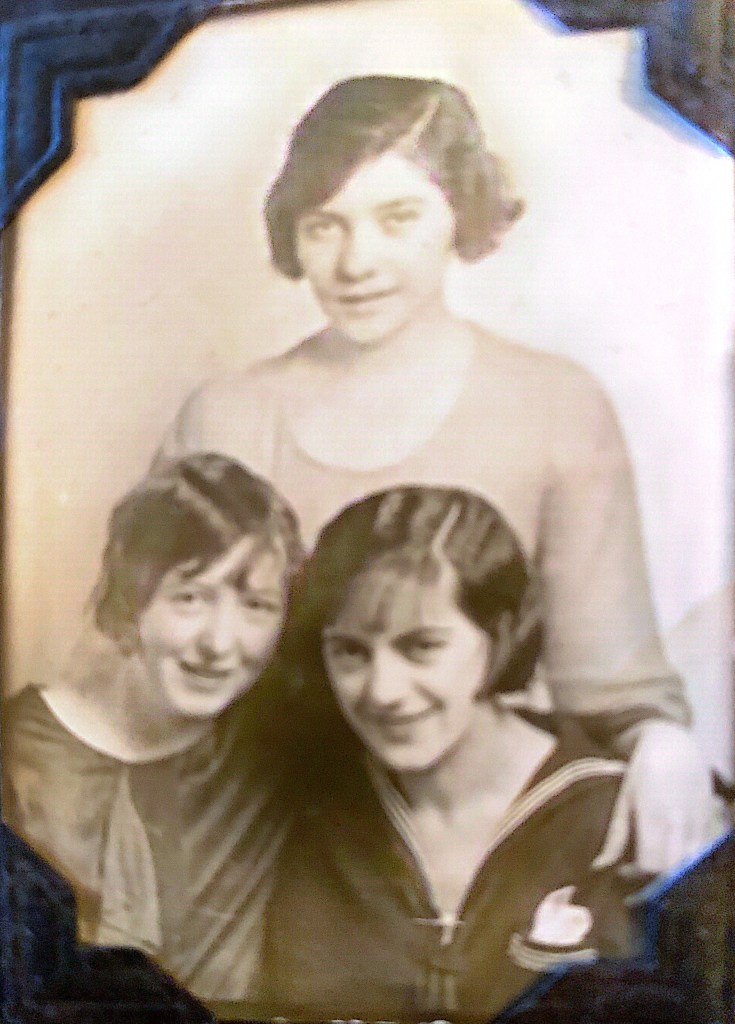
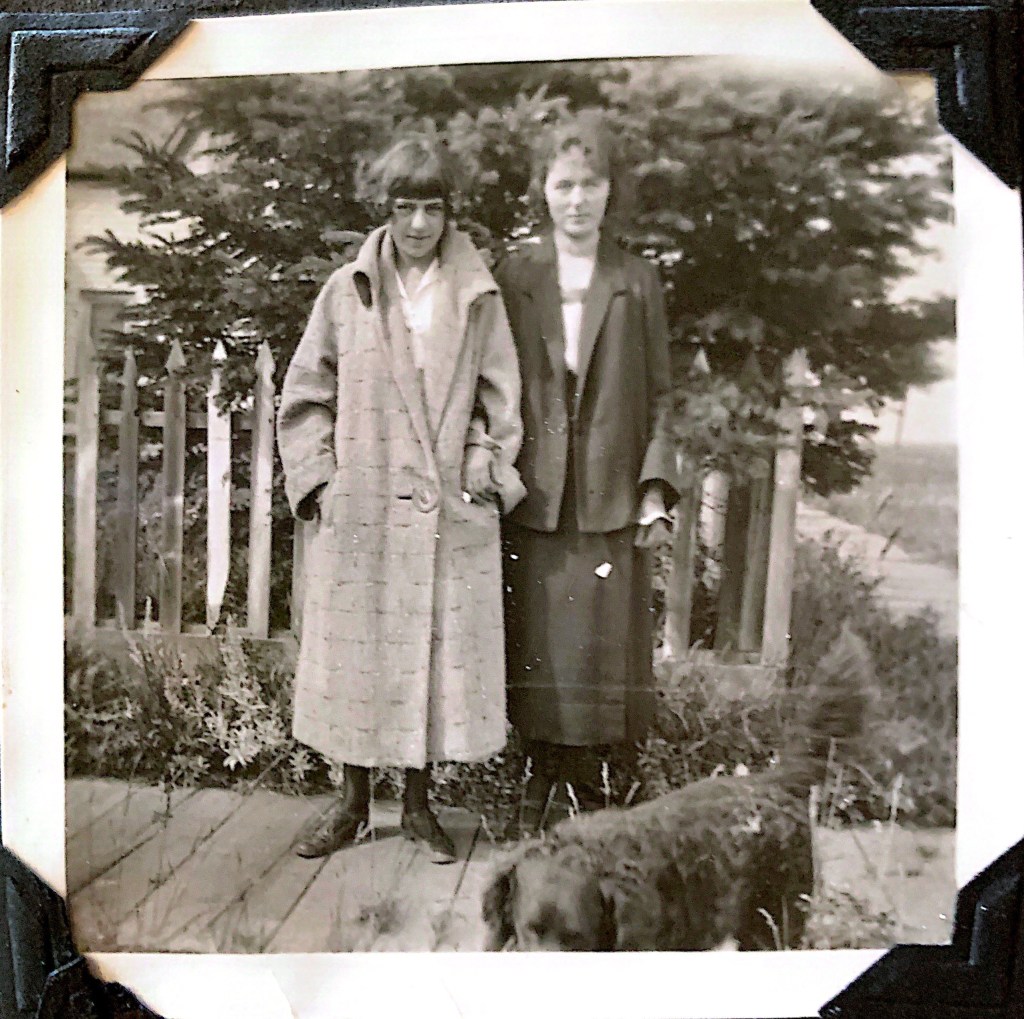
Grandma and her friend Jean are in the front. Not sure who the woman is standing in back.
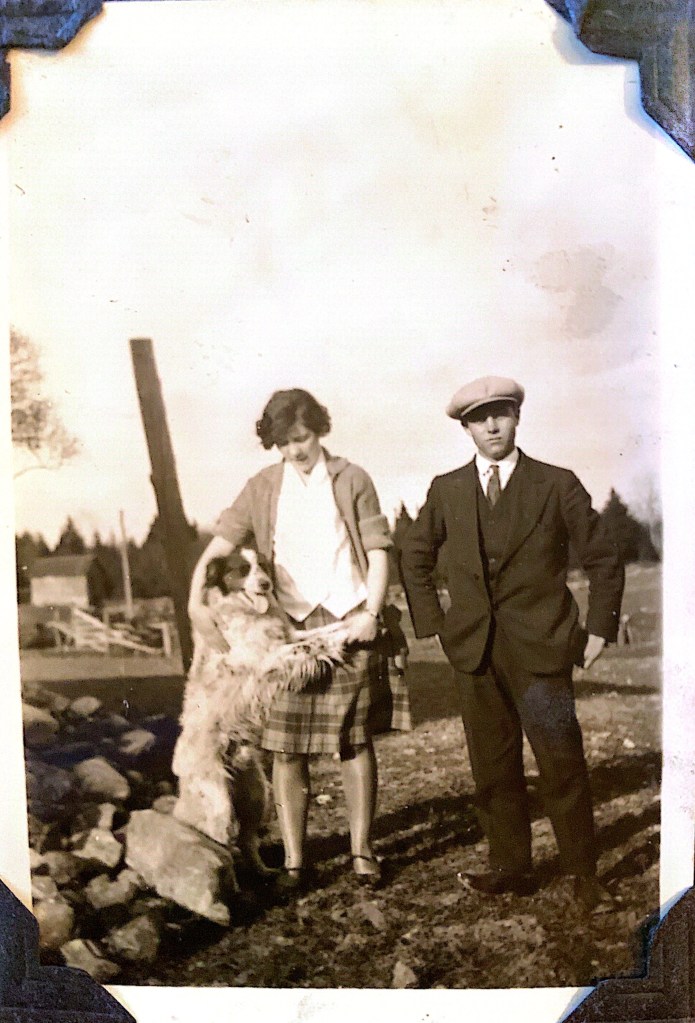
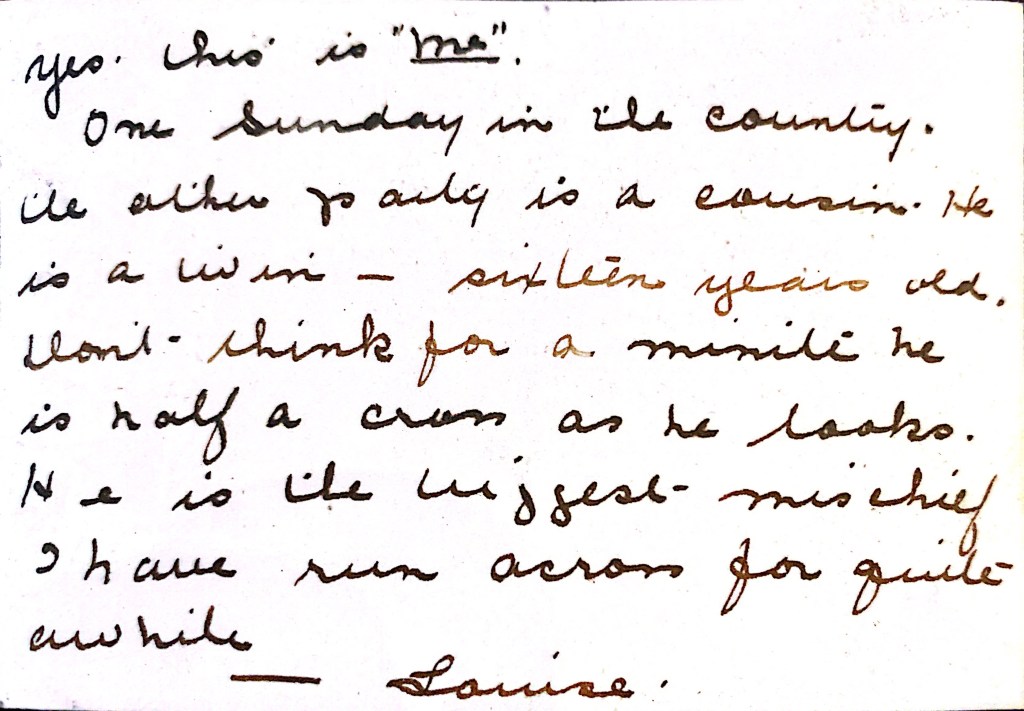
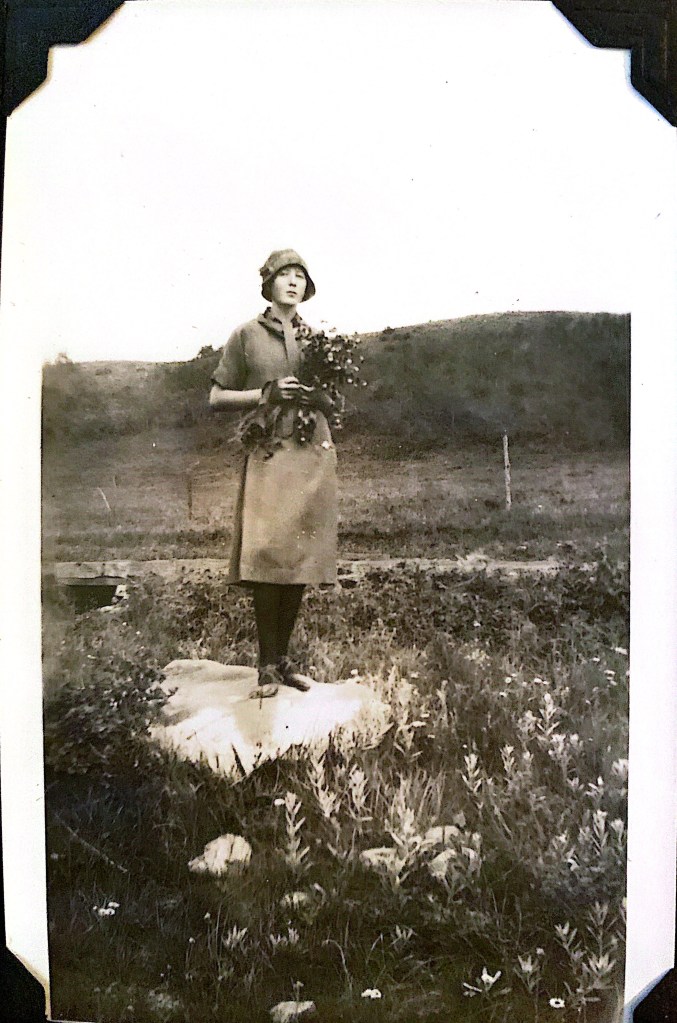
Yes, this is “me”. One Sunday in the country. The other party is a cousin. He is a ______ – sixteen years old. Don’t think for a minute he is half as ______ as he looks. He is the biggest mischief I have run across for quite a while. Louise
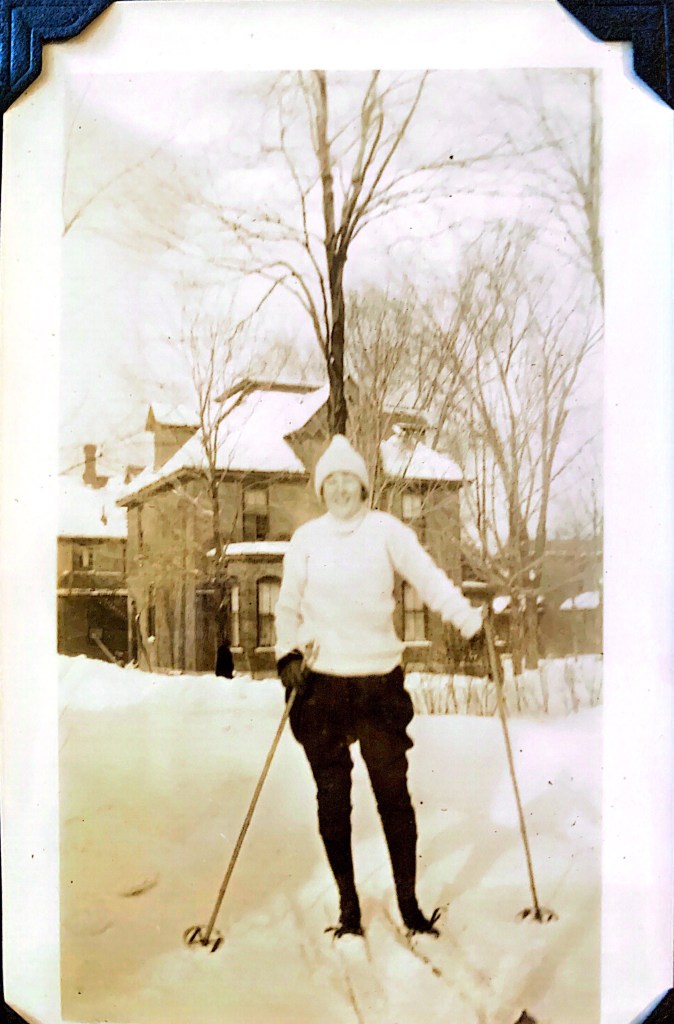
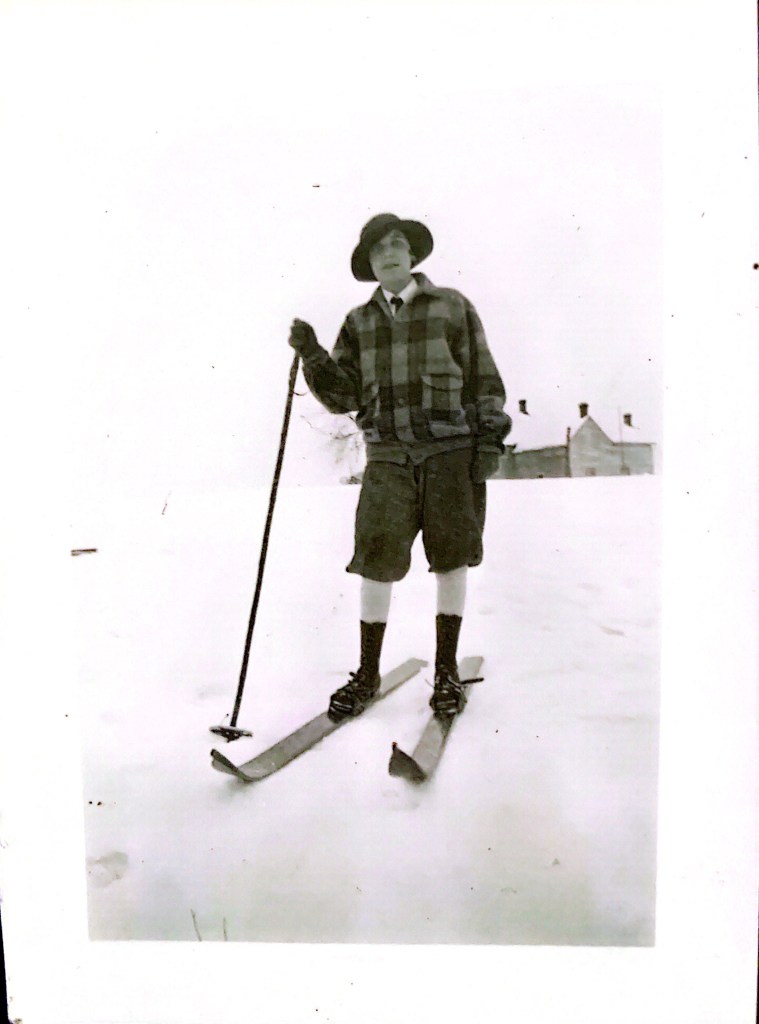
I would have sworn this was a Ramsay photo – but nope. There are a few ski ones – and I’m not sure if they weren’t in Ontario for a visit.
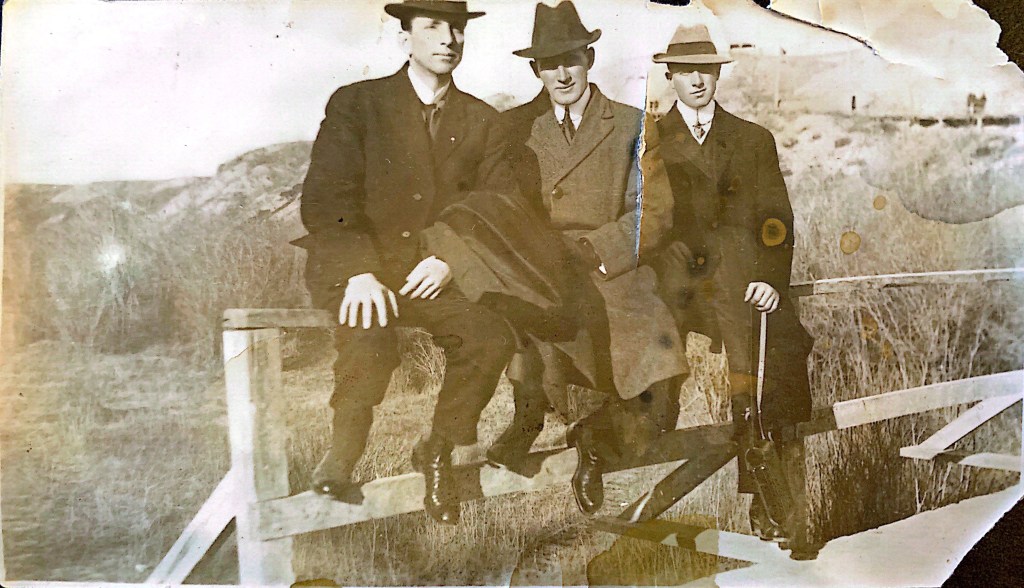
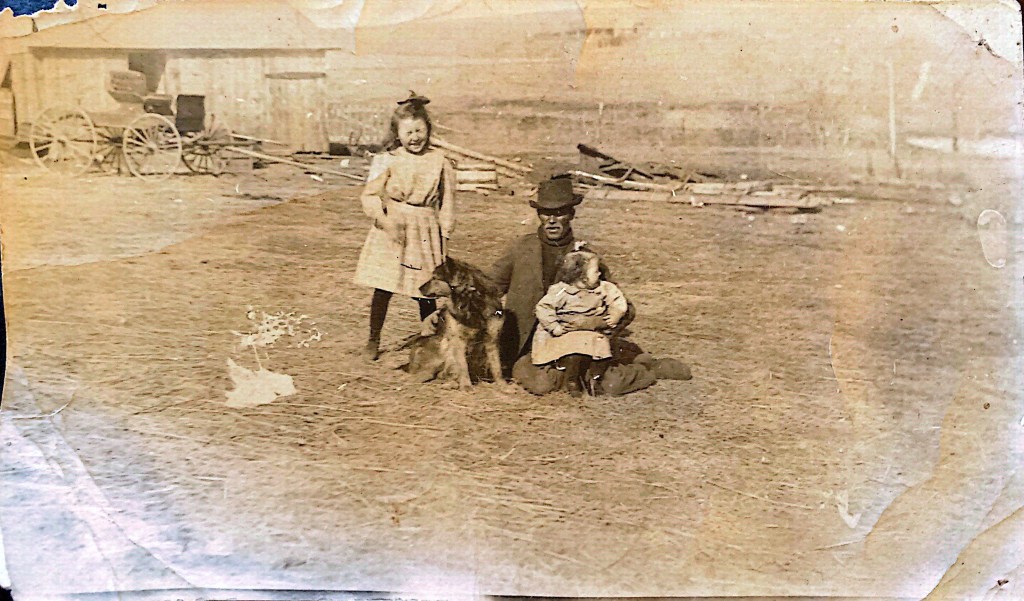
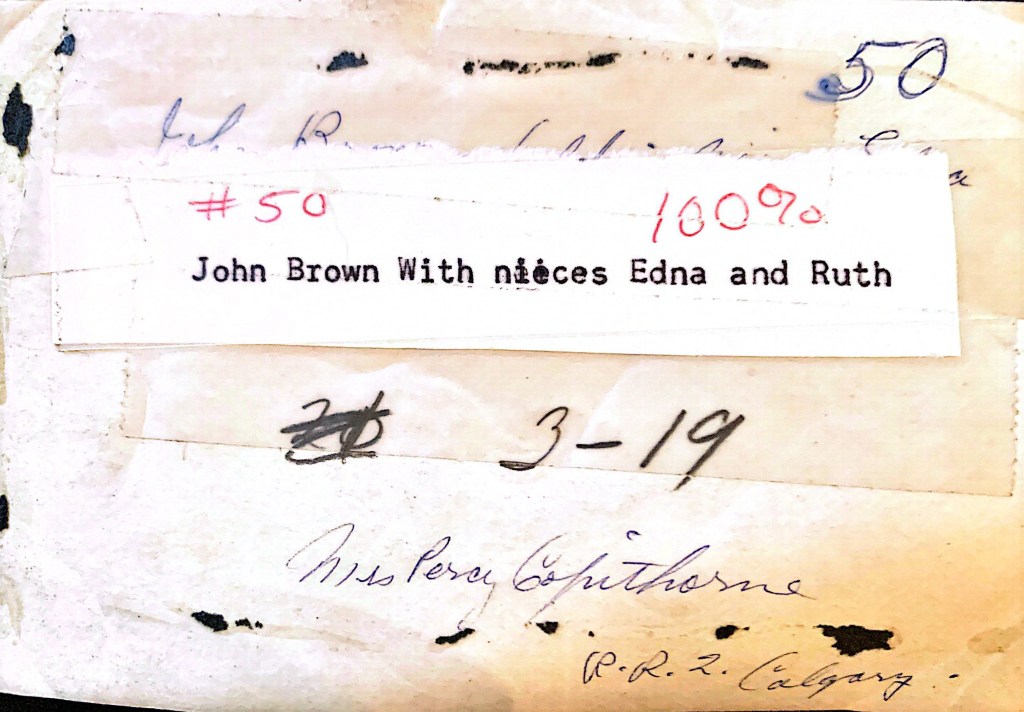
John Brown with nieces Edna and Ruth
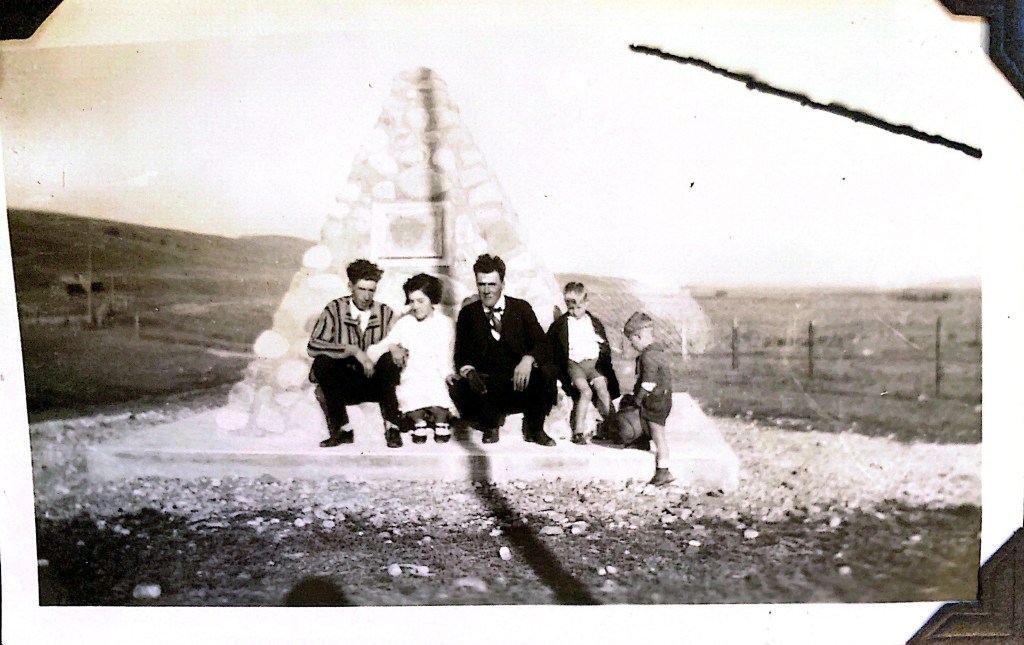
McDougall memorial 1927
I think we’ve seen this one before, but it’s a great photo so I’ll throw it in again.
Standard
happiness

Days Gone By 7 (FGK 220)

Uncle Gord! 4 years
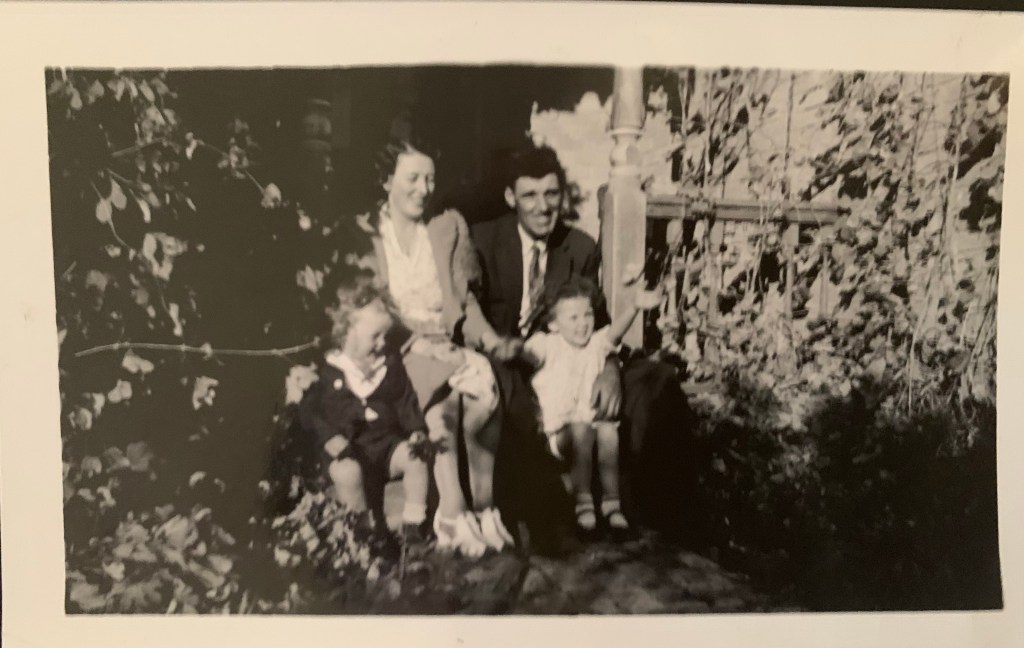
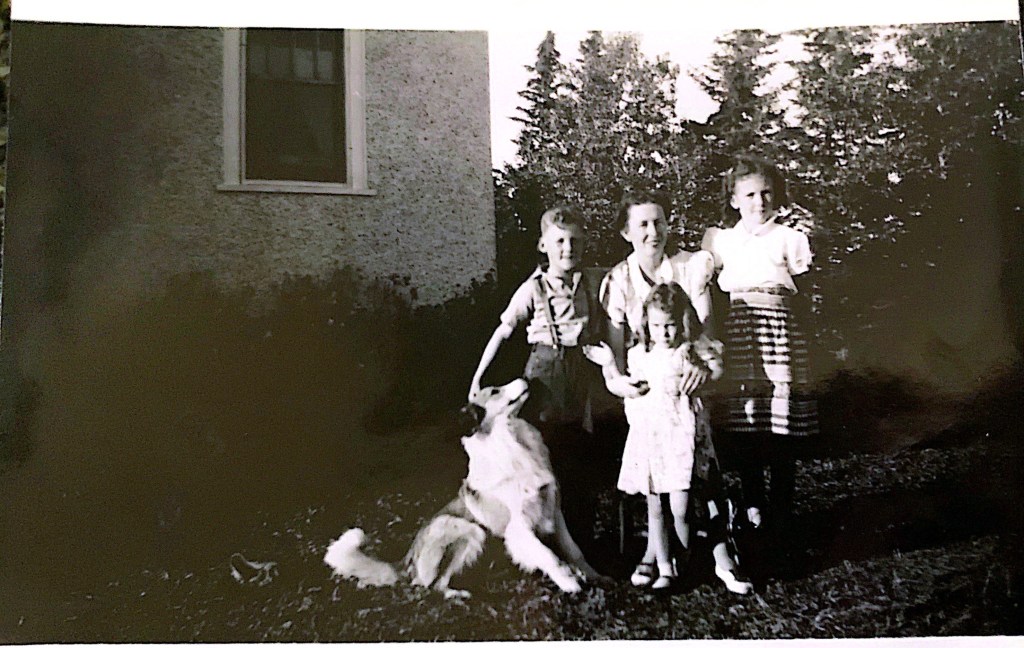
1944. L-R Marshall, Edna, Sheila, Margie in front
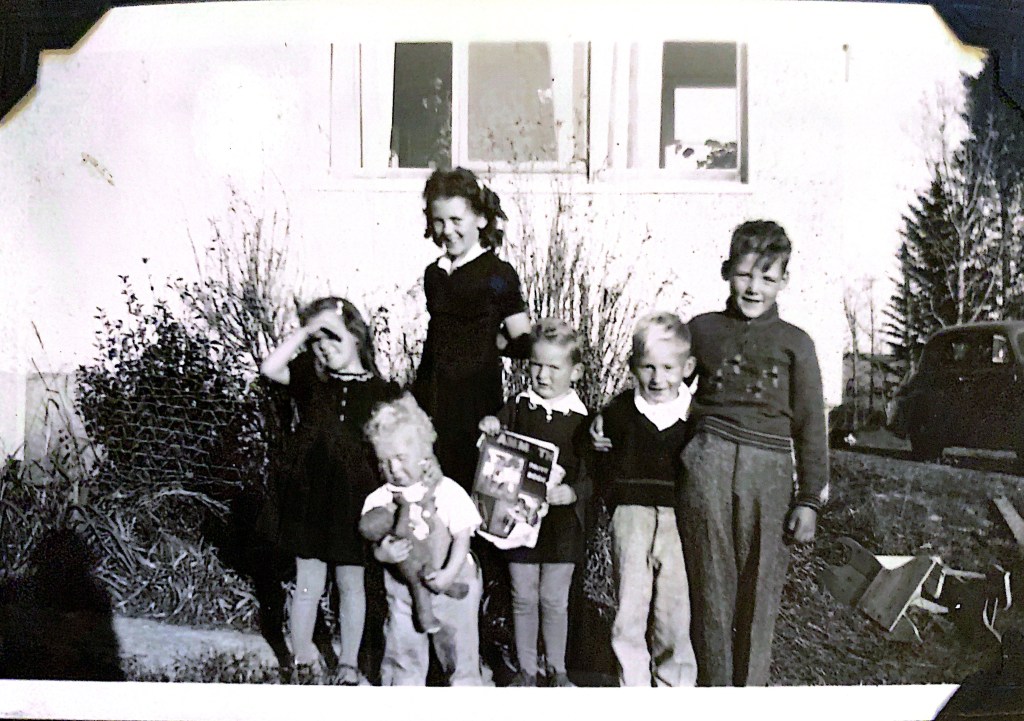
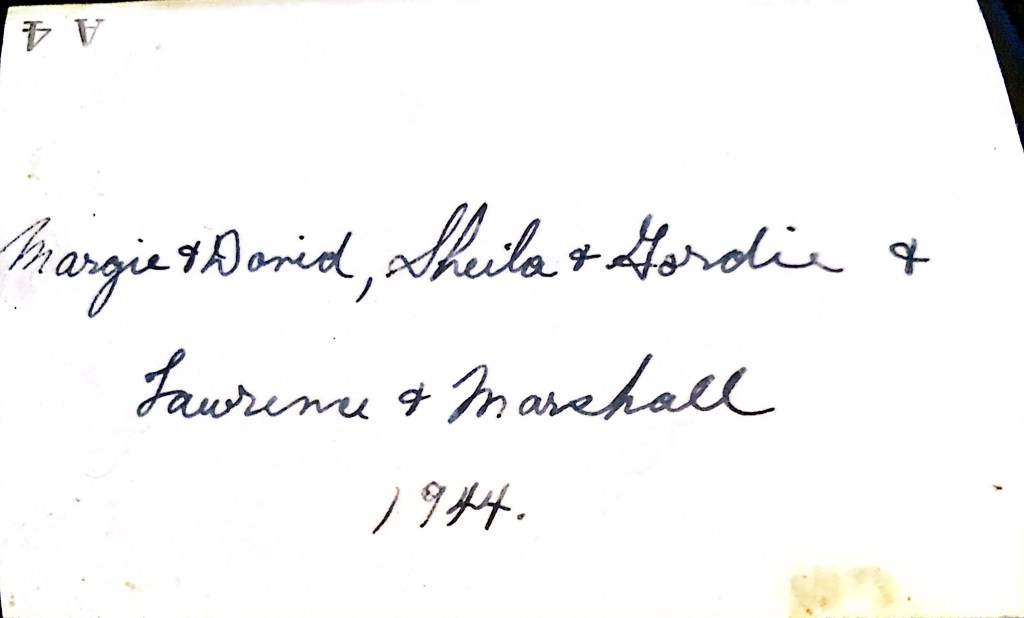
Margie and David, Sheila and Gordie and Lawrence and Marshall 1944
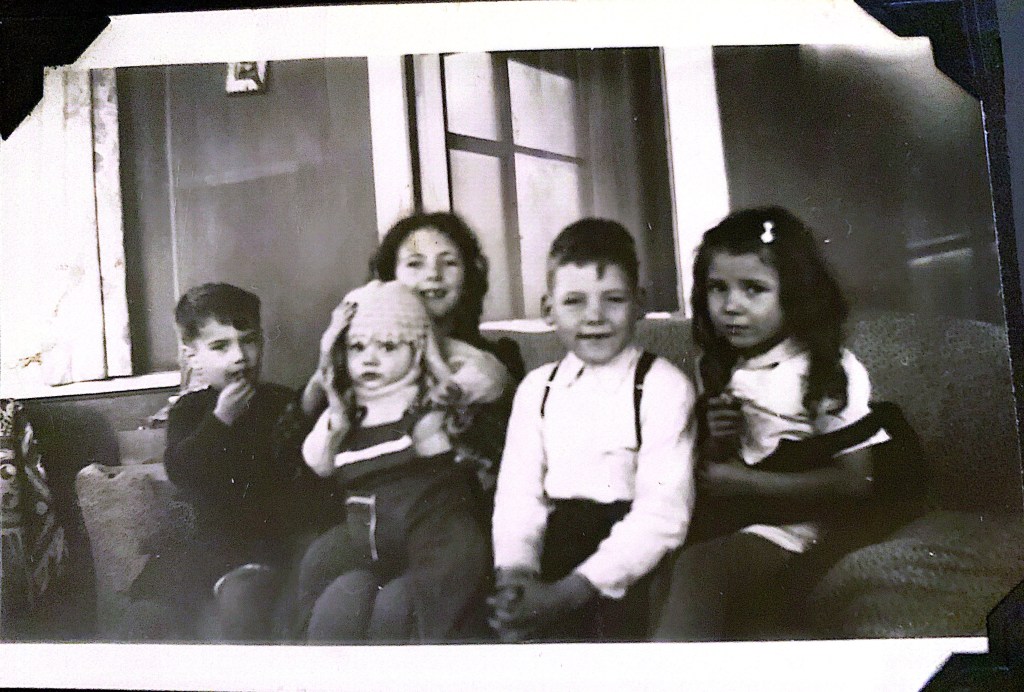
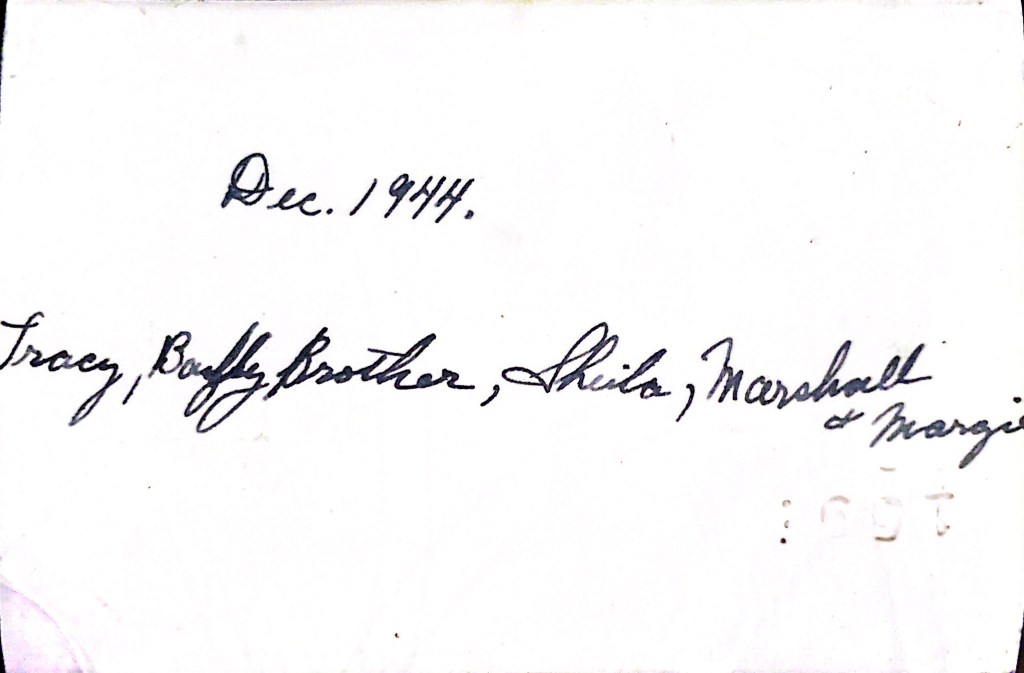
Dec 1944. Tracy, ???, Sheila, Marshall, and Margie
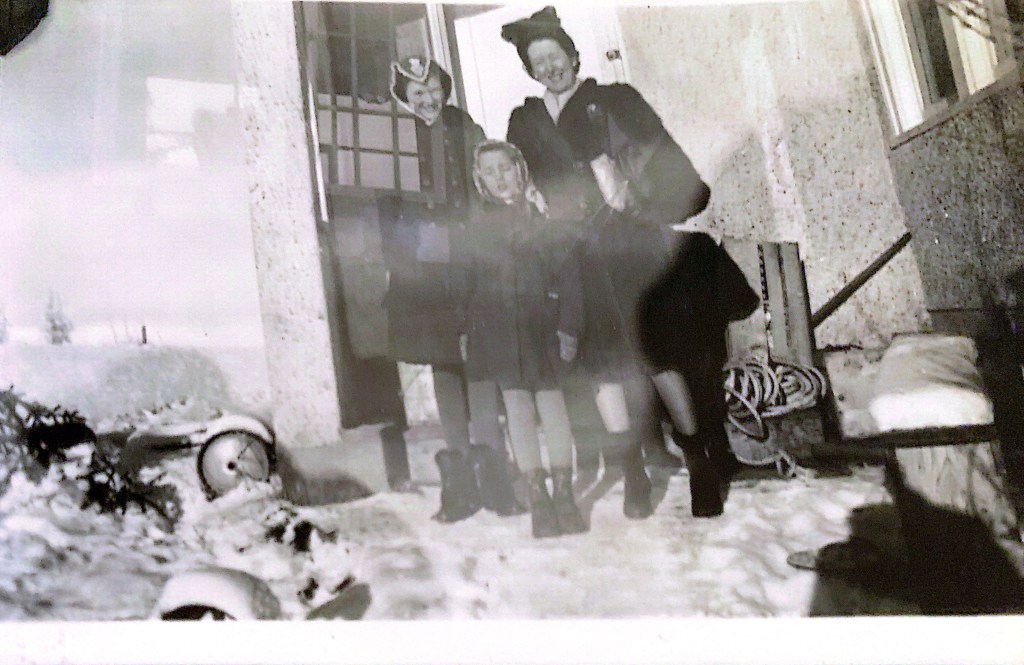
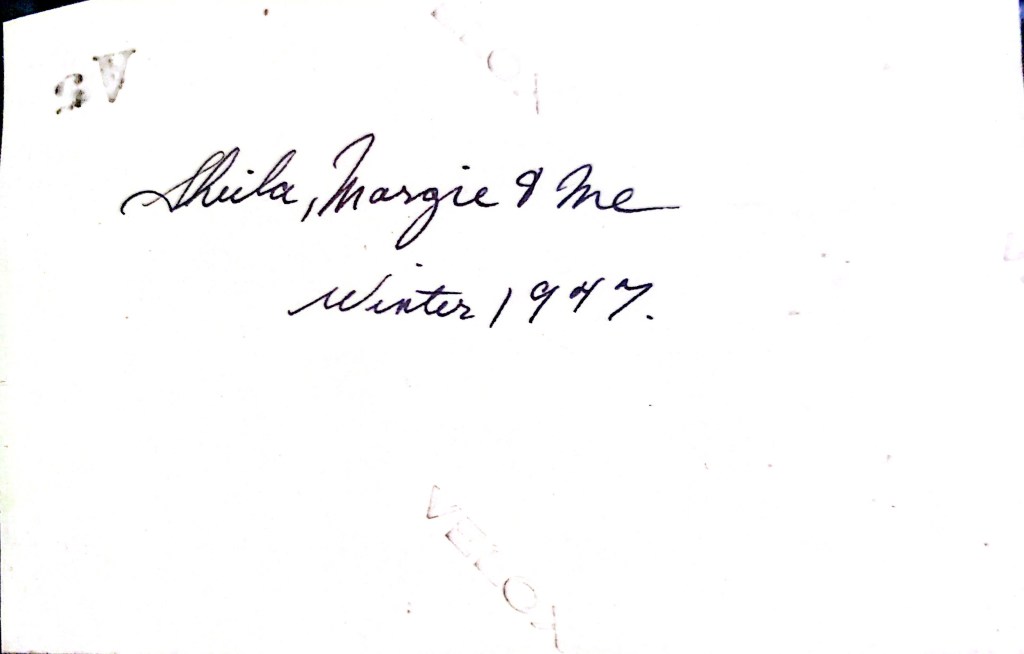
Sheila, Margie, and me. Winter 1947
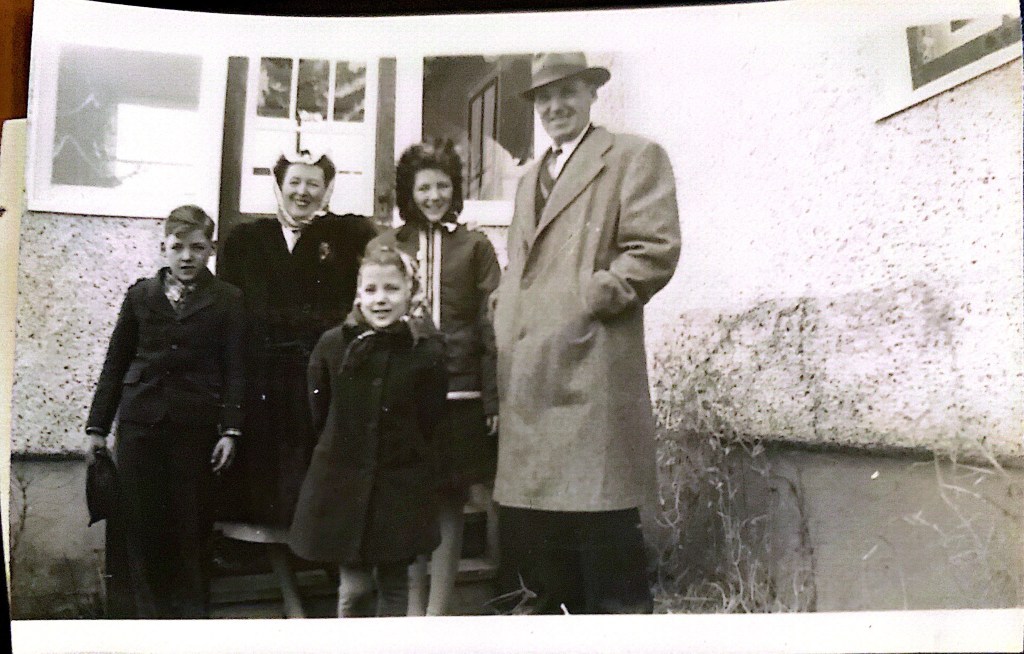
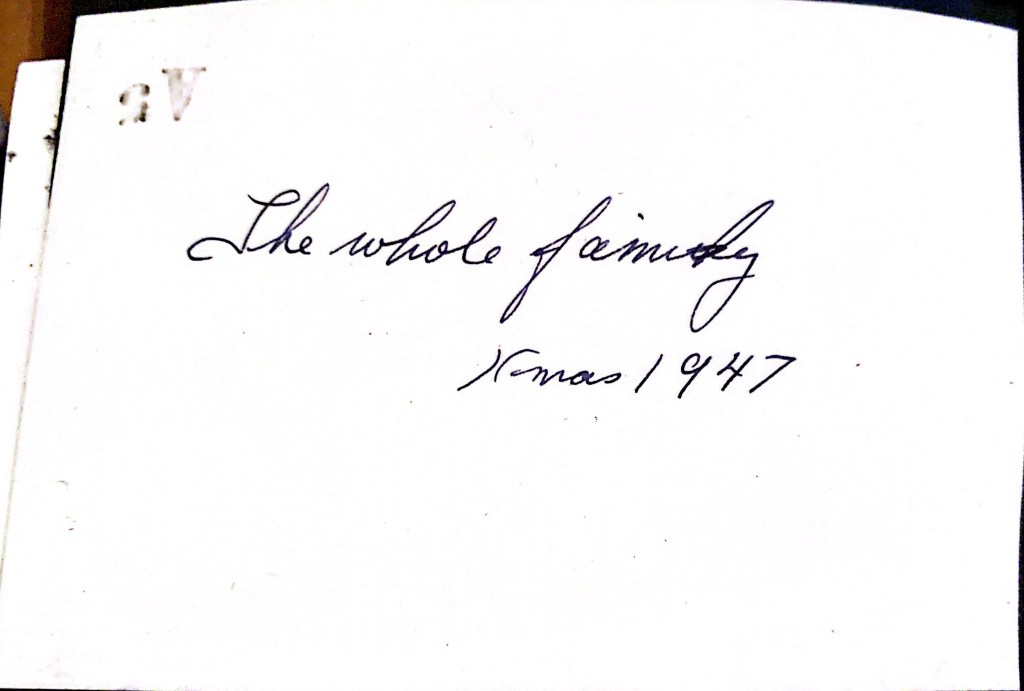
The whole family (Marshall, Edna, Sheila, Percy, Margie in front). Christmas 1947
I took all these photos in the same spot. This one I retook/scanned on my phone several times but for whatever reason Grandma’s stained glass window insisted on making an appearance for this one.
Standard
happiness

Days Gone By 4 (FGK 217)

Sheila, Margie, Marshall 1947
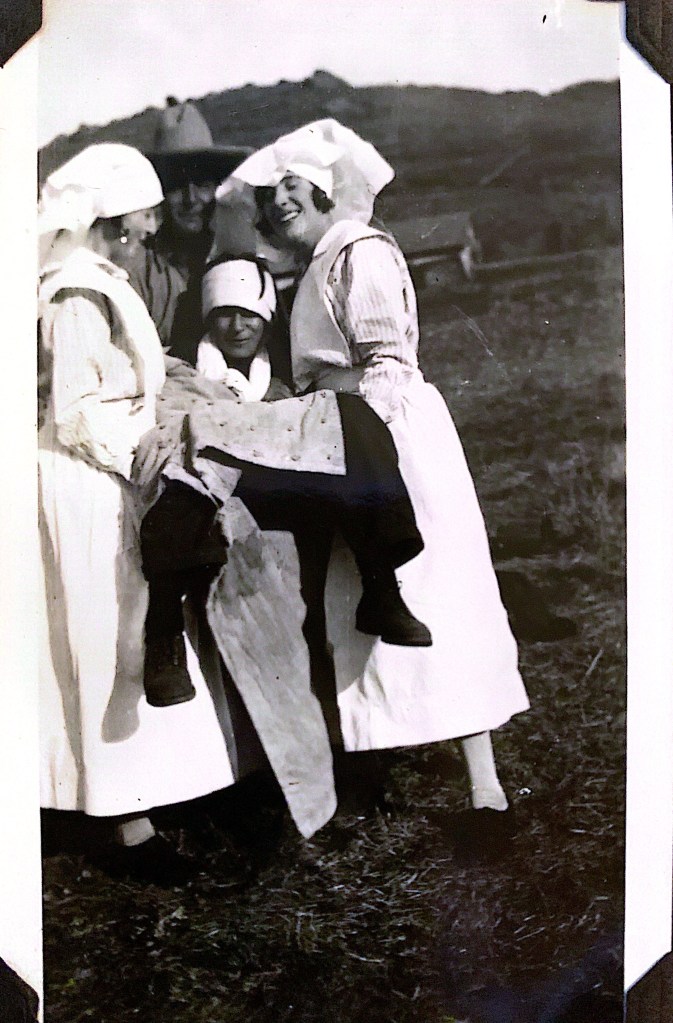
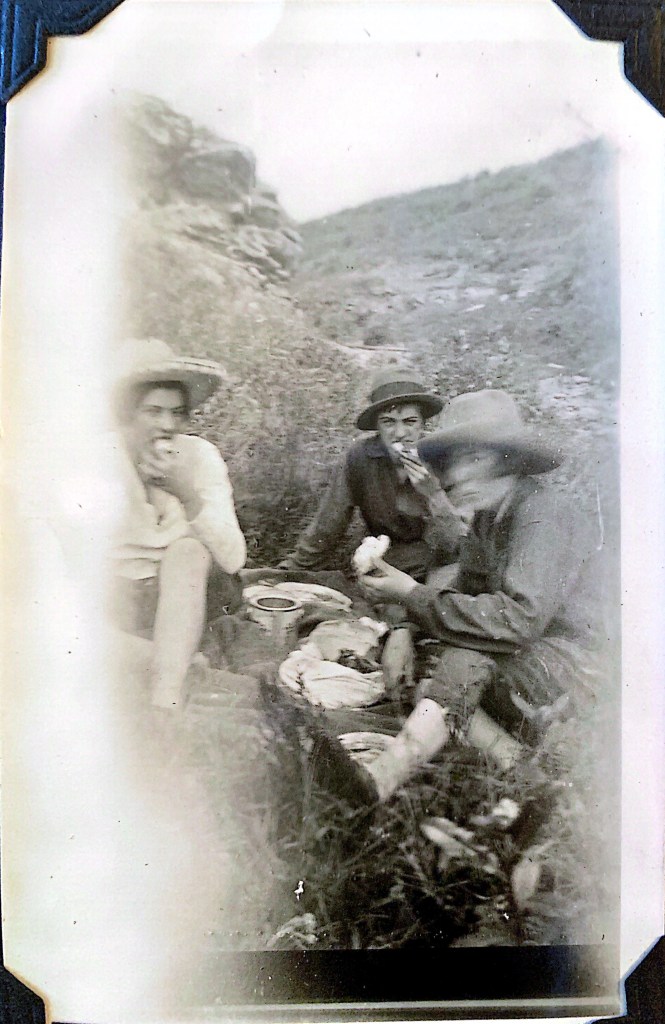
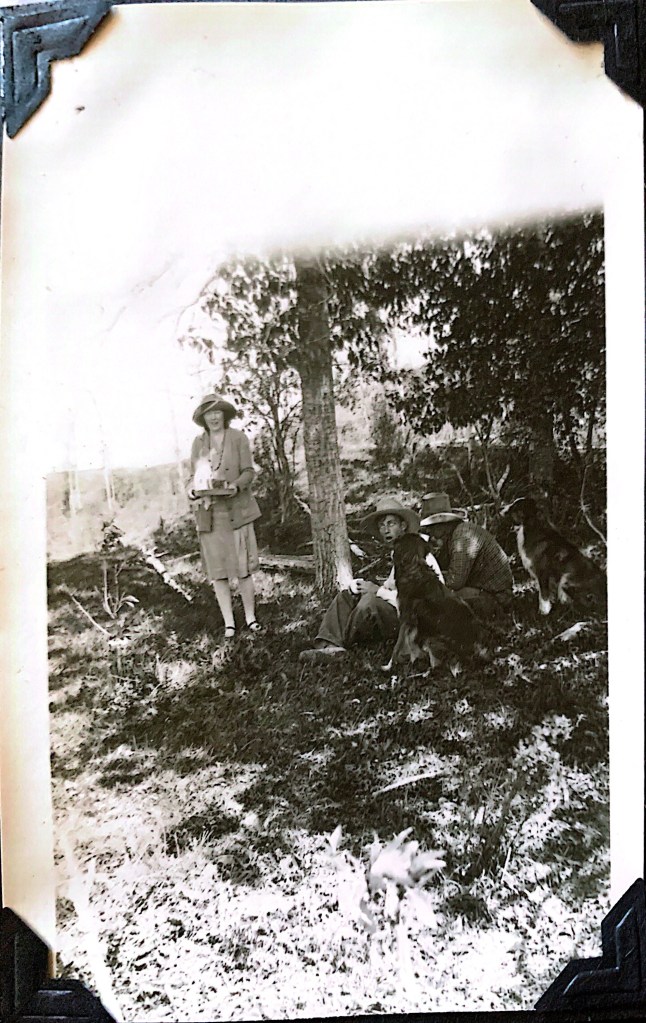
There’s a lot going on in this one. I think it’s Grandma on the left holding a tray of food all dressed up in the field. The poor man sitting on the left looks like he was caught by surprise.
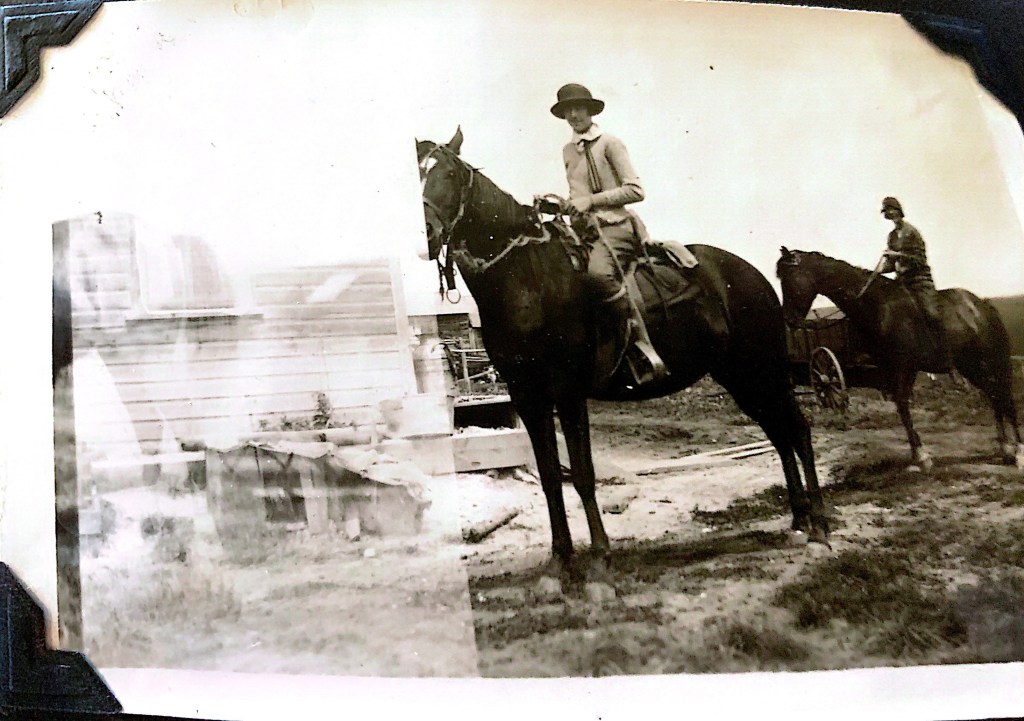
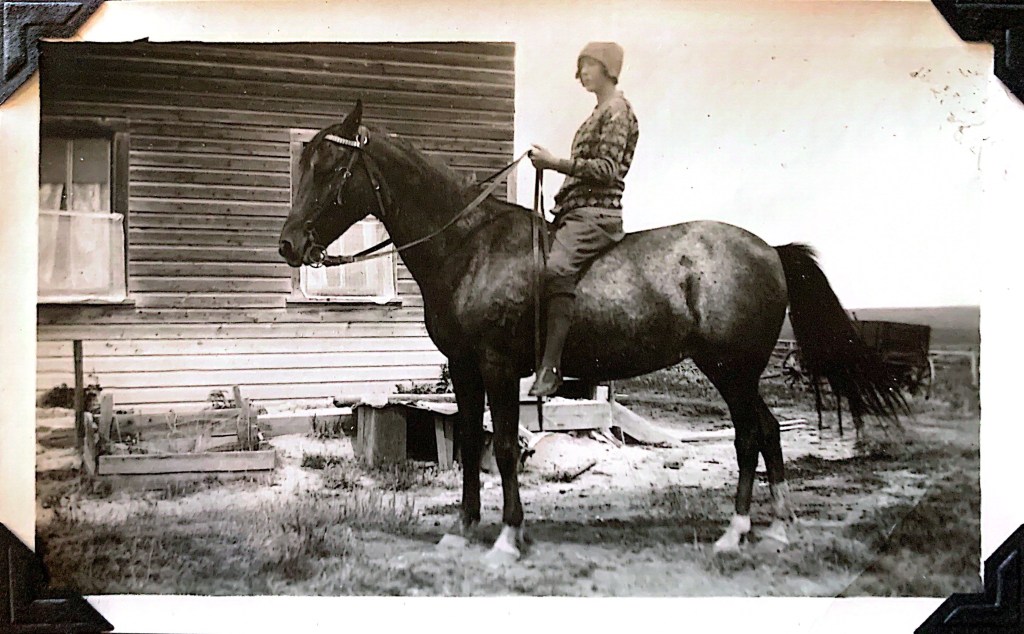
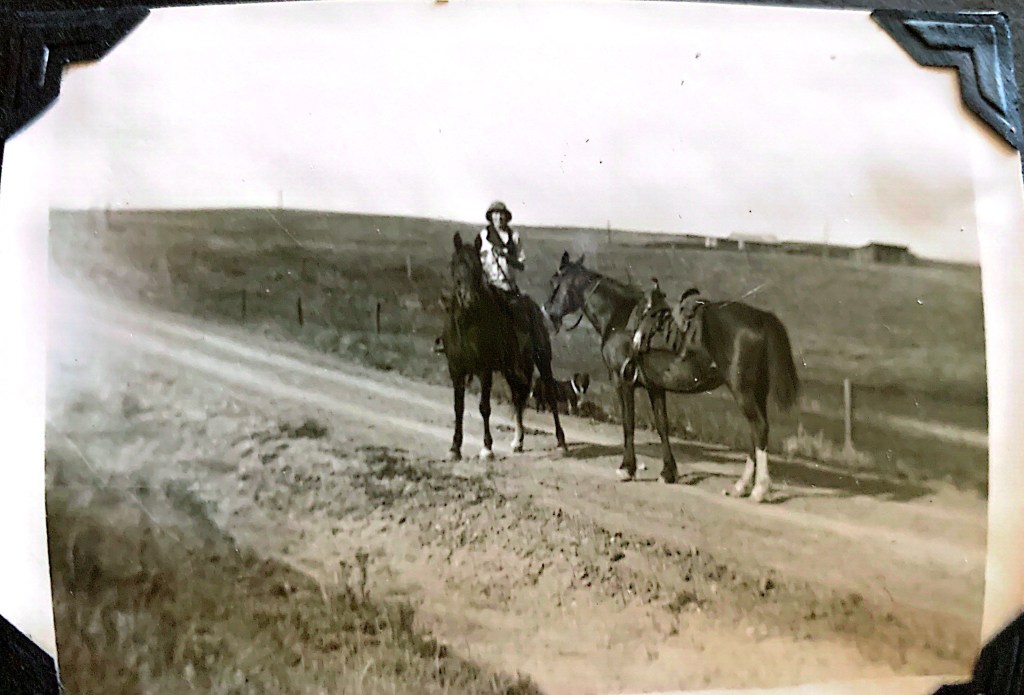
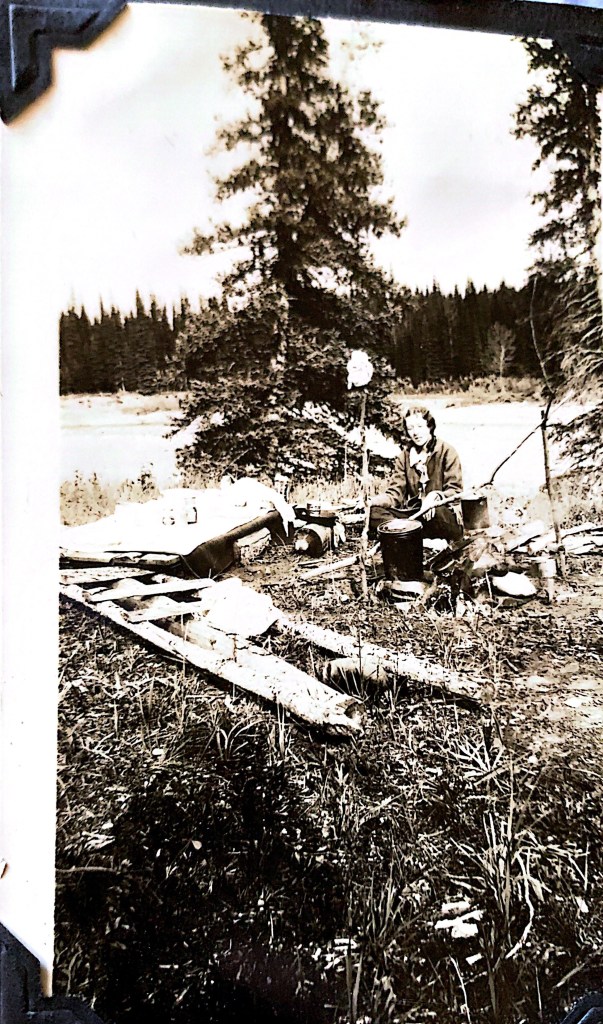
We’ve seen this one before – but the back is this photo says “Edna at Coal? Camp” anyone know where that is? The photo was printed in Vancouver as far as I can tell
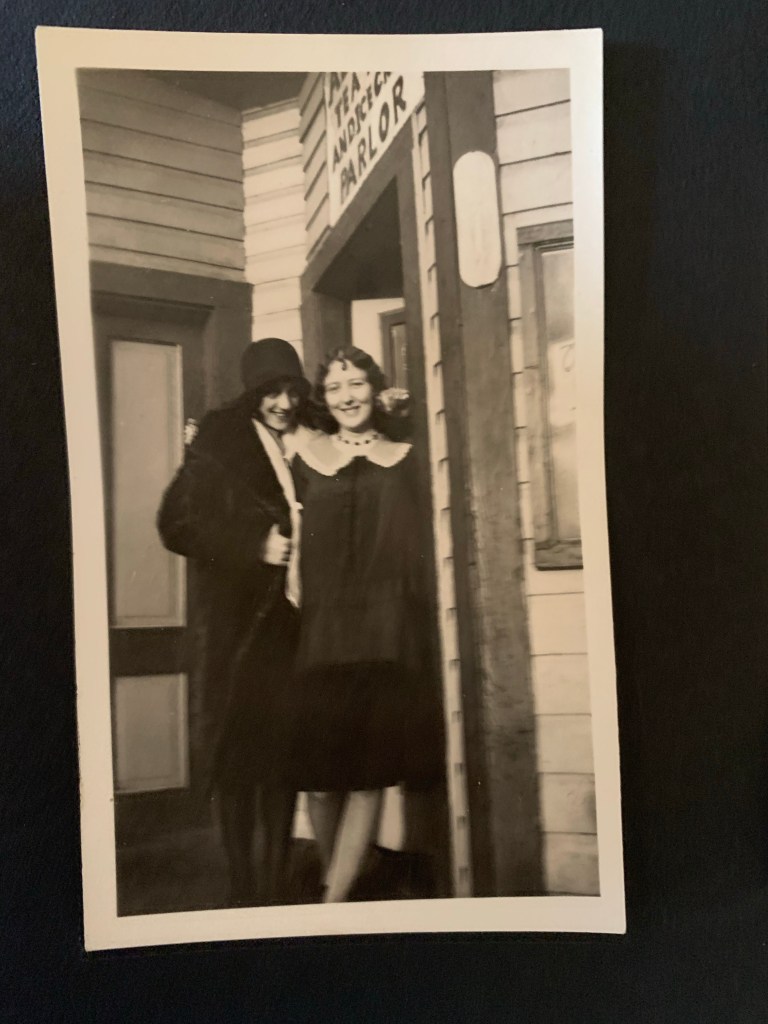
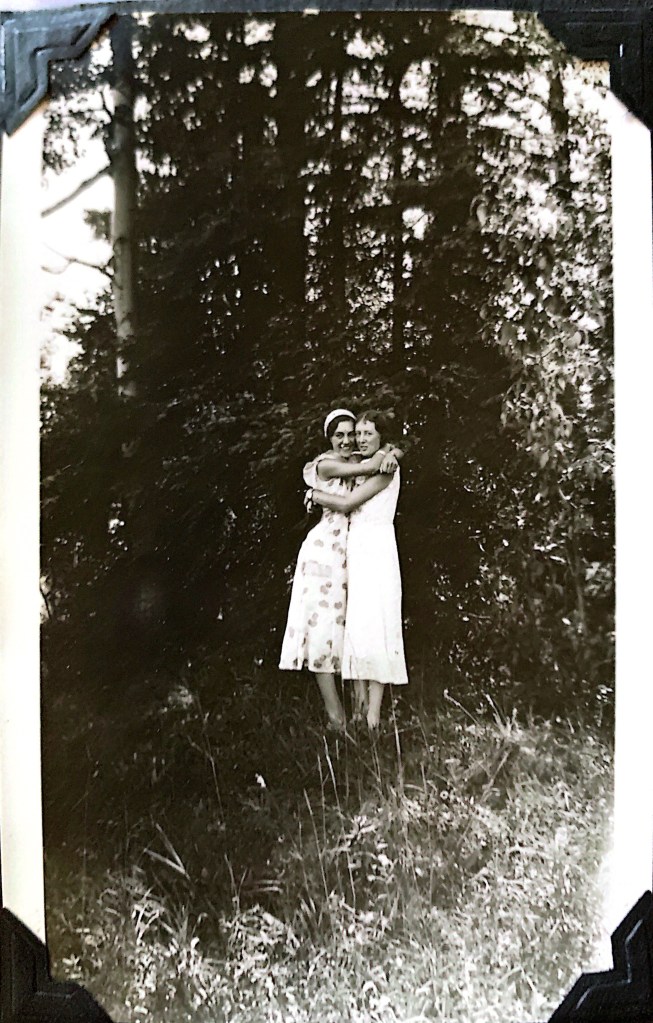
I *think* this is Grandma and her friend Jean. They seem to me like they had an Anne Shirley/Diana Barry kind of friendship- one that we should all be so lucky to have.
Standard
happiness

Days Gone By 2 (FGK 215)

Help me out if you know who anyone is!

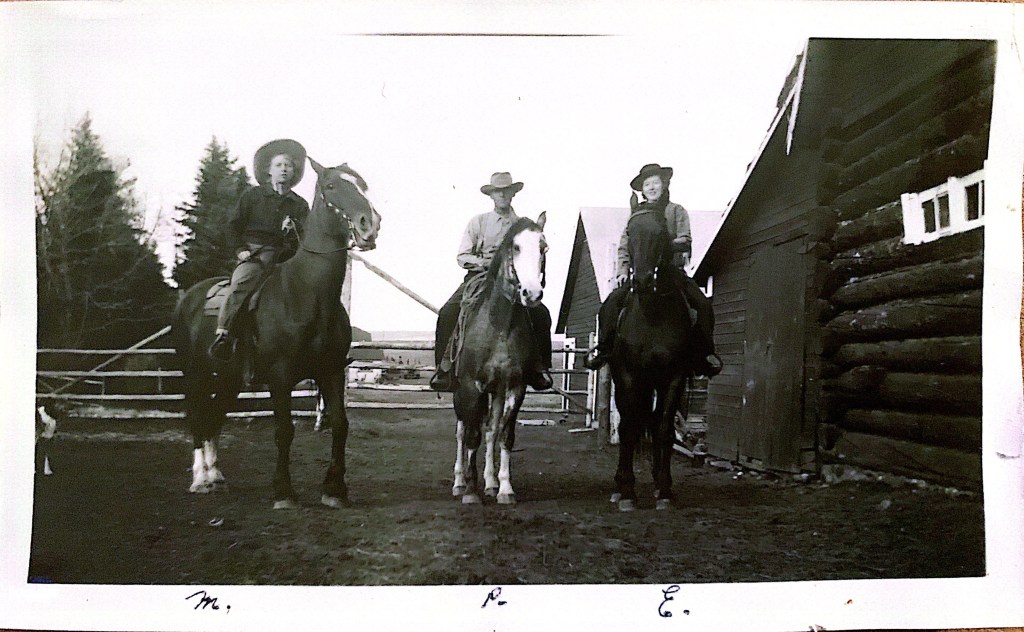
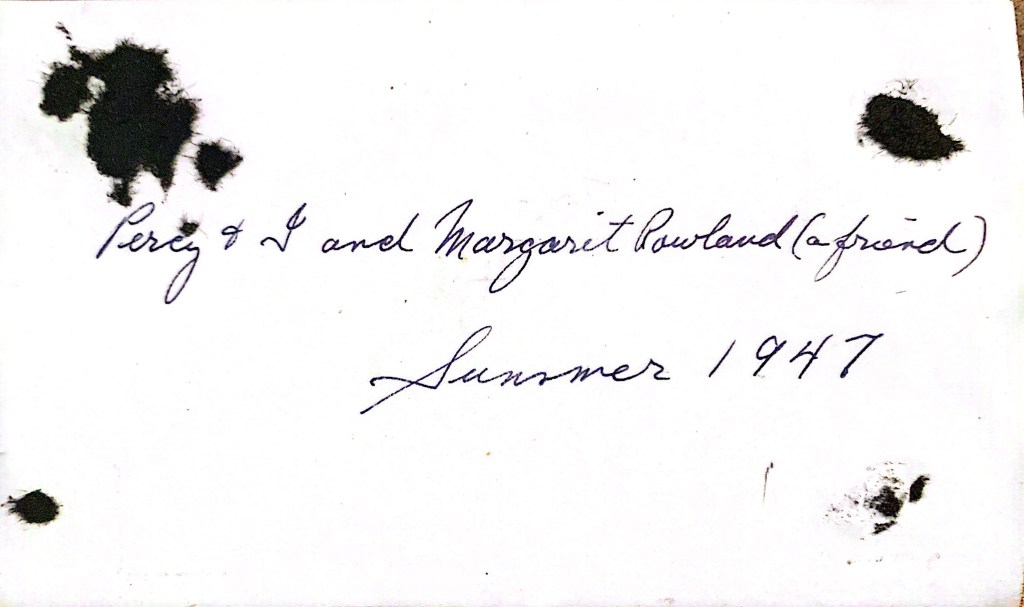
Percy and I (Edna) and Margaret Rowland (A friend). Summer 1947. Grandma is closest to the barn, Grandpa beside her.
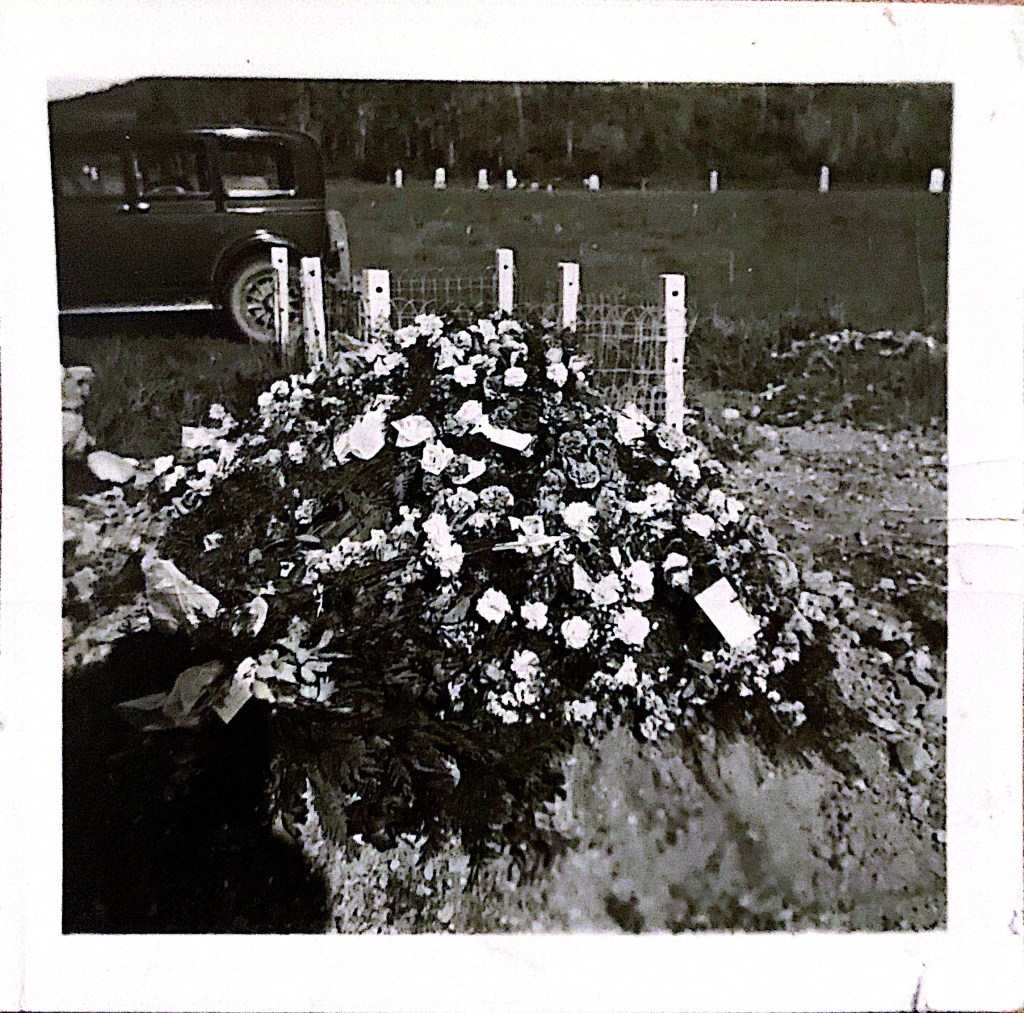
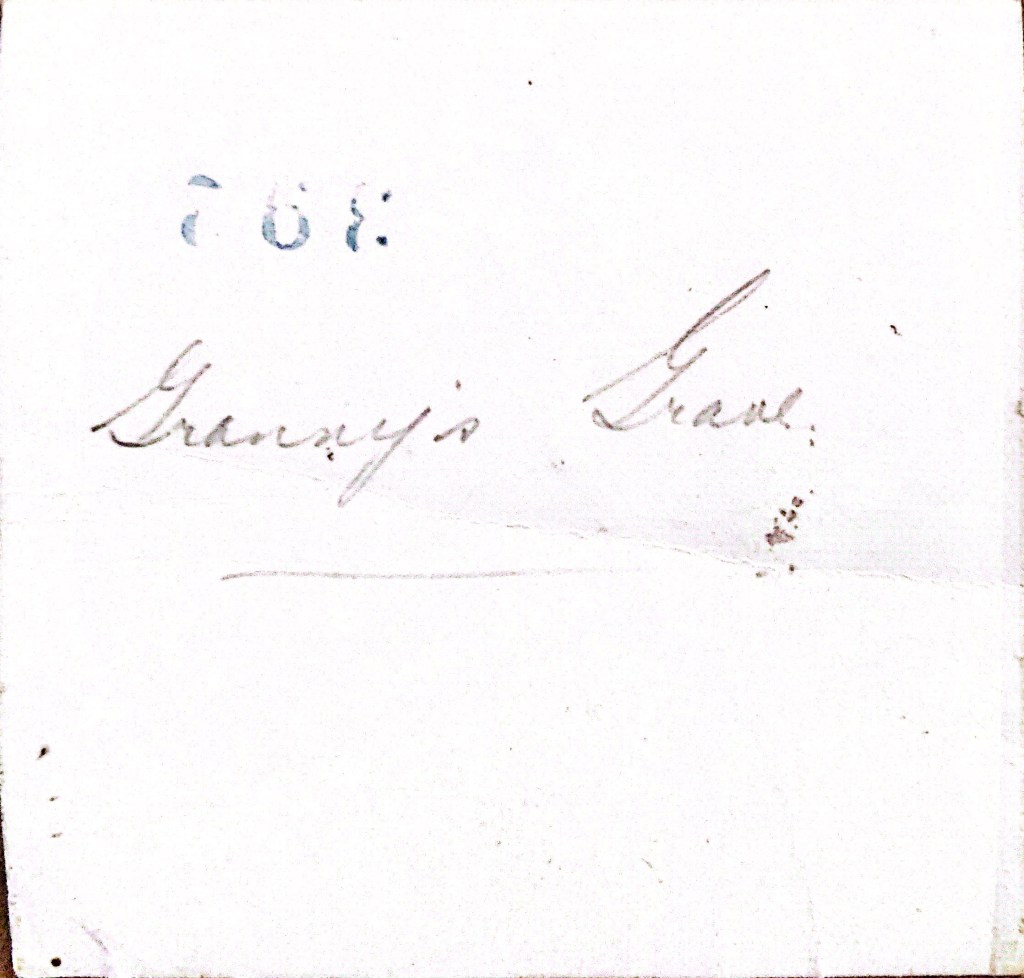
Granny’s grave.
Grandpa
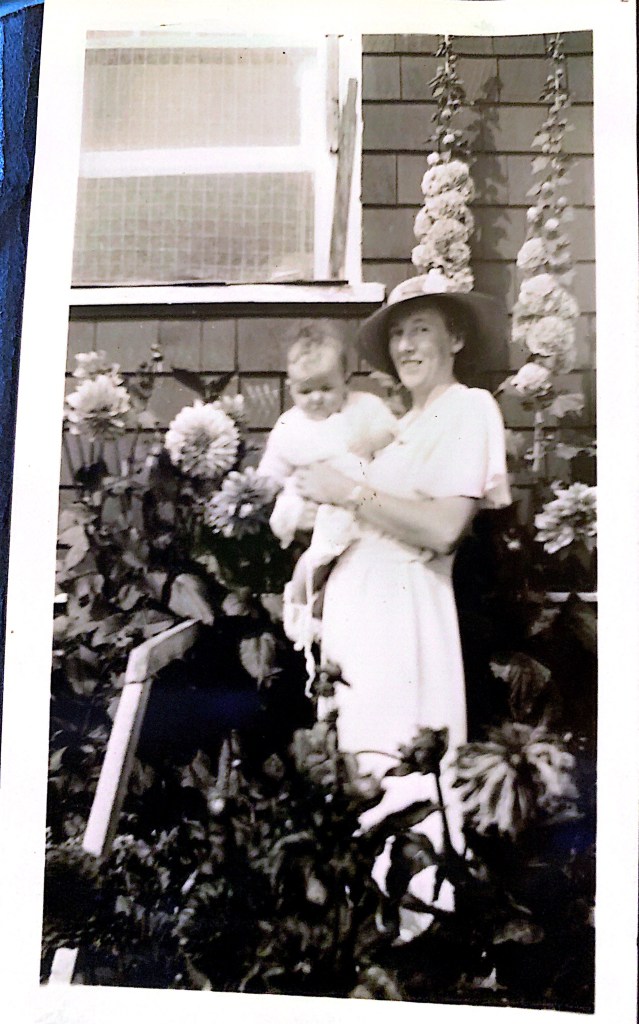
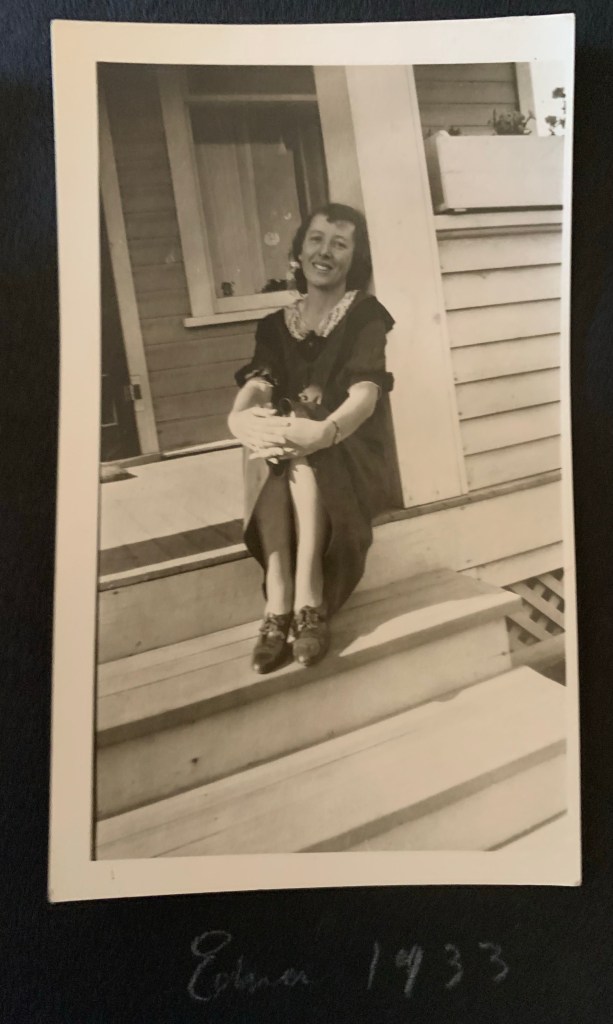
Maybe grandma?
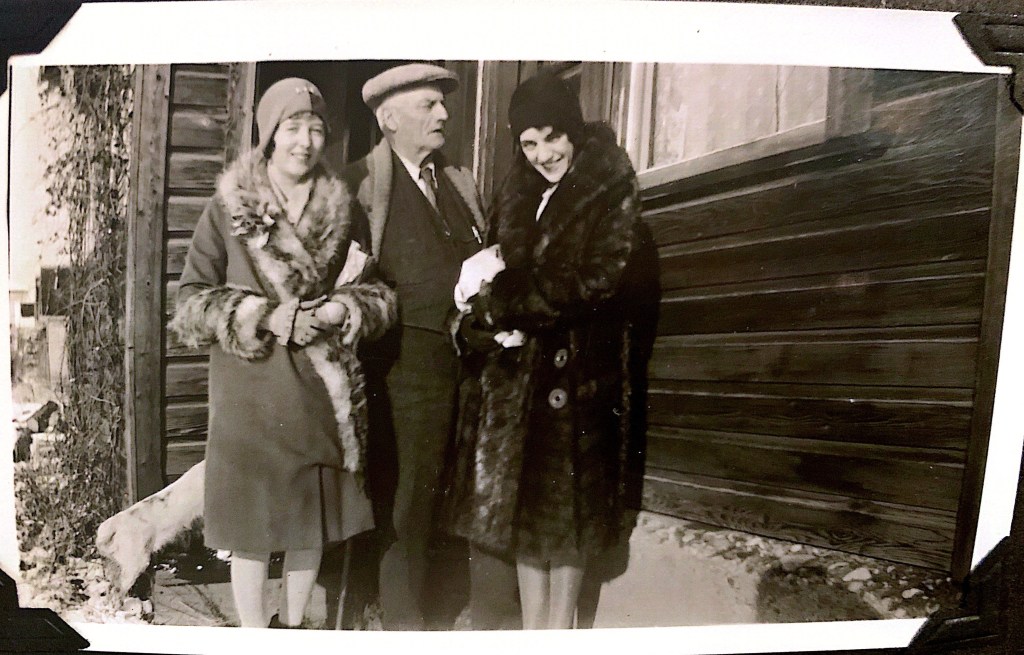
Grandma and her friend Jean, not sure who the man is – one of their fathers?
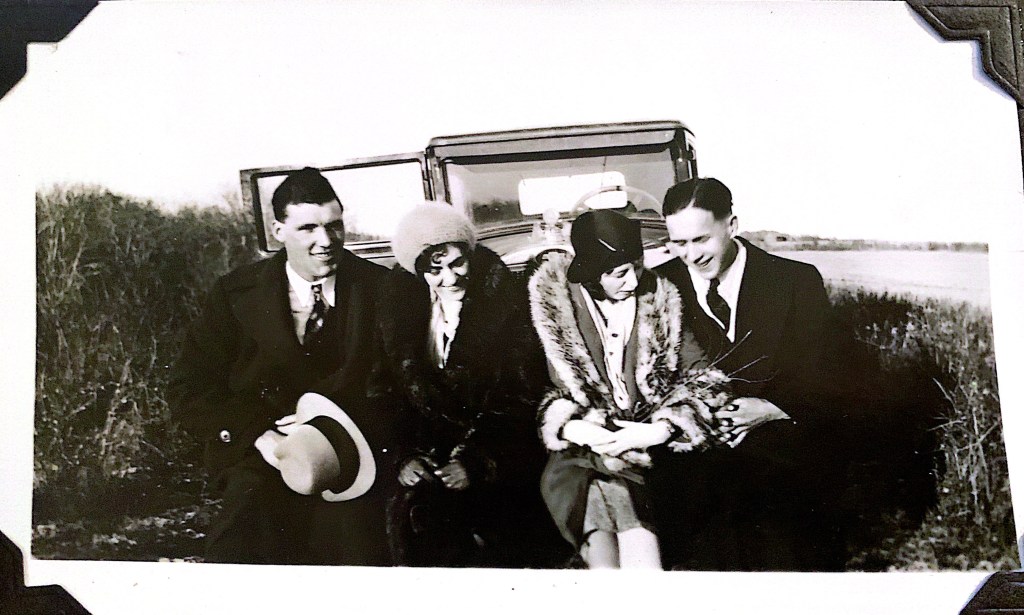
Grandpa, Jean, Grandma, George (I think? Jean’s husband?)
Standard